
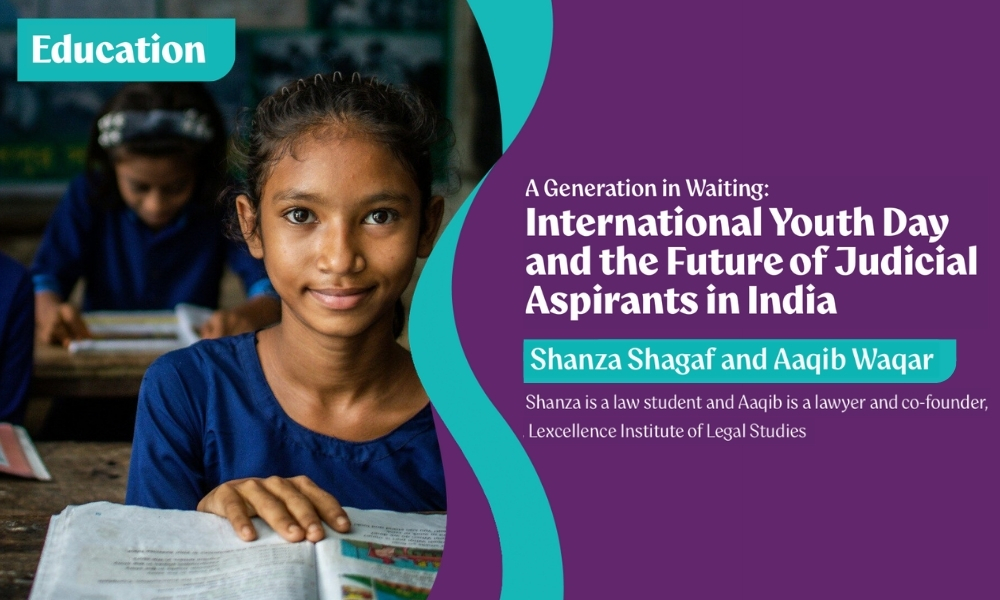
Shanza is a law student and Aaqib is a lawyer and co-founder, Lexcellence Institute of Legal
Yet, for thousands of law students and judicial aspirants across the country, the path to public service is becoming increasingly uncertain. While the judiciary remains one of the most respected institutions in Indian democracy, recent developments surrounding judicial recruitment have generated widespread concern among young legal professionals. The restoration of the mandatory three-year practice requirement for entry into the lower judiciary, coupled with persistent delays and irregularities in judicial service examinations across several states, has created a climate of uncertainty for an entire generation of aspiring judges.
For many students, the journey towards judicial service begins immediately after school. They clear competitive entrance examinations, invest years in legal education, and dedicate themselves to rigorous preparation for judicial service examinations. However, after completing their degrees, many now find themselves trapped in a cycle of delayed notifications, postponed examinations, changing eligibility criteria, and prolonged litigation concerning recruitment policies.
As one judicial aspirant recently observed:
We are trapped in a cycle of systemic delay, administrative apathy, and agonizing uncertainty. Our career aspirations are being shattered by irregular recruitment cycles. Regular and timely examinations are essential not only for aspirants but also for ensuring a strong and efficient judiciary.
This sentiment reflects a growing frustration among young legal professionals. The issue is no longer merely about employment opportunities; it concerns access to public institutions, social mobility, diversity within the judiciary, and the ability of young citizens to contribute meaningfully to the administration of justice.
Historical Background: The Long Debate Over the Three-Year Practice Requirement
The controversy surrounding mandatory legal practice before entering judicial service is not a recent phenomenon. The debate can be traced to the landmark case of All India Judges Association v. Union of India (1992), where the Supreme Court examined the need for greater uniformity in judicial services across the country.
Following recommendations contained in the 14th Law Commission Report, the Supreme Court in All India Judges Association (II) (1993) supported the requirement that candidates possess a minimum of three years’ practice at the Bar before joining the subordinate judiciary.
However, the practical implementation of this requirement remained inconsistent. Several states either diluted the condition or abandoned it altogether. Recognising these developments, the Justice Shetty Commission, constituted in 1996, conducted an extensive review of service conditions in the subordinate judiciary. The Commission noted that strict implementation of the requirement often prevented exceptionally talented young graduates from entering judicial service.
Consequently, in All India Judges Association v. Union of India (2002), the Supreme Court removed the mandatory practice requirement. The Court recognised that fresh law graduates, when provided with adequate institutional training, were fully capable of performing judicial functions effectively. For more than two decades, this approach enabled thousands of young law graduates to compete directly for judicial service examinations.
The recent revival of the three-year practice requirement has therefore reopened a debate that many believed had been settled.
Who Gets Excluded?
The debate is often framed as one between experience and competence. Yet, a closer examination reveals that the issue is equally about accessibility and inclusion.
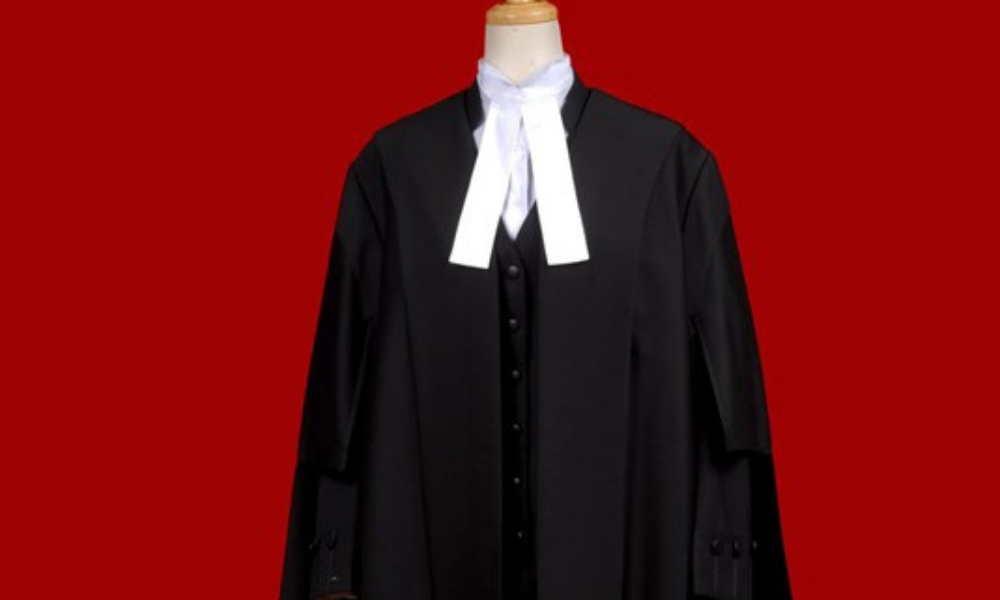
More importantly, the burden falls disproportionately upon first-generation lawyers, candidates from Scheduled Castes, Scheduled Tribes, Other Backward Classes, and economically weaker sections. The reality of litigation practice is that junior advocates frequently receive little or no remuneration during their initial years. Although the Bar Council of India has repeatedly emphasized the need for minimum stipends, implementation remains weak.
For such candidates, the additional three-year requirement is not merely a professional prerequisite it becomes a financial barrier.
Women aspirants may face a different set of challenges. Despite significant advances in educational access, societal expectations regarding marriage and family responsibilities continue to affect career decisions. Delaying eligibility for judicial service examinations may unintentionally reduce the number of women entering the judiciary, thereby affecting gender diversity within the institution itself.
Delayed Recruitment and Lost Opportunities
Even if aspirants satisfy eligibility requirements, another challenge awaits them: irregular and delayed recruitment processes.
States such as Maharashtra, Madhya Pradesh, Rajasthan, Chhattisgarh, Gujarat, and others have witnessed periods of recruitment uncertainty, delayed notifications, postponed examinations, and procedural complications. For aspirants who dedicate years to preparation, such delays are not merely administrative inconveniences.
Years of preparation become difficult to sustain without predictable examination schedules. Aspirants postpone employment opportunities, higher education plans, and personal commitments while waiting for notifications that may arrive months or even years later. The resulting uncertainty contributes to significant mental stress and financial pressure.
This concern becomes even more serious when viewed alongside the broader issue of judicial vacancies. Across India, thousands of posts in the subordinate judiciary remain vacant, contributing to the mounting backlog of cases and delays in justice delivery. According to data from the National Judicial Data Grid, courts continue to struggle with enormous case pendency, highlighting the urgent need for timely appointments and efficient recruitment mechanisms.

The paradox is striking: while courts require more judges to reduce pendency, many aspiring judges continue to wait for recruitment processes that move at an uncertain pace.
Strengthening Training Instead of Restricting Entry
The argument that judges require practical courtroom experience deserves serious consideration. Judicial officers must understand not only legal principles but also courtroom dynamics, procedural complexities, and professional ethics.
However, restricting entry is not the only way to achieve this objective.
A more balanced alternative would be to strengthen institutional training after selection. Judicial academies can extend induction programmes, provide practical simulations, attach trainee judges with experienced advocates, and expose them to real courtroom environments before they assume full responsibilities.
Such an approach would preserve access for talented young graduates while simultaneously ensuring that judicial officers acquire the practical skills necessary for effective adjudication.
Indeed, the question should not be whether the judiciary chooses between youth and experience. The challenge is to create a system that successfully combines both.
Current Scenario
Following the judgment dated 20 May 2025, a Review Petition has been filed before the Hon’ble Supreme Court of India, which is presently pending consideration.
The matter is listed before a Bench comprising B. R. Gavai (Chief Justice of India), Augustine George Masih, and K. Vinod Chandran.
On the last occasion, the Hon’ble Apex Court heard the submissions of the parties and directed that the matter be listed for further consideration. The Review Petition continues to remain pending adjudication before the Court.
A Judiciary for the Future
International Youth Day reminds us that institutions must evolve to accommodate the aspirations of younger generations. The judiciary, as a guardian of constitutional democracy, must remain open to talent, merit, and diversity irrespective of economic background, gender, or social status.
The objective of judicial reform should be to improve competence without creating unnecessary barriers. Experience at the Bar undoubtedly adds value, but reforms must be accompanied by safeguards that preserve accessibility and inclusion. Equally important is the need for a transparent and predictable recruitment calendar that prevents young aspirants from becoming victims of administrative delay.
India’s future judges are sitting today in law schools, libraries, coaching centres, and court corridors. They are preparing not merely for a profession but for a public responsibility. On this International Youth Day, their concerns deserve to be heard.
For a nation that seeks to empower its youth, the true measure of progress lies not only in celebrating their dreams, but in ensuring that those dreams are given a fair opportunity to succeed.
DID YOU KNOW?
The UN defines “youth” as ages 15–24 — about 1.2 billion people worldwide, roughly one in six humans alive today.
India separately marks National Youth Day on January 12, honouring Swami Vivekananda’s birthday — distinct from the UN’s August 12 observance.
India has roughly 21–22 judges per million people. The Law Commission recommended 50 per million back in 1987; the US has about 150 and Europe around 210.
6a20fy
c5kj6q
okh0ym
91ysxg