
The author is a Mental Health Advocate and Psychology writer
Imagine you just bought a brand-new washing machine loaded with the latest features. You are happy, excited, and thankful—in short, you are experiencing a total mix of emotions. You sit down to start the installation, but to do this, you pull out your old washing machine’s manual and start following it. Many of the new features aren’t even mentioned in this old booklet; in fact, the manual was explicitly meant for an outdated model. Yet, you keep using it anyway.
What do you think will happen? Is this going to work, or are you about to seriously damage your brand-new product?
Sometimes, the exact same thing happens with kids. Parents genuinely believe they are doing the absolute best they can for their upbringing—and they definitely are. But they often forget that every single generation comes with different struggles, opportunities, distractions, and triggers. Simply saying, “This is how our parents raised us, and look how well we turned out,” is no longer enough. If an old manual cannot work on a new model of a machine, don’t you think a new generation needs an upgraded parenting style?
Our Time’s Aura
No matter who you are or how old you are reading this article right now, there is one phrase about the past you have definitely heard:
“This new generation is totally spoiled. Our time was golden.”
Many of you are probably remembering this right now and smiling. Some of you might even be remembering the exact moment you said it to someone younger than you.
The funny thing is, even historical records show that ancient philosophers held the exact same thoughts about the youth of their eras. Can you imagine? This cycle of blame has been repeating for centuries because every new generation comes with its own unique flaws, while the older generation holds onto their “golden standards,” feeling like they’ve somehow been failed.
But how correct is it to just accept that the new generation is completely doomed? And how much accountability should the older generation actually take for them?
Parenting naturally changes with time, but people choose their add-ons differently. Some want to follow the exact same patterns they grew up with because they view them as the root cause of their current success and good conduct. Others want to provide every ounce of kindness and support that they themselves craved in their own childhoods.
Let’s look at the different parenting styles we see around us today and analyze their psychological impact on child-rearing.
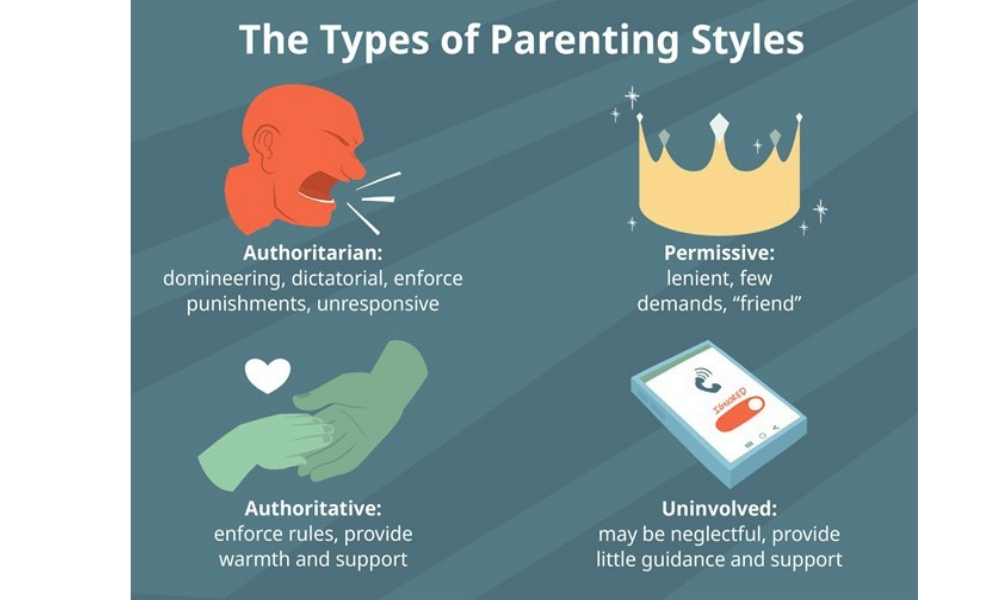
(Originally known as Authoritarian Parenting)
This style is built entirely on the concept of absolute hierarchy, izzat, and keeping the neighbors impressed. The parental word is law, and any attempt at a debate is immediately shut down as badtameezi. Love in these homes isn’t expressed through hugs or emotional validation, but through pure duty—paying school fees, providing food, and ensuring societal security. The underlying rule is that children must fulfill the parents’ unachieved dreams, prioritizing family reputation over personal happiness.
Real-world scenarios:
• When a student scores a massive 92% on their boards, the immediate response isn’t a celebration, but a cold question asking where the other 8% went and why Sharma ji’s kid got a 98%.
• If a college student brings up a passion for graphic design or photography, the conversation is ended instantly with a reminder that they are preparing for the UPSC or engineering exams because hobbies don’t pay bills.
• When an argument breaks out and a teenager tries to explain their perspective, they are immediately cut off with a sharp warning about raising their voice in front of their elders.
The “Let’s Sit and Discuss It” Council
(Originally known as Authoritative Parenting)
This is the modern, evolving Indian household that manages to balance traditional respect with emotional intelligence. Parents still hold firm boundaries regarding academics, culture, and ethics, but they treat their children as independent individuals rather than extensions of themselves. Communication goes both ways; mistakes are viewed as a part of growing up rather than a stain on the family name, creating a space where the child feels safe to tell the truth without fearing a flying footwear incident.
Real-world scenarios:
• When a low test score comes home, the parent doesn’t lose their temper; instead, they acknowledge the child’s effort, reassure them that a single exam doesn’t define their worth, and sit down to figure out a better study routine together.
• If a child wants to pursue an unconventional career path, the parents don’t blindly shut it down; they ask for a concrete plan on how the child expects to survive financially, offering their full support once they see genuine dedication.
• When a teenager accidentally drops and shatters an expensive piece of kitchen crockery, the parent checks if they are hurt first, tells them to be more careful, and hands them a broom to clean it up together.
The “Mera Beta Raja Beta” Syndrome
(Originally known as Permissive Parenting)
Often found where parents want to overcompensate for their own overly strict childhoods, this style completely lacks boundaries. The child’s immediate happiness and comfort are prioritized above everything else, often leading to a dynamic where the kid runs the house like a mini-dictator through sheer tantrum power. Parents actively shield their precious offspring from any form of accountability, frequently blaming external factors like school pressure or bad teachers for the child’s poor behavior.
Real-world scenarios:
• If a child fails an internal school test, the parent will march into the principal’s office to argue that the teacher doesn’t know how to grade properly and that the school environment is just too stressful for their highly intelligent child.
• During dinner, if a child refuses to eat unless a smartphone screen is playing videos right in front of them, the parent gives in immediately just to avoid a meltdown.
• When the child speaks rudely to a relative or a house help, the parent simply laughs it off and says they are just a child who will naturally learn when they grow up, completely bypassing any correction.
The “Suno Sabki, Karo Apni” Method
(Originally known as Natural Consequences / Detached Supervision)
This is the highly pragmatic approach emerging among younger, burnt-out Desi parents who refuse to play the role of the helicopter parent. It operates on a simple rule: the parent gives a clear, fair warning, steps back, and lets reality deliver the punchline. There is no constant nagging or saving the child from their own laziness. If the child makes a bad choice, they face the full, unshielded consequences of it alone—the parents are just there to watch the show.
Real-world scenarios:
• When a teenager spends an entire week gaming instead of studying for finals, the parent warns them twice and then stops asking. When the report card comes back with a failing grade and the school calls, the parent sits back and tells the teenager to go fix their own mess with the principal.
• If a college student blows their entire monthly allowance on expensive cafés and clothes in the first week, the parent flatly refuses to send an extra rupee, leaving them to survive on basic hostel food and walk to campus for the next three weeks.
• When a school kid refuses to wake up on time despite multiple alarms, the parent stops pulling off the blankets, lets them sleep in, and calmly watches them miss the school bus, leaving them to face the fury of the school coordinator for missing an important test.
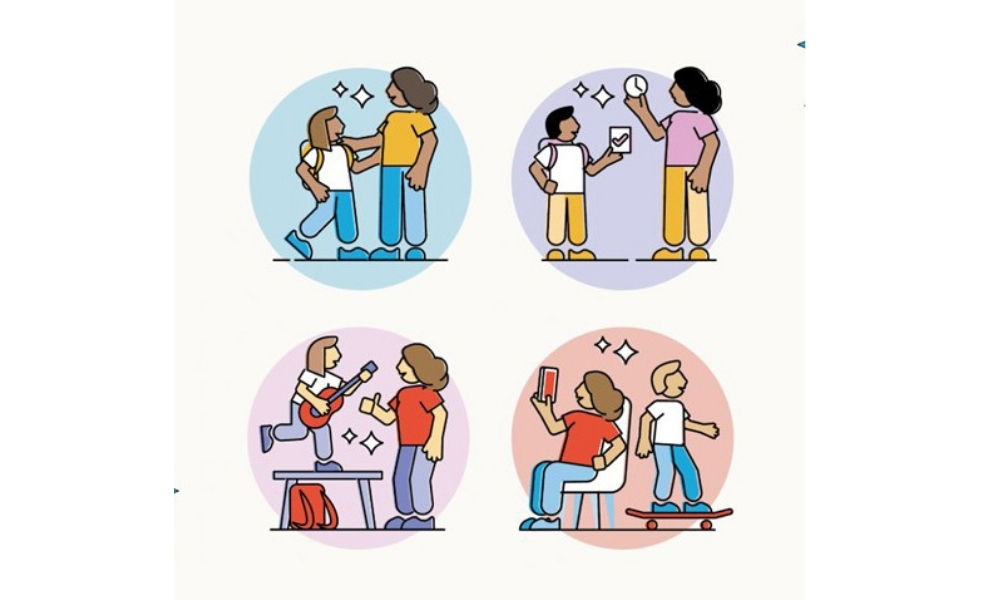
All these parenting styles have their own consequences and advantages, though definitely not in equal measure.
The household environment and parental approach deeply shape an individual’s adult personality. A child who looks perfectly obedient and always follows orders at home might grow up completely incapable of sharing his views in a corporate meeting or standing up against what is wrong—simply because he was never allowed to speak up as a child. He might find himself needing someone else’s consent every single time he makes a move because he was never allowed to make decisions or learn the reasoning process that goes behind them. He might make a great, compliant employee, but leadership will be entirely missing from his personality.
Similarly, consider your “Raja Beta” who was always brought up expecting a “Yes.” No matter how wrong he was, you, trying to be the perfect parent, provided everything he demanded. Now, that kid grows up completely unable to handle hearing the word “No.” We are already seeing the dark reality of hundreds of these pampered ‘Raja Betas’ who turn aggressive or assault women the moment they encounter a “No.”
This example isn’t meant to scare you; it is meant to make readers realize the heavy, real-world importance of child-rearing. Your love, attention, availability, and support shape their core personalities. And these individuals are the ones who go on to build society. Parenting is not just about bringing up a child; it is about preparing human resources for a developing nation.
The Modern Parenting Crisis
Every generation of parents faces its own distinct crisis, and their unique struggles should never be downplayed. Here are some of the most common crises modern parents are battling today:
• The Identity Crisis:
“If I am highly educated, how can I just stay at home? What if the most productive years of my life are entirely consumed by child-rearing?”
These are incredibly common thoughts among new parents, especially mothers who find themselves labeled as “Just Homemakers.” In reality, they are performing a role that benefits the entire nation and the whole Ummah. Society has fed us the toxic narrative that if you aren’t working a corporate job, you have wasted your education. Seriously? We were not born just for a rat race. Education gives you a way of living life; let’s stop associating it strictly with a 9-to-5 job and money-making.
On the flip side, if a woman chooses to work while raising babies, she is instantly subjected to judgmental glances and the constant, nagging fear of losing her connection and missing special moments with her baby. We need to understand that child-rearing is not the job of the mother alone. It is time to support all mothers and start collectively taking accountability for these kids—they are, after all, the next front line of the Ummah.
• Lack of Trustworthy Guidance:
Parents today are genuinely confused about whose advice to follow. Do they listen to grandparents who offer traditional parenting (the old manual), or social media influencers who paint child-rearing as this incredibly easy, cool, aesthetic journey?
The latter often backfires, making real-world parents feel like they are failing because their lives don’t look perfectly balanced and filtered. When their own trial-and-error experiments fail, exhaustion sets in. People desperately need access to professionals who have actually studied human behavior and truly understand modern psychological dynamics.
• Technology and Hyper-Trends:
No matter how hard parents try to filter out negative influences, social media is omnipresent; it cannot be detached from modern life. Every generation now interacts with social media differently, but entertainment media is aggressively rewriting definitions and values for our kids.
Boys are misunderstanding healthy masculinity by chasing the toxic “Alpha Male” trend, while girls are misunderstanding genuine equality by adopting a superficial, fake brand of feminism. It wouldn’t be wrong to say that social media is doing the primary upbringing of Gen Z and Gen Alpha right now.
It is a massive threat.
What To Do Next?
Parents are always doing the absolute best they can with the tools they have, and they deserve a collective salute. There is no doubt why Allah commanded us to respect them in the highest possible manner immediately after establishing Tawheed; it is a direct acknowledgment of the physical, emotional, and economic sacrifices they make for their children.
But working on our structural setbacks is just as important as appreciation.
To bridge this divide, consciously working on the generation gap is critical. We must actively seek to understand the unique needs of the newer generation while honoring the expectations of the older one. Parents need to actively equip themselves with an understanding of new trends, current ideologies, and modern mental struggles to properly guide their children. We have to be completely aware of the long-term consequences of our parenting patterns and daily actions.
Alhamdulillah a full of facts and very engaging thoughts are shared by you dear,many congratulations.
n6q2kn
e0s5k1
yact8m
ulsbb3
[2644]bajibetting Official Login | সেরা অনলাইন ক্যাসিনো ও অ্যাপ ডাউনলোড,bajibetting-এ লগইন করে সেরা অনলাইন ক্যাসিনো গেম উপভোগ করুন। বিকাশ দিয়ে টাকা জমা এবং অ্যাপ ডাউনলোড করে আজই খেলা শুরু করুন। visit: bajibetting