
The author is an educationist & social worker
Hijrah teaches a very important lesson that faith in God does not negate the need for careful planning and strategic action. Rather, it beautifully demonstrates the harmony between complete reliance on God (Tawakkul) and the responsible use of human effort and wisdom.
For thirteen years after the beginning of his prophethood, Prophet Muhammad ﷺ preached the message of Islam in Makkah. When he began publicly preaching the message of Islam, it directly threatened the socio-economic status quo of Makkah. The tribe of Quraish, which also happened to be the tribe of the Prophet ﷺ, was dominant, and they were the then custodians of the Kabah. They relied heavily on the lucrative pilgrimage trade centred around the Kabah, which housed hundreds of idols. Prophet Muhammad’s message of Monotheism threatened this economy. It posed a danger to their political power, social hierarchy and religious authority. Initially, the message of the Prophet Muhammad ﷺ was met with ridicule; later, the early Muslim community, particularly those without tribal protection, soon faced severe physical torture, public humiliation, and confinement. Despite immense hardships, the Prophet ﷺ and his companions remained steadfast, calling people to the worship of one God with wisdom and patience. Eventually, all those who supported the Prophet’s mission were subjected to relentless persecution, economic boycott, social isolation, and physical assault. Hence, Hijrah, the historic migration, was not a sudden decision, but rather the culmination of over a decade of intensifying social, economic, and existential pressures.
The persecution by the Quraish escalated so much that they forced the Prophet’s clan, the Banu Hashim, to withdraw their protection of him and instituted a total boycott of the clan. For three gruelling years, Muslims and non-Muslim members of the Banu Hashim were forced into a barren valley. They were barred from buying food, selling goods, or marrying outside their clan. This caused immense starvation and psychological trauma, weakening the health of many community members.
Shortly after the boycott ended, the Prophet suffered two devastating personal and political losses. First was the passing of his beloved wife, Khadija, who had been his primary emotional support and a strong facilitator of his divine mission. Soon after, his uncle and protector, Abu Talib, passed away. Abu Talib, despite not accepting Islam, had fiercely shielded the Prophet using his high status in Makkan society.
With Makkah being completely closed off for his
The turning point came during the pilgrimage seasons in the tenth and eleventh years after prophethood when the Prophet ﷺ met with a small delegation from Yathrib (later named Madina). They invited the Prophet to relocate to their city and promised to protect him and his followers as their own. Following this development, the Prophet ﷺ instructed the Muslims in Makkah to begin migrating to Madinah in small groups without attracting the attention of the Quraish. The strategy was deliberate. This secret migration took place over roughly three months. It was highly organised, incredibly tense, and filled with personal sacrifices. These early migrants left behind their homes, businesses, and possessions solely for the sake of God. Their arrival helped establish the foundations of the Muslim community in Madinah. They were welcomed by the Ansar (Helpers) of Madinah, whose generosity became a shining example of brotherhood in Islam.
Fearing that a Muslim stronghold in Madina would threaten their northern trade routes and other socio-religious interests, the Quraish leaders hatched a final plot. The assassination of the Prophet Muhammad! They conspired that a representative from every major clan would simultaneously stab the Prophet, making it impossible for his family to seek blood revenge. Informed by divine revelation, Prophet Muhammad left his home under the cover of night, leaving his cousin Ali (RA) in his bed to delude the elite guards, and began his journey to Madina.
The Meticulous Planning
What is often overlooked while narrating the history of Hijrah is the extraordinary degree of preparation that preceded it. The Prophet was not merely a spiritual leader; he was a strategist of remarkable clarity and foresight. The Hijrah was not a panicked flight; it was a meticulously orchestrated operation. Contrary to the misconception that reliance on God means abandoning worldly means, the Prophet demonstrated that proper planning is itself an act of responsibility.
Selecting a Travel Companion
The Prophet chose Abu Bakr (RA) as his travel companion. Abu Bakr (RA), with his prudence, demonstrated remarkable foresight and readiness for the Hijrah. Knowing that the Prophet might one day receive permission from Allah to migrate, he purchased and carefully prepared two strong camels, months in advance. He fed and cared for them diligently so that they would be fit for the arduous journey across the desert when the time came. His actions teach us that believers are required to take every lawful means available and then place their trust in God for the outcome.
Misdirecting the Enemy
On the night of the assassination plot, the Prophet instructed his cousin Ali ibn Abi Talib (RA) to sleep in his bed, wrapped in the Prophet’s cloak. This was a calculated act of misdirection. The Quraish, watching the house, would believe the Prophet was still inside. Ali (RA) displayed remarkable courage in agreeing to this, fully aware of the danger. This bought the Prophet and Abu Bakr (RA) the time they needed.
Choosing an Unexpected Route
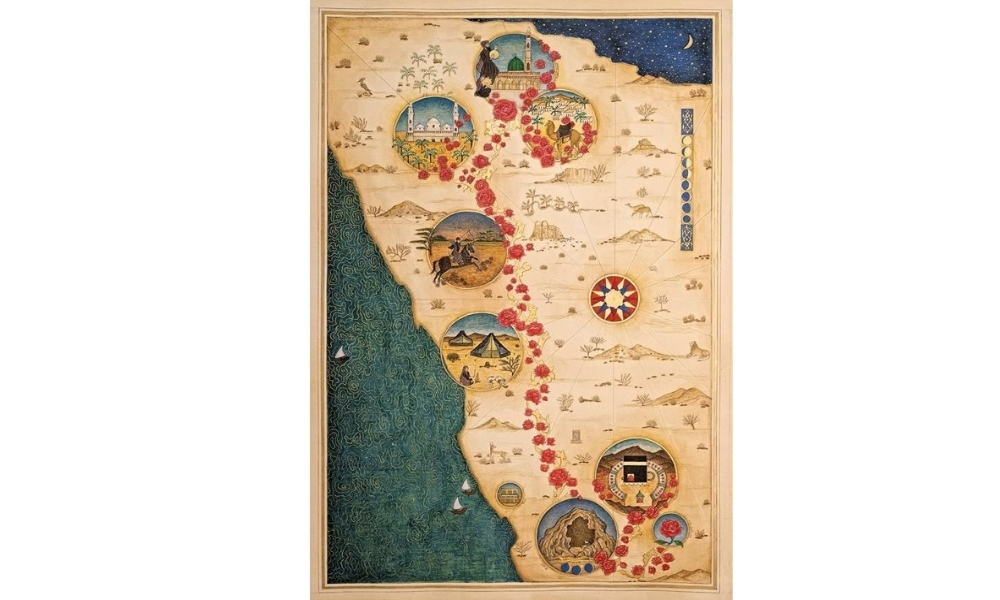
Instead of taking the usual northern route to Madinah, which was the obvious and expected path, the Prophet first travelled south towards Yemen and stayed in the cave of Thawr for three days before turning North along the Red Sea coast. This strategic diversion demonstrated sharp tactical thinking, confusing the Quraish pursuers and buying valuable time before continuing the journey northward. While the enemy searched in predictable directions, the Prophet moved in the unpredictable one.
Choosing an Excellent Guide
The Prophet hired Abdullah ibn Urayqit, an experienced desert guide who was not yet a Muslim, but was known for his trustworthiness and his expert knowledge of desert routes. This shows a key principle that competence and reliability were valued regardless of religious affiliation when the task demanded it.
Using Intelligence and Logistics
Every aspect of the journey was carefully organised, and contingency was planned at every turn. The migration plan was shared only with a handful of trusted individuals. Information was compartmentalised so that each person knew only what was necessary for their role, thereby minimising the risk of exposure. Abdullah ibn Abu Bakr (RA) was assigned the task of gathering intelligence during the day about the Quraish’s plans and movement and secretly going to cave of Thawr at night to convey them. Asma bint Abu Bakr (RA), braving the watchful eyes of the enemy, undertook the crucial task of supplying food and provisions to the cave. She also gathered secret information and conveyed it. Amir ibn Fuhayrah, Abu Bakr’s freed slave, played another vital role. He grazed his flock of sheep along the routes taken by Abdullah and others, causing the sheep’s hoofprints to erase human footprints. The sheep also provided fresh milk for the travellers. This was a very clever method of concealing evidence and avoiding detection.
Each individual contributed according to their strengths, highlighting the Prophet’s exceptional ability to identify talent and delegate responsibilities effectively.
The Calm and Composed Leader
Perhaps the most profound aspect of the Hijrah is the demeanour of the Prophet throughout. Even in the face of grave danger, he remained calm and composed. When the Quraysh search party came within metres of the cave entrance at Thawr, Abu Bakr (RA) whispered, “O Messenger of Allah, if one of them were to look at his feet, he would see us.” The Prophet replied with complete serenity: “O Abu Bakr, what do you think of two, the third of whom is Allah?” Calmly, he reassured Abu Bakr, saying, “Do not grieve; indeed, Allah is with us.” Here is a courageous and optimistic leader who did not panic a bit but was utterly grounded in Tawakkul (reliance on God) while simultaneously having done everything humanly possible to ensure success.
The Incident of Suraqah
One of the most remarkable incidents during the Hijrah was the encounter with Suraqah ibn Malik. Tempted by the large reward announced by the Quraysh for capturing the Prophet ﷺ and Abu Bakr (RA), Suraqah set out on horseback to pursue them. He was confident that he would succeed and claim the reward. However, as he drew near, his horse repeatedly stumbled and sank into the ground. Realising that extraordinary divine protection surrounded the Prophet, Suraqah became fearful and sought safety. Instead of retaliating against a man who had come to capture him, the Prophet responded with mercy and assurance.
In a moment that reflected absolute confidence in God’s promise of great victory to the believers, the Prophet prophesied that one day Suraqah would wear the bracelets of the Persian emperor, Kisra. It seemed unimaginable at that time. The Muslims were the ones who were forced to leave their homes and possessions behind, while the mighty Persian Empire stood as one of the world’s greatest powers. Yet years later, during the caliphate of Umar (RA), the Persian Empire fell, and Suraqah was indeed presented with Kisra’s bracelets, fulfilling the Prophet’s prophecy.
The story of Suraqah teaches several profound lessons. It demonstrates that God’s protection is stronger than any human scheme; when God wills to safeguard someone, no force can harm them. It also highlights the Prophet’s optimism and vision. Even in the darkest moments of uncertainty, he looked ahead with confidence to a future shaped by the divine promise. The incident further teaches the power of mercy and forgiveness, as the Prophet treated a pursuer with kindness rather than vengeance. Above all, it reminds believers that apparent weakness today can be transformed into strength tomorrow when one remains steadfast in faith, patience, and trust in the divine decree.
His farewell to the city of his birth, Makkah, was characterised not by bitterness but by love. Looking back at the city, he emotionally said: “By Allah, you are the most beloved of Allah’s lands to me, and had your people not driven me out, I would not have left you.”
The lessons of Hijrah extend far beyond history. It is a treasury of timeless wisdom.
1. Every action of the Prophet during Hijrah served a higher objective. Successful individuals and organisations require clarity of mission and long-term vision.
2. He taught that great goals require systematic preparation. Careful planning is not contrary to spirituality; it is part of Islamic excellence (Ihsan).
3. The success of Hijrah depended on contributions from men and women, young and old, each fulfilling a unique responsibility. Communities thrive when talents are recognised and coordinated.
4. The Prophet ﷺ endured years of hardship before victory came. Hijrah reminds believers that trials often precede transformation and patience during adversity is truly rewarding.
5. The Prophet ﷺ showed that trust in Allah with action is the characteristic of a believer. It is encouraged to tie the camel while trusting Allah, teaching that effort and reliance must go together.
6. Hijrah gave a profound lesson that positive change always requires sacrifice. It required leaving one’s home, wealth, and comfort for the sake of faith, teaching that lasting change often demands sacrifice and courage.
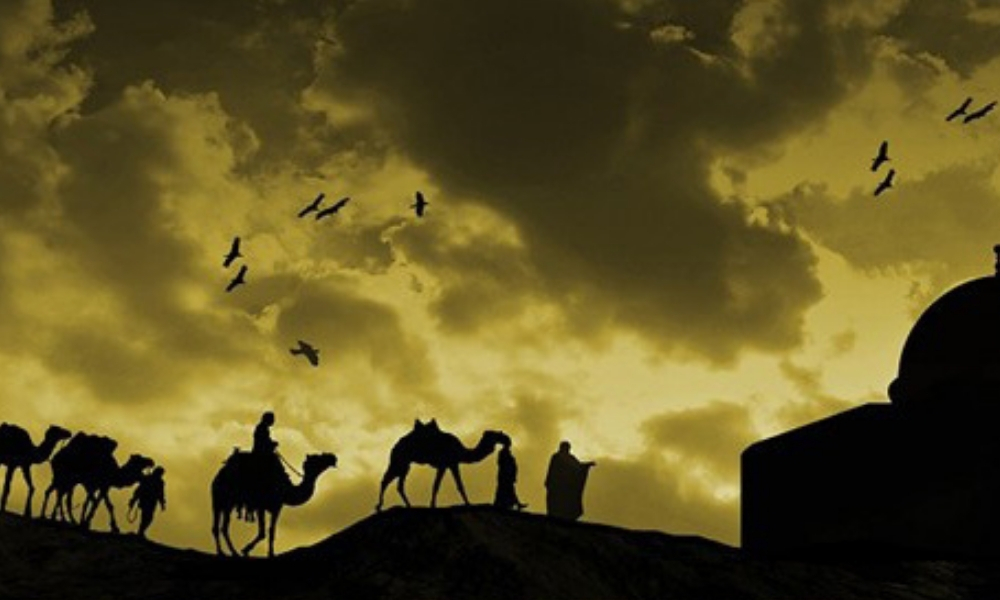
When the Prophet ﷺ arrived in Madinah, the entire city came out to receive him. The atmosphere was one of overwhelming joy. It is reported that women and children sang “Tala’a al-Badru Alayna”, which means: The full moon has risen upon us. This was a warm and joyous welcome befitting not just a leader, but a light of guidance and solace.
In Madinah, the Prophet immediately set about building the foundations of a society. He constructed the first mosque, Masjid an-Nabawi (The Prophet’s Masjid), which served as a house of worship, a community centre, a court, and an educational institution simultaneously. He formulated the Constitution of Madinah, the world’s first written constitutional document, establishing rights and responsibilities for Muslims, Jews, Christians and other tribes living together. Brotherhood was established between the Muhajirun (migrants) and the Ansar (helpers), binding the community through bonds stronger than blood.
The Hijrah was not an escape from persecution but a strategic move that changed the course of history. It transformed a small persecuted community into a confident society founded upon justice, faith, and brotherhood.
As we commemorate the Hijrah each year, we are reminded that every journey toward righteousness requires conviction, sacrifice, planning with wisdom, working with excellence, relentless perseverance, and unwavering trust in God. In this timeless event lies a blueprint not only for spiritual growth but also for effective leadership, community building, and personal transformation.
DID YOU KNOW?
Mecca and Medina lie roughly 450 km apart. Tradition holds that the Prophet and Abu Bakr covered this
distance in about eight days — far faster than the 10–14 days a typical caravan took.
Before setting out, the Prophet & Abu Bakr hid for three days in the cave of Thawr, south of Mecca, while search parties combed the city for them.
His first stop near Medina was Quba, where he
established what is recognised as the first mosque built in Islamic history.
Soon after arriving, the Prophet drafted the Constitution of Medina — an agreement between Muslim migrants and Medina’s existing tribes, including Jewish clans, that is often cited as one of history’s earliest written constitutions.
k0edhb
Signing up was a breeze and the welcome bonuses are actually worth it. If you are looking for a fresh start, jiliplay888register is the way to go.