
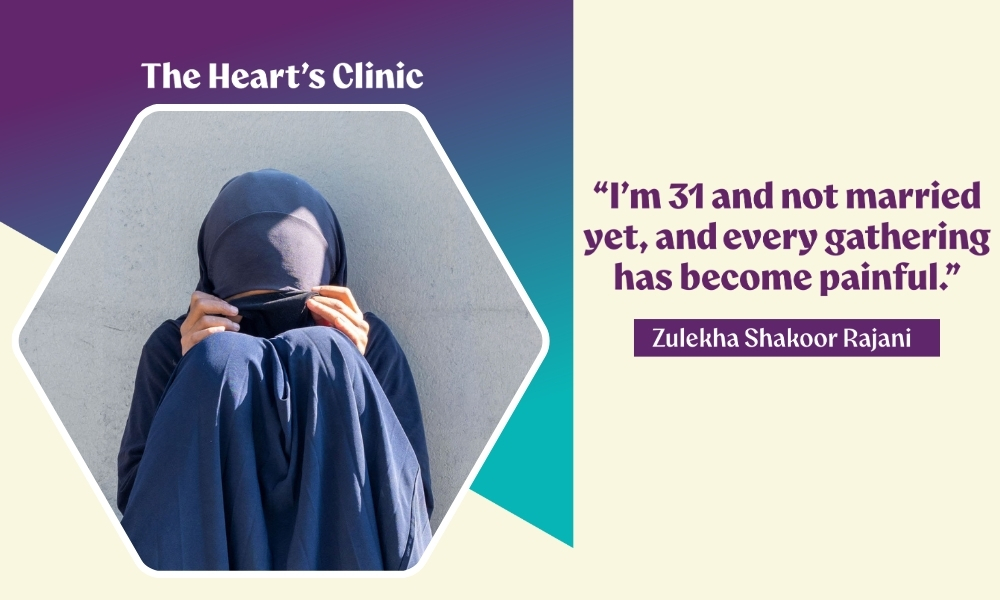
Zulekha Shakoor Rajani is a Counselling and Spiritual Psychologist specializing in Islamic Psychology, with over 8,500 hours of clinical practice. She serves as the Clinical Director and Head of the Department of Islamic Psychology (Research, Training & Psychoeducation) at Ummeed Counselling Centre, a unit of Ummeed Deaddiction and Rehabilitation Centre, Bengaluru. She holds an M.Sc. in Psychology and a Diploma in Islamic Psychology from Cambridge Muslim College (Cambridge, UK), with advanced training through the Khalil Center (Istanbul, Türkiye), Avicenna Academy (Indonesia), and Al-Balagh Academy (UK). She is a Research Fellow, Supervisor, and Facilitator at Al-Balagh Academy (UK), a Facilitator at The Quran Institute (Al-Madad Outreach, UK), and an Executive Advisory Member of ISIP. A TEDx Speaker on bringing the soul back into mainstream conversations on mental health, she was recognized among the AIMDC 40 Under 40 Leaders (2025) for her contributions to faith-integrated mental healthcare.
Send your questions at [email protected]. Full anonymity will be maintained.
Question
I am 31 and still not married. Every family gathering turns into questions about it, and my mother cries about it often. I have started dreading weddings and even avoiding relatives. I have prayed for years. I make du’a regularly and do a lot of istighfar, hoping that Allah will open this door for me. I have tried to be patient, and I keep telling myself to trust Allah’s timing, but sometimes I wonder why, despite asking for this for so long, it still has not happened. Lately, I have started to feel like something is wrong with me. How do I cope with this without losing hope or feeling like there is something lacking in me?
— Sister, 31, Hyderabad
Answer
Let me begin by naming what I think may actually be hurting. The first pain is not being married yet, and the second is the feeling of being watched and pitied, while also seeing the people close to you, especially your mother, carry their own worry about it. It is entering a family gathering already wondering who might ask, hearing another conversation about someone’s daughter, or receiving another wedding invitation and feeling a heaviness before you have even decided whether you will attend. And then there are your mother’s tears, which are particularly difficult because you know they come from love and concern, while you are carrying your own uncertainty at the same time. There is something exhausting about having a private ache and repeatedly finding yourself in rooms where that ache becomes a concern for every relative and acquaintance.
After a while, you may begin anticipating questions before anyone has asked them. You may avoid certain relatives because you do not have the energy to have the same conversation again. You may dread weddings not because you cannot be happy for other people, but because being there brings you face to face with something you deeply want and still do not have yet, while also making you conscious of everyone else noticing its absence. When these situations have repeatedly become painful, it makes sense that you have begun to dread them. Sometimes the heart remembers what has hurt long before we consciously realise that we are bracing ourselves for it.
But there is another shift that can happen when a person has been waiting for something for a long time. In the beginning, the question may have been, “When will Allah grant this?” After enough waiting and comparison, it can quietly become, “Why has Allah not granted this to me?” And then, almost without us noticing, it becomes, “What is wrong with me?” At that point, the waiting is no longer only about marriage; it has begun to affect the way you see yourself.
This is where we have to be careful about what the nafs begins to tell us. Shaytan can seize moments of vulnerability and whisper conclusions that deepen our distress, while the nafs, already wounded by comparison and uncertainty, can begin searching for an explanation. Perhaps I am not attractive enough. Perhaps there is something difficult about me. Perhaps Allah is displeased with me. Perhaps there is something everyone else can see that I cannot. Not every painful thought is necessarily from Shaytan, but we should also recognise that not every thought deserves to be believed. A thought can arise from hurt, comparison, the nafs, or waswasah, and that does not make it true.
You begin to experience not being chosen as though it were evidence that there is something unworthy of choosing in you. Yet sometimes what hurts us most is not only what has happened, but what we have slowly come to believe it says about us. Being unmarried is one circumstance in your life; it does not have to become a judgement about who you are.
This is where our understanding of qadr can become protective of the heart. Allah tells us, “To Allah belongs the dominion of the heavens and the earth. He creates what He wills. He gives to whom He wills daughters, and He gives to whom He wills sons…” (Surah ash-Shura 42:49). There are things we can work towards, and there are things whose timing remains outside our hands. Marriage is one of them. You can take the means, make du’a, remain open to suitable opportunities and work on yourself, but you cannot determine when, how or through whom it will come.
There is a beautiful reminder in a hadith about the way Allah’s provision reaches us:
“No soul will die until it has received all its provision, even if it is slow in coming. So fear Allah and be moderate in seeking provision…”
— Sunan Ibn Mājah 2144
The fact that something is slow in coming does not mean that it has been forgotten. We can become so focused on when something will arrive that we begin to mistake delay for deprivation. But our timelines are not the measure of Allah’s provision.
And when you have been making du’a for years, the waiting can become painful in another way. You may begin to wonder whether Allah has heard you at all. Prophet (s.a.w) addressed this impatience directly: the believer’s supplication continues to be answered so long as they do not become impatient and say, “I made du’a, but it was not answered.” (Sahih Muslim 2735; Sahih al-Bukhari 6340)
This does not mean you have to stop wanting marriage. Sometimes, after we have waited for something for a long time, our hearts can grow bitter, especially when we begin to think in all-or-nothing terms. You are allowed to want companionship, affection, children, friendship and sakinah. You are allowed to feel disappointed. Tawakkul does not require you to become indifferent to what your heart longs for. It asks you not to let the delay become a conclusion about your relationship with Allah or about your own worth.
Your mother’s tears may make this harder because you are carrying not only your own longing but also the worry of someone you love. Perhaps she fears for your future, perhaps she feels that time is passing, perhaps she is affected by what relatives say. But your parents, too, are being given their own experience of this. They feel the joy of their children’s lives, but they also encounter its uncertainty, disappointment and pain. These moments can be a test for them just as they are for you, and when they meet that test with patience, trust and turning to Allah, their struggle is not without meaning or reward. Her worry, therefore, is not evidence that you have failed her. You can understand her pain, make space for it, and still recognise that it is hers to carry before Allah, just as your waiting is yours.
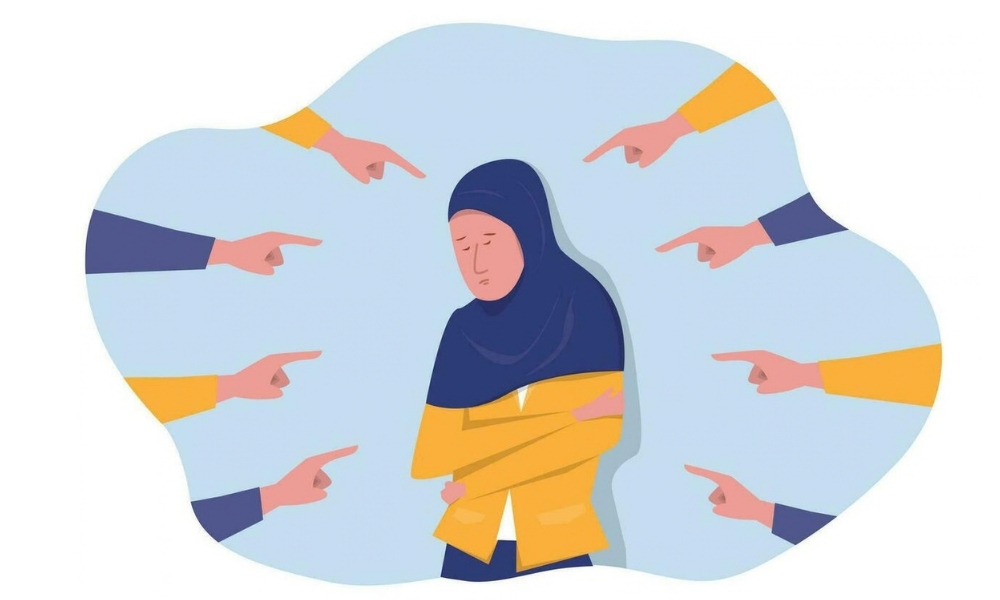
The same applies to relatives. Their questions may be casual to them and deeply personal to you. When the subject is already tender, curiosity can become shame. You stop thinking simply, “I have not married yet,” and begin feeling, “I am the woman everyone has noticed has not married.” That is a much heavier identity to carry. You do not have to keep making yourself available for long conversations that leave you feeling diminished and hurt. You can choose which gatherings you attend, how long you stay and what you are willing to discuss. A simple, “In sha Allah, when Allah writes it, you will all be there. Please make du’a for me,” may be enough.
It is also worth noticing what happens after the question has ended. Sometimes the relative goes home, but the conversation continues inside your head. You replay it, compare yourself with the woman who just got married and begin examining yourself for flaws. Other people’s questions slowly become your own internal questioning. And perhaps that is the part that needs the most care, because the problem is no longer only that people keep asking when you will get married; their question has begun changing the way you see yourself.
Marriage is a beautiful provision, and there is no need to minimise its importance in order to protect your self-worth. But it was never given to us as the measure of a person’s value. Allah says, “Indeed, the most noble of you in the sight of Allah is the most righteous of you.” (Surah al-Hujurat 49:13) Before you were someone’s wife, you were already Allah’s servant. Before anyone chose you, Allah knew you. Your womanhood did not begin when someone wanted to marry you, and your dignity does not diminish because you are not yet a wife.
You can still take the means towards marriage. Let trusted people know you are open to it. Consider suitable introductions. Think carefully about what you value in a spouse and what kind of marriage you want to build. Work on yourself because growth is part of tazkiyah, not because you have secretly decided that you need to become perfect before someone can love you. Prophet (s.a.w) said, “Be eager for what benefits you, seek help from Allah, and do not give in to helplessness.” (Sahih Muslim 2664)
There will also be things you cannot know. A proposal may not have worked because of incompatibility. Circumstances may not have aligned. Someone may simply not have been ready. You do not have to create a grand spiritual explanation for every closed door. Sometimes it is enough to say, Allah knows, and I do not.
What I would be careful about is allowing the waiting to become the organising principle of your life. It is easy to think, When I get married, then I will feel settled. When I get married, then I will study. When I get married, then I will finally feel chosen. And without meaning to, you can place your life on hold for someone who has not yet entered it.
Continue to learn, work (if applicable), build friendships, serve, create, take care of yourself and deepen your relationship with Allah. Not because marriage does not matter, but because your life is already happening.
And perhaps the deeper question is not only, “When will I get married?” but, “Who am I becoming while I wait?” This period may be showing you how much your sense of self has become tied to being chosen by another person. It may be teaching you to separate people’s expectations from Allah’s view of you, to set boundaries without becoming bitter and to hold longing without allowing it to become shameful.
If you are regularly withdrawing from people, dreading social situations, constantly comparing yourself with other women or genuinely feeling lesser because you are unmarried, please take that seriously. If need be, a good counsellor can help you untangle the shame, comparison and self-doubt that have gathered around this pain, so that marriage can remain something you deeply desire without becoming the condition upon which your self-worth depends.
You may not know why this has taken this long, and you may never know completely. You can continue to make du’a, take the means and ask Allah for what your heart wants without turning the waiting into evidence against yourself. The world may keep asking you when, but you do not have to let that question determine who you are.
You are already Allah’s servant, already living a life that has value beyond this one unanswered question. Marriage may become part of that life, but it does not have to become the proof that your life was valuable all along.
0 Comments