

The author is an educationist and social leader, serving as Correspondent of Hidhaaya Islamic College and Vice President of the Women Redeem Restore Society. Honored with multiple awards, she champions women’s welfare, sustainability, and Urdu literature.
Every year on June 5, people worldwide celebrate World Environment Day (WED). WED is a great way to bring attention to the need to protect our environment and encourage people to take action
The destruction of the environment affects every society in the world. As a way of life, Islam offers remarkable guidance and solutions for everyday problems, including ones that revolve around ecology. Like most religions, Islamic teachings foster care for the environment and natural resource conservation.
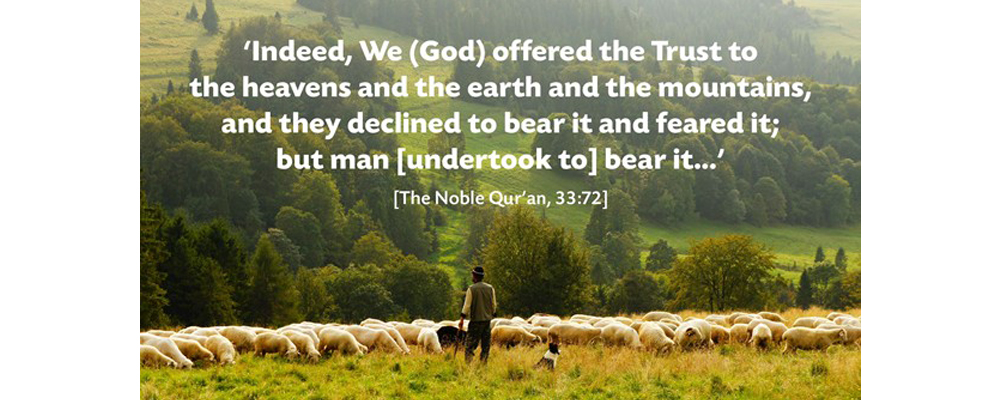
Islamic Views on Environmental Conservation and Care
Prophet Muhammad (Peace be upon him) advocated for mercy towards all living beings, including encouragement of moderation and water preservation. Muslims were obliged to take care of nature from the perspective of morality, ethics, and spirituality.
Islam promotes harmony and balance in nature, as well as a caring attitude towards all creations, as a way of life. The teachings of the Noble Qur’an and the Hadith guide humans in the responsible use of the earth’s resources, the avoidance of excess, and the maintenance of balance in nature.
Islamic Heritage in Environmental Conservation
Prophet Muhammad (PBUH) created reserves to protect natural resources in Makkah and Madinah during the early Islamic era. These were known as Hima reserves. The practice was continued by the caliphs who created reserves for military horses, treasury camels, and even destitute animals. While assisting in social and economic resilience, the HIMA system also promotes the protection of the environment.
In Islamic history, many rulers and civilisations strongly focused on water conservation. An example is the advanced agricultural dam and flood canal infrastructure set up by the Umayyads from 661 to 750 CE.
Islam and Environmental Protection
According to Qur’an 2:30, humans are representatives of Allah, and humans need to follow and manage the earth accordingly.
All life-sustaining resources get their life from Allah, and it constitutes a duty to take care of Allah’s resources and manage them properly.
According to Islamic belief, before creating humans, Allah prepared the earth with all necessary resources in perfect balance. The Quran states, “Verily, all things have We created by measure” (Quran 54:49). Everything was created with precise proportion, such as the ideal mix of gases in the air for life to thrive.
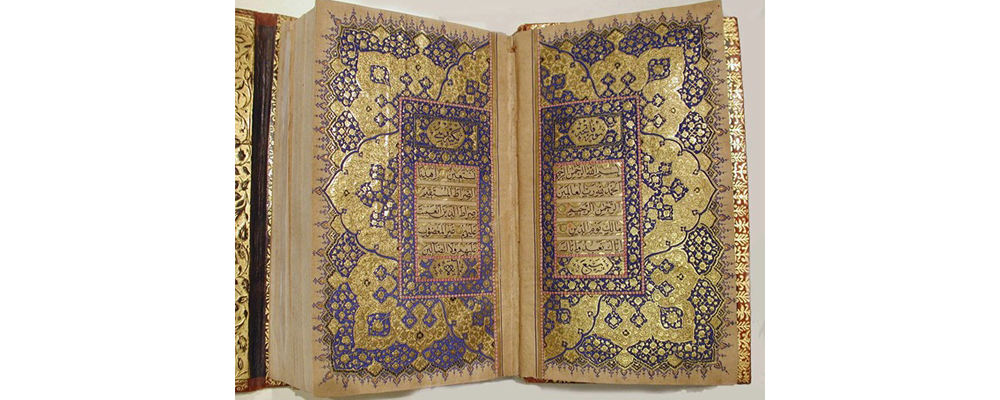
Balance and Interrelationship in Allah’s Creation
The Quran states, “As for the earth, We have stretched it out and have cast on it firm mountains, and have caused to grow in it everything well-measured.” (Quran 15:19). All living beings are interdependent—minerals support plants, plants support animals, and natural waste is recycled into nourishment.
Nature is an ecosystem that flourishes and has the perks of getting taken care of, allowing all living beings to flourish together and depend on one another. The Quran says, “And We have provided sustenance for you on it and also for those of whom you are not the providers.” (Quran 15:20)
With respect to both nature and mankind, every existing creature carefully executes what was created, with non-living elements maintaining the balance on which our universe thrives.
Earth stretches out vigorously, throwing water in to create vegetation with treasures stacked inside, and the Quran says, “There indeed are signs for those who take time to ponder. (16:12)
As seen within the boundless universe, a single element serves as a priceless jewel, as none of its existence is useless, and its beauty and virtues only gush with overwhelming satisfaction, which is astonishingly framed as eloquently by the Qur’an.
Animal Rights and Kindness in Islam
The Holy Quran mentions 31 animals, including bees, which make honey, which has many antiseptic properties and is known for curing many ailments. Some animals are known for specific qualities, and some are especially acknowledged as man’s mentors. For example, the horse and dog signify faithfulness. Apart from these facts, each animal has been assigned a duty to serve the Creator as has been mentioned in the Quran, “Have you not seen that all those who are in the heavens and all those who are in the earth prostrate themselves before Allah; and so do the sun and the moon, and the stars and the mountains, and the trees, and the beasts,…” (Quran, 22:18).
The Prophet Mohammed (PUBH) was sent as “a mercy for the entire world” (Quran, 21:107) and instructed people to be kind and show compassion to the animals they have under their custody. He further stressed that “whoever will starve an animal to death, Allah will punish him to the hellfire” (Bukhari, 3482, Muslim 2242). On the other hand, he advised people to feed and help needy animals, as there is a huge reward for treating every living thing pleasantly.
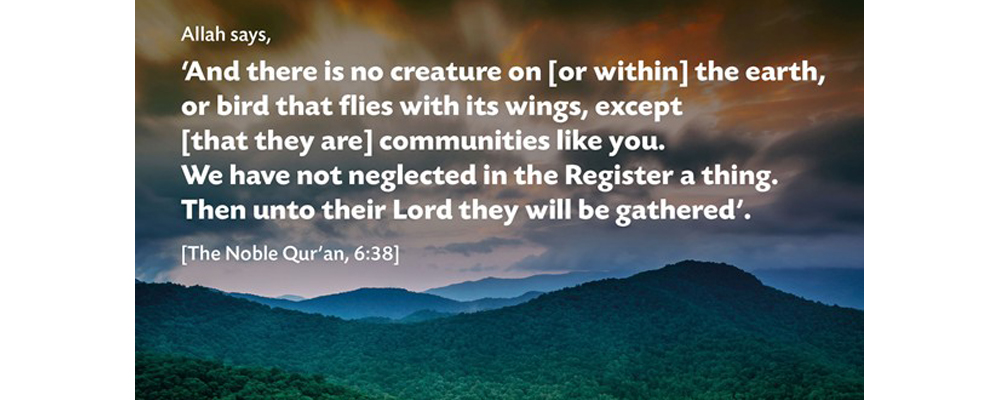
The Prophet ﷺ cursed people who took the lives of animals for sports and also prohibited causing needless suffering at the time of slaughter (Muslim, 4810). The Quran states, “There is no animal that crawls on the earth, no bird that flies with its two wings, but are communities like you.” (Quran, 6:38).
Though Islam allows hunting and fishing, these are permissible only within limits and without harming their future existence. It is stressed to take all necessary measures for the upkeep of these creatures and save them from destruction so that the coming generations can equally benefit from them.
In the Sharia, animals have a certain legal status and therefore legal rights in Islam. These rights of animals (including livestock) regarding their treatment were formulated based on the teachings of the Prophet Mohammed ﷺ. These rights are found in various books of Hadith, including Saheeh Muslim, Al Bukhari, Abu Dawood, Ibn Majah, and others.
Conclusion:
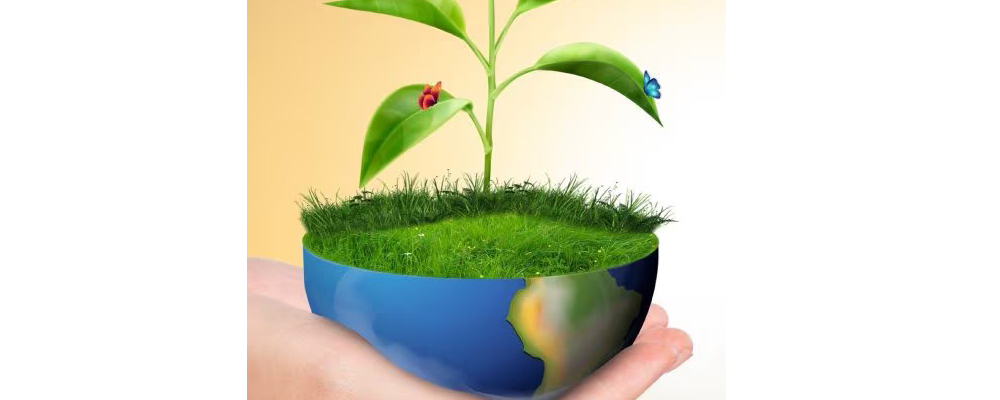
Man, as an integral part of the universe, holds a pivotal role among creation and has been granted stewardship over the earth as the best of Allah’s creations. However, he is Allah’s representative and administrator, tasked with managing the earth’s resources for the benefit of all. As a trustee, he must act with equity and responsibility.
The Prophet ﷺ said, “The world is beautiful and verdant, and Allah has made you His steward in it, and He sees how you acquit yourself” (Saheeh Muslim).
It’s an issue of discussion for the cause of Humanity and for sustainability of earth and for the cause of of our survival. Many many thanks to the writer for relating it with an important Islamic issue with the necessary Public agenda. I will translate it in Bengali and will try to publish in South Assam DAILIES.
Jazak Allah khair Brother
It’s an issue of discussion for the cause of Humanity and for sustainability of earth and for the cause of of our survival. Many many thanks to the writer for relating it with an important Islamic issue with the necessary Public agenda. I will translate it in Bengali and will try to publish in South Assam DAILIES.
Good and informative