
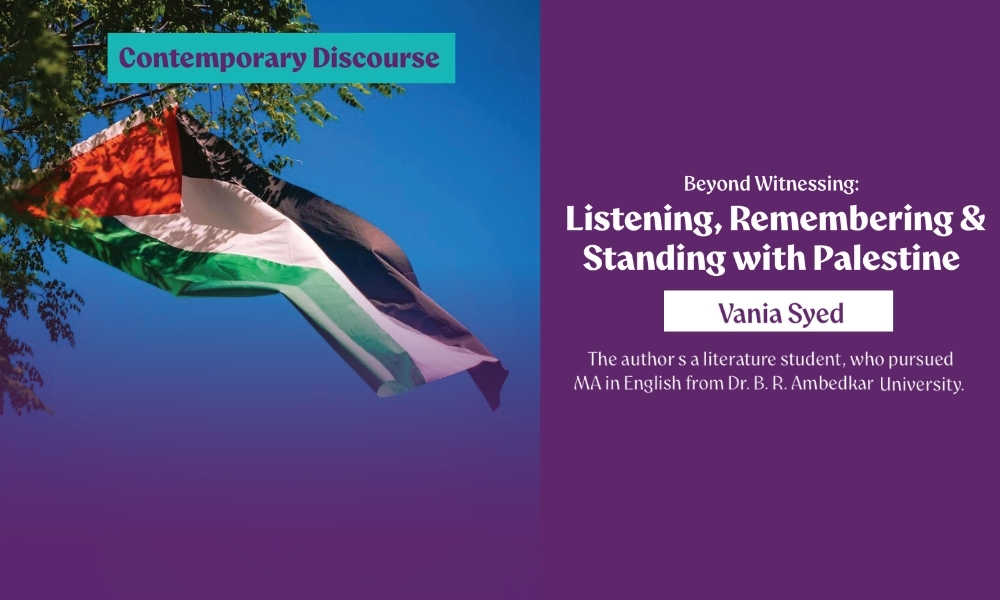
The author s a literature student, who pursued MA in English from Dr. B. R. Ambedkar University.
From Witnessing to Solidarity: What does Palestinian Solidarity Mean?
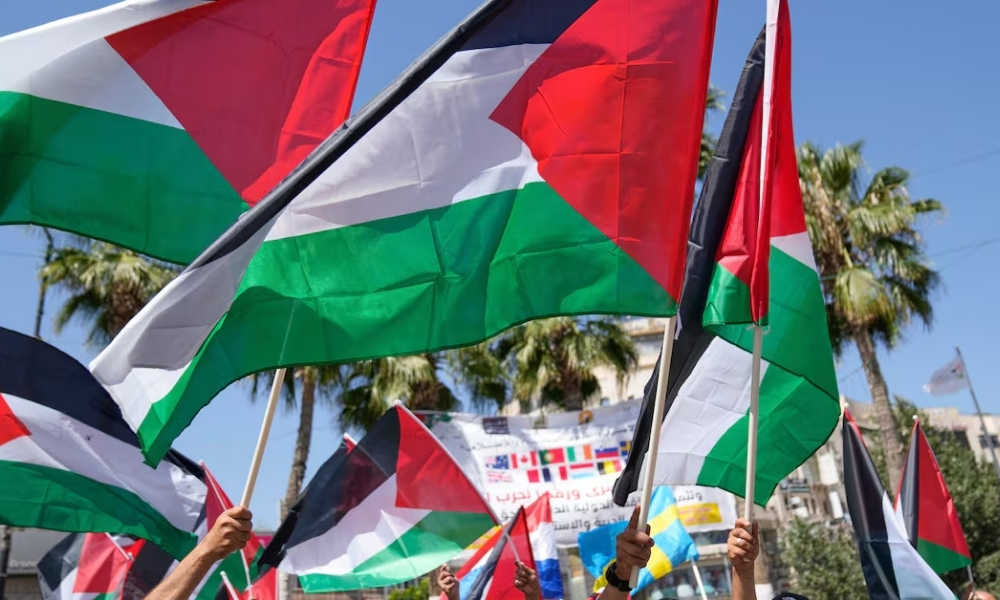
What does it mean to stand in solidarity with Palestine? The term “Palestinian solidarity” is widely used today in protests, universities, literature, social media, and different forms of political and cultural expression. But solidarity is more than simply saying that we support Palestine or feeling sad when we see images of suffering. It begins with witnessing, but it does not end there. To witness Palestine today often means encountering stories of death, displacement, destruction, loss, and suffering through news reports, photographs, videos, literature, and social media. These forms of witnessing can make us aware of experiences that are geographically distant from us. However, simply seeing suffering does not always lead to solidarity. We may see an image, feel pain or anger, and then move on. Solidarity requires us to remain engaged with what we have witnessed. It asks us to listen, remember, learn, and understand the history and political conditions behind what we see. This is why there is an important difference between witnessing suffering and standing in solidarity with those who suffer. Witnessing can be the first step, but solidarity begins when witnessing creates a sense of responsibility. It means refusing to treat Palestinian suffering as something distant or temporary. It means paying attention to Palestinian voices and allowing them to tell their own stories rather than reducing them to images of victims.
People outside Palestine may write about Palestine, raise their voices for Palestinian rights, or participate in solidarity movements, but this should not replace Palestinian voices themselves. Solidarity should instead create more space for those voices to be heard. Palestinian literature, poetry, testimony, memoirs, and other forms of cultural expression are important in this regard because they allow Palestinians to speak about their own memories, losses, homes, relationships, histories, and hopes. Literature, therefore, can become an important form of solidarity. It allows readers to encounter Palestinians not simply as victims of conflict but as people with complex lives and individual experiences. Reading Palestinian literature moves the reader beyond statistics and headlines and towards a more personal understanding of what displacement, loss, memory, and belonging mean. It also challenges the idea that Palestine can be understood only through images of violence.
Writing about Palestine does not mean claiming to speak for Palestinians. It means listening to their voices, engaging seriously with their experiences, and refusing to let those experiences disappear from academic and public conversations. Palestinian solidarity can therefore take many forms. It can be expressed through protests and collective action, but it can also exist through literature, art, teaching, research, translation, remembrance, and the sharing of Palestinian voices. These different forms of solidarity are connected by a common effort to keep Palestinian experiences visible and to challenge their erasure. The movement from witnessing to solidarity is therefore not simply a movement from seeing to acting. It is also a movement from seeing to listening, from listening to understanding, and from understanding to responsibility. Solidarity does not require us to claim Palestinian experiences as our own. Instead, it asks us to recognise our position, listen to Palestinian voices, and remain engaged with their histories and struggles. In this sense, to stand in solidarity with Palestine is not to speak over Palestinians, but to stand beside them while making space for them to speak for themselves.
Researching Palestine under Conditions of Institutional Anxiety
My engagement with Palestine and Kashmir began as an academic interest, but it slowly became something much more personal and emotional for me. When I started working on my MA dissertation, I wanted to study literature that dealt with conflict, occupation, resistance, memory, and the experiences of people living through political violence. I eventually chose Resisting Disappearance: Military Occupation and Women Activism in Kashmir and We Are Not Numbers: Voices of Gaza’s Youth as my primary texts. My dissertation focused on resistance and resilience and on the ways in which people preserve their memories, voices, and sense of homeland in situations of conflict. When I first started, I was excited about the research. I wanted to understand the texts deeply and give serious attention to the voices within them. But as I continued reading and writing, I slowly began to understand how difficult and sensitive the subject was. I was not simply studying two literary texts. I was dealing with the experiences of people who had lived through violence, disappearance, displacement, loss, and occupation. I became increasingly aware of the responsibility that came with writing about these experiences.
This responsibility also affected the way I thought about the title and language of my dissertation. My supervisor suggested that I remove “Kashmir” and “Palestine” from the title. The concern was that having these names directly in the title might make the administration, particularly the Dean, suspicious about the content of the research. I eventually accepted the suggestion and changed the title- Voices of Survival: Resistance, Resilience and the Idea of Homeland. What may appear to be a small change in the final document made me think about how even the words we use to describe our research can become important when we are working on politically sensitive subjects. As I continued with the dissertation, I also became increasingly anxious about how my work would be received. I remember feeling particularly nervous during presentations. I would think about how my professors would respond to my arguments, whether they would question my terminology, and whether I would be able to explain and defend what I was trying to say. The anxiety was not only about completing an academic requirement, it was also about whether I was doing justice to the people and the experiences I was writing about. The fear surrounding the act of writing also made me realise that solidarity can sometimes begin with something as simple as refusing to remain silent.
Towards the end of the research, this feeling became overwhelming. Just before completing it, there was a point when I actually wished that I had not chosen Kashmir and Palestine as my research areas. I felt exhausted by the emotional weight of the subject. There were moments when I quietly envied my classmates whose dissertations dealt with areas that did not carry this extent of political sensitivity. I wondered what it would feel like to work on something without constantly worrying about how it would be received, whether my words were appropriate, or whether I was doing justice to the people whose experiences I was working on. I began to lose confidence in myself and questioned whether I was capable of doing this research. At times, I felt that I had taken upon myself the responsibility of representing people whose experiences I could never fully understand. I was afraid that I would fail them somehow, that my writing would not be enough, that I would not be able to do justice to their voices, or that I would simplify experiences that were far more complicated than anything I could put into a dissertation. This was perhaps the most difficult part of writing the dissertation. I was emotionally invested in what I was reading, but I was also afraid of getting it wrong. There were moments when I was overtly conscious of the political sensitivity surrounding the subject and wondered whether my work on Palestine and Kashmir would be accepted within an academic institution
Yet I continued.
Slowly, the dissertation reached its final stages. I completed the chapters, revised the arguments, made the necessary changes, and finally submitted it. When I later looked at the final copy of my work, I felt something that I had not been able to feel during much of the writing process: relief. Looking at the completed work, I realised that all the fear, anxiety, self-doubt, and emotional exhaustion had not been meaningless. It was worth it. Today, when I think about those moments or look at my work, I realise that I did it finally, with the help of the Almighty who led me to choose this topic. I don’t claim to fully understand the experiences of the people I was writing about but what I did was listen carefully, take their voices seriously, and write about them with honesty and care. My dissertation taught me something that goes beyond the research itself. It made me realise that solidarity does not mean claiming another person’s experience as one’s own. It means listening to that experience, respecting the voice through which it is expressed, and refusing to turn away from it because it is difficult or uncomfortable. When I began the dissertation, I thought I was simply researching resistance and resilience in Palestinian and Kashmiri literature. By the time I finished, I had also learned what it means to listen to voices that are not my own. I had learned that solidarity can sometimes begin with the simple act of taking another person’s story seriously, and having the courage to continue listening even when doing so becomes emotionally difficult.
Literature and Testimony as a way of preserving Palestinian voices
My understanding of Palestinian solidarity has also developed through the different texts I have read over time. These include We Are Not Numbers: Voices of Gaza’s Youth, the poetry of Mahmoud Darwish and Refaat Alareer, the diaries and writings of Palestinian prisoners, and Arabic works on Palestinian resistance, including Mazahmat. Each of these forms of writing offers a different way of encountering Palestine. Together, they have helped me understand that Palestinian literature cannot be limited to a single narrative of suffering. It carries memories, grief, resistance, love, hope, and the desire to preserve a connection to one’s homeland. The writings collected in We Are Not Numbers bring individual Palestinian voices into focus. They remind readers that behind every number is a person with a name, a family, a history, and a future they imagine for themselves. By sharing their experiences in their own words, the writers challenge the tendency to reduce Palestinian lives to statistics. Their narratives allow readers to encounter Palestinians not simply as people affected by political violence, but as individuals who think, feel, dream, create, and speak for themselves.
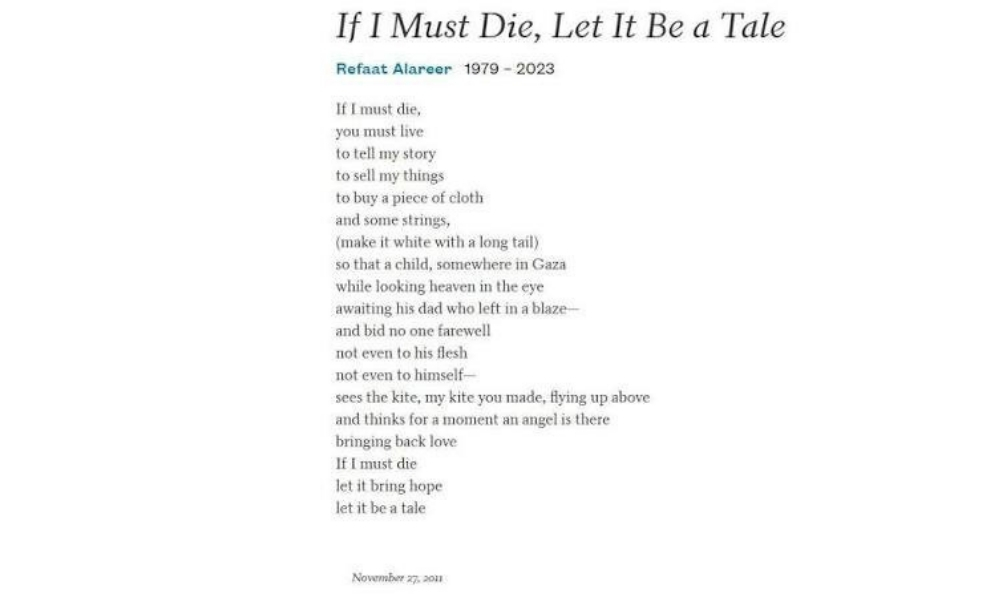
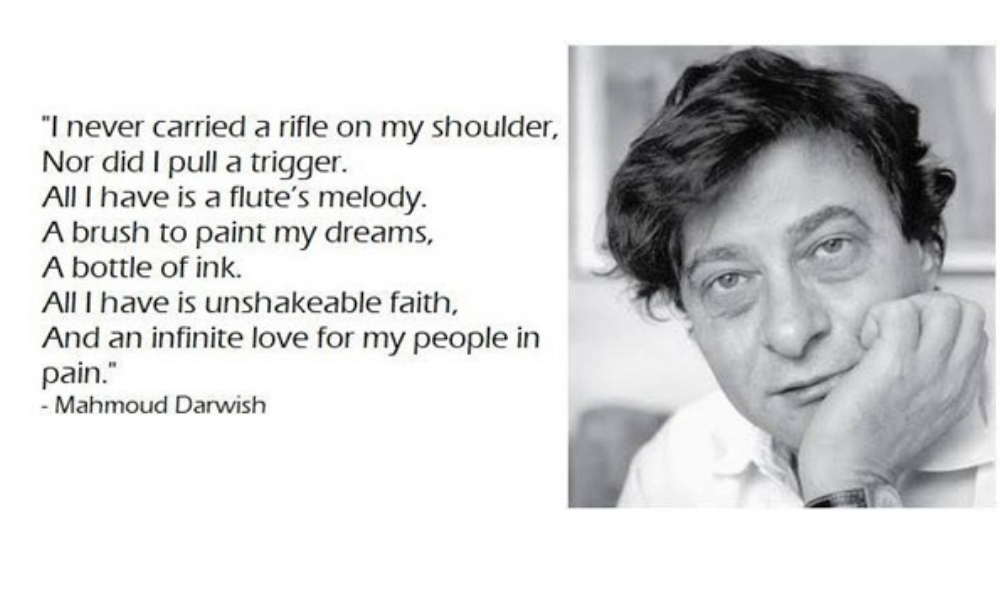
Poetry offers another way of understanding this connection between literature and solidarity. The poetry of Mahmoud Darwish, for instance, often returns to questions of homeland, exile, memory, identity, and belonging. His writing shows how a relationship with a homeland can continue through language and memory, even when physical belonging is threatened or disrupted. Refaat Alareer’s poetry, meanwhile, brings attention to Palestinian life under conditions of violence and to the importance of telling one’s own story. His poem “If I Must Die” has become widely associated with questions of survival, memory, and the continuation of a voice beyond the life of its speaker. Through poetry, personal experiences become part of a larger collective memory, allowing stories of loss and belonging to travel across geographical boundaries. The diaries and writings of Palestinian prisoners offer another important perspective. They provide a way of understanding experiences of imprisonment through the words and reflections of those who have lived through it. Such writings carry torturous descriptions of experiences that these prisoners and their families underwent, they preserve memories, thoughts, relationships, and hopes that might otherwise remain outside public view. They also remind readers that prisoners are not merely names in legal cases or political debates; they are people with individual lives and voices. Reading their accounts can therefore become an act of listening to experiences that are often discussed by others but not always heard in the words of those who experience them.
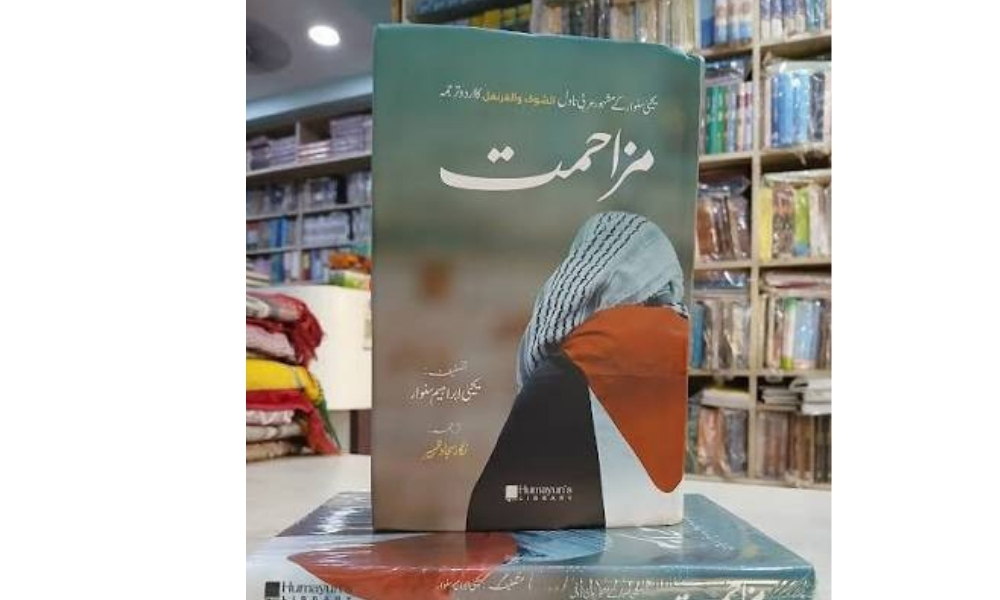
The engagement with Arabic works on Palestinian resistance, including Mazahmat by Yahya Sinwar, also encourages us to approach Palestine through its own languages and literary traditions. Reading Palestinian writing in different forms and languages opens up perspectives that become lost when experiences are encountered through a single literary or political framework. It also reminds us that Palestinian voices are not limited to the texts most familiar to international audiences. These readings have shaped my understanding of literature as more than a record of events. Literature can preserve what people remember, how they understand their experiences, and what they want future generations to know. It can challenge representations that leave little room for Palestinian voices and make space for stories that might otherwise be forgotten. Reading these works has become one way of remaining attentive to Palestinian experiences and recognising the importance of listening to Palestinians as they narrate their own lives.
Literature alone cannot end oppression or replace political action. However, it can challenge indifference, preserve memory, and create connections between people who may never meet. This also brings to mind Edward Said’s Orientalism, in which he examines how the East has often been represented through Western knowledge and narratives that present Eastern people and cultures as inferior, backward, or fundamentally different from the West. His work encourages us to question who has the power to represent others and whose voices are given authority. In the context of Palestine, this question becomes particularly important when Palestinian lives are discussed through narratives that leave little space for Palestinians to describe their own experiences. Literature and testimony can challenge dominant representations of Palestinians by changing the question from “What is happening to Palestinians?” to “How are Palestinians themselves telling us about their lives and experiences?” This shift is important. It moves Palestinians from being objects of observation to becoming subjects who speak, remember, resist, and create meaning.
The Problem of Saving Palestine
There is a problem with the language of “saving” Palestine. When we say that Palestine needs to be saved, we must ask ourselves: saved by whom, and from what? The phrase may come from a place of genuine concern, but it can also place the person who wants to save at the centre of the story, while Palestinians become the people waiting to be rescued. Their own struggles, political thought, resistance, and agency risk disappearing behind the image of the helpless victim. When Palestine is discussed only through the language of suffering and rescue, Palestinians can once again be denied the position of people who speak, think, organise, resist, and imagine their own futures. This does not mean that international support or humanitarian assistance is unnecessary. People facing violence, displacement, hunger, and destruction need material support, political accountability, and international action. The problem begins when support turns into a saviour narrative, in which outsiders imagine themselves as the primary agents of change and Palestinians as passive recipients of their efforts. Solidarity should not depend on this distinction between the person who saves and the person who is saved. Palestinians have their own voices, demands, and visions of freedom. They have documented their experiences, written about their lives, preserved their histories, and resisted attempts to erase their identities. They are not waiting for the world to discover their humanity. The world needs to recognise the humanity it has so often failed to acknowledge.
The question is not how we can save Palestine, but how we can stand in solidarity with Palestinians. This requires listening to what Palestinians themselves demand, learning about the political conditions shaping their lives, challenging the narratives that dehumanise them, and questioning the institutions and policies that sustain their dispossession. It also requires recognising that Palestinians have never been merely waiting to be saved. They have been documenting their lives, preserving their memories, organising, writing, creating, and resisting. Our role is not to become the heroes of their story, but to act in ways that support their struggle for freedom, dignity, and self-determination.
0 Comments