
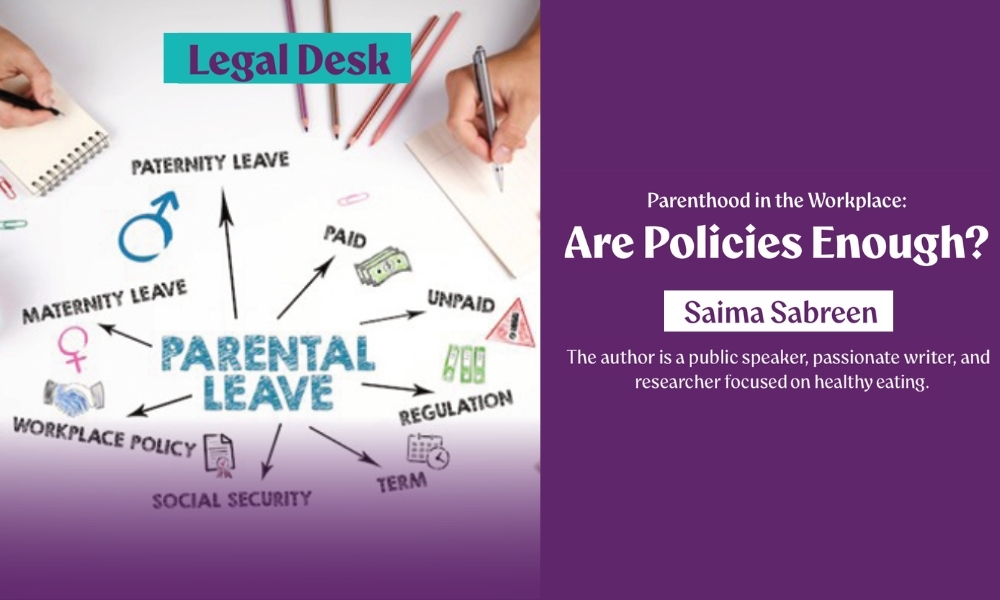
The author is a public speaker, passionate writer, and researcher focused on healthy eating.
Human life has increasingly become a competition in almost every aspect. From a very young age, infants are compared with their peers; how quickly they learn to crawl, eat independently, stay away from screens, or even complete potty training and all in the name of supporting brain development. As they grow older, they are constantly encouraged to perform better than others, because today’s world often seems to revolve around the idea of the “survival of the fittest.”
The desire to become a better person is not wrong. Most people aspire to be better partners, better parents, dependable employees, and individuals who make a positive impact on those around them. However, the pressure to excel in every role often creates new challenges. Many people feel compelled to become indispensable at work to safeguard their careers, while also striving to be the best parents for their children and maintaining meaningful relationships with family and friends. Balancing these expectations can be overwhelming.
One challenge that often goes unnoticed is the pressure associated with returning to work after maternity or paternity leave. While much attention is given to leave policies and the duration of leave offered by different organizations, the period following the return to work receives far less discussion. Yet, this transition can silently take a significant toll on an individual’s mental well-being. Without adequate support, parents are often left with limited options, resulting in either organizations losing valuable employees or parents struggling to maintain a healthy work–life balance. Let us take a closer look at three major challenges commonly faced by working parents during this phase.
The Unintended Consequences of Extended Maternity Leave
Paid maternity leave is widely regarded as an important support measure for working mothers. In fact, more than 145 countries provide some form of paid maternity leave, and many developing nations, including India, have expanded these benefits in recent years (Hyland et al., 2020). While such policies are introduced with the intention of supporting women during one of the most important phases of their lives, the outcomes are not always as straightforward as they appear. A notable example is India’s Maternity Benefit (Amendment) Act, 2017, which increased paid maternity leave from 12 weeks to 26 weeks. At first glance, the reform appeared to be a significant step towards supporting working mothers. However, research examining the impact of the amendment revealed some unintended consequences in the labour market.
Studies found that female employment declined following the implementation of the policy. Employers, anticipating the increased costs associated with longer maternity leave, appeared to adjust their hiring and workforce decisions accordingly. Among blue-collar women (earning less than ₹15,000 per month), employment declined by approximately 5.5% within six months of the reform. White-collar women (earning above ₹15,000 per month) experienced a 6% decline in employment within the first year, which increased to nearly 10% four years after implementation. Interestingly, these effects were concentrated almost entirely among younger women aged 18–35 years, who are more likely to become mothers, while women above 35 years of age were largely unaffected (Garima et al. 2025).
The findings also suggest that employers did not compensate for the increased leave costs by reducing women’s wages. Instead, a slight increase of approximately 1.8% was observed in men’s wages. At the same time, changes were noted in career progression opportunities. Researchers found that young women were less likely to be promoted into managerial positions after the policy expansion. They were also more likely to be assigned routine or manual roles that required lower levels of firm-specific expertise. In contrast, older women and male employees were more likely to move into managerial and higher-skilled positions. Men were found to be 10% more likely to receive managerial promotions and slightly more likely to transition into roles requiring greater firm-specific human capital (Garima et al. 2025).
These findings highlight an important concern. While the policy was designed to protect and support women, it may have unintentionally reinforced employer biases against hiring and promoting women of childbearing age. Researchers have further suggested that employers may substantially overestimate the likelihood of women taking maternity leave. One analysis estimated that employers behaved as though 27% of women would take maternity leave within their first year of employment, whereas the actual rate was closer to 5% (Conlon & Sharma, 2024).
Taken together, these findings suggest that although the expansion of maternity leave was introduced with positive intentions, policy changes alone may not be sufficient. Without addressing workplace perceptions and structural barriers, well-intentioned reforms can sometimes create challenges that were never intended.
Creche Facilities: Strong Policies, Weak Implementation
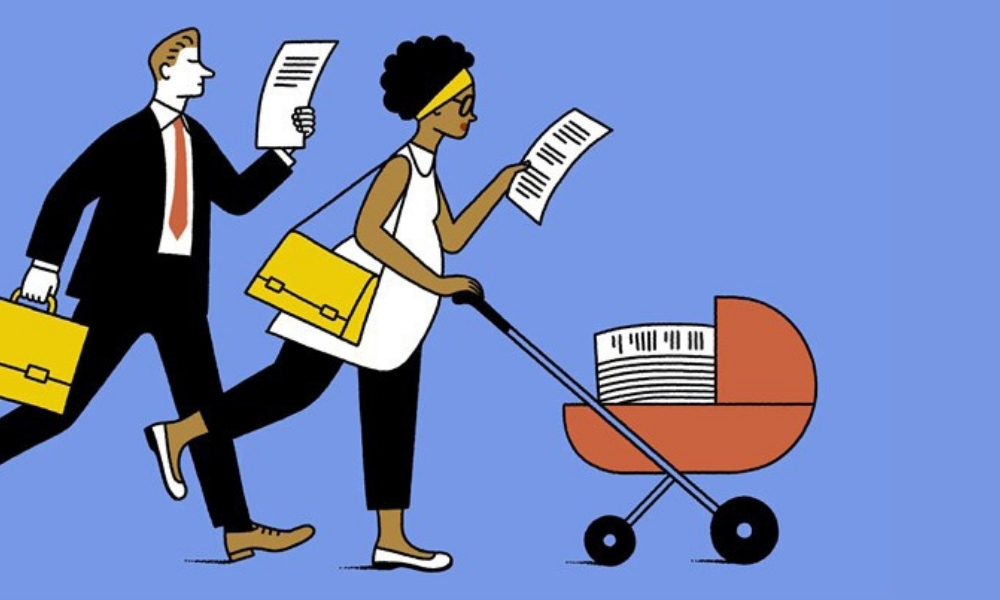
A crèche is a supervised childcare centre where parents can leave their infants and young children during working hours to take care of them. Recognising that parental support extends beyond maternity leave, the Ministry of Women and Child Development issued amended guidelines in November 2018 that included provisions for workplace crèche facilities. More than just a childcare arrangement, quality crèche facilities can support early learning, growth monitoring, health check-ups, and access to nutritious meals and snacks.
The guidelines helped clarify several aspects that were not clearly defined in the original amendment. They specified that crèche facilities should cater to children between six months and six years of age, be accessible to all categories of employees including temporary, contractual, consultant, and daily-wage workers and preferably operate for eight to ten hours each day. However, despite the existence of these guidelines, implementation has remained limited. As of May 2020, Karnataka was the only state to have formally notified maternity benefit rules related to crèche facilities. Tamil Nadu followed in January 2021, while several other states were still in the process of drafting or notifying similar rules (IndiaSPEND, 2021).
Experts have highlighted that the absence of state-level notifications makes enforcement difficult. Without clear monitoring mechanisms, many organisations are able to avoid compliance without facing any consequences. Workplace inclusion consultants have also pointed out that there are currently few incentives encouraging organisations to establish quality childcare facilities and limited penalties for failing to do so.

As a result, a significant gap remains between policy and practice. While crèche facilities have the potential to support both parents and children, their impact remains limited unless organisations are actively monitored and held accountable for implementation. This raises an important question: Can policies truly support working families if they exist only on paper?
The Challenges of Paternity Leave
While maternity leave is often discussed in conversations around workplace inclusion, paternity leave remains a relatively overlooked aspect of parental support. Paternity leave refers to the time granted to working fathers to care for their newborn child and support their partner during the early stages of parenthood. Although fathers play a crucial role during this transition, access to paternity leave in India remains highly inconsistent.
Unlike maternity leave, India does not have a uniform national law governing paternity leave. Under Rule 43A of the Central Civil Services (Leave) Rules, 1972, male government employees with fewer than two surviving children are eligible for 15 days of paid paternity leave. Temporary government employees may also qualify, provided they have completed at least 80 days of service in the 12 months preceding the birth or adoption of a child. However, policies vary across states. For example, Kerala provides 10 days of paternity leave, while states such as Karnataka largely follow central government norms. In the private sector, there is currently no legal requirement for employers to provide paternity leave, leaving the decision entirely to individual organisations.
As a result, access to paternity leave remains limited for many fathers. Reports indicate that only about 14% of private companies in India have a formal paternity leave policy. This creates a significant gap in support for working fathers and makes employer-led policies an important factor in shaping workplace culture.
However, the challenge extends beyond the availability of leave. Even when paternity leave is offered, many fathers hesitate to utilise it due to concerns about how it may affect their professional image. Researchers have described this phenomenon as the “Fatherhood Penalty” i.e., the perception that men who take time away from work for caregiving may be viewed as less committed to their careers. A Deloitte survey found that 57% of Indian male employees feared that taking paternity leave would lead to negative perceptions from their managers.
Research also suggests that workplace policies are only one part of the equation. Despite increasing awareness around shared parenting, men continue to be underrepresented in childcare, domestic work, and other caregiving responsibilities. Previous studies have often highlighted external barriers, such as inadequate income replacement during leave, as major factors limiting fathers’ participation in parental leave (Castro-García & Pazos-Moran, 2016; Karu & Tremblay, 2018; Kaufman, 2018). However, more recent research examining parental leave intentions across 37 countries found that individual attitudes towards gender roles may have an even greater influence than national leave policies themselves (Olsson et al., 2023).
Another important finding is the role of family dynamics in parental leave decisions. Researchers observed that fathers were more likely to consider taking leave when they felt supported by their partners. This highlights how decisions surrounding childcare are often negotiated within families rather than determined solely by workplace policies. Since the transition to parenthood is experienced by both parents, responsibilities related to caregiving, employment, and household management must be continuously discussed and shared.
Interestingly, even when fathers expressed a desire to take parental leave, many viewed their leave as secondary to that of mothers. Leave taken by fathers was often considered an additional benefit rather than an equal entitlement. Such perceptions reinforce traditional caregiving roles and may unintentionally limit fathers’ participation in early childcare.
These findings suggest that creating paternity leave policies alone is not enough. For fathers to actively participate in caregiving, workplaces, families, and society must collectively move towards viewing parenting as a shared responsibility rather than a role primarily assigned to mothers.
A Step in the Right Direction
However, not everything is hopeless. Across India’s corporate landscape, a few organisations are quietly rewriting what it means to support working parents and their efforts are worth acknowledging. Meesho, Zomato, Swiggy, and Cure.fit have each gone well beyond the statutory minimum, building policies that treat parenting as something both parents share rather than something only mothers manage. Meesho offers 30 weeks of gender-neutral parental leave. Zomato provides 26 weeks of paid leave for all parents, regardless of gender, along with a ₹69,000 financial support package to help new families settle in. Swiggy and Cure.fit have followed suit with inclusive leave policies and flexible return-to-work arrangements that actually account for what life with a newborn looks like.
What sets these companies apart is less about the number of weeks on paper and more about what those weeks communicate. When an organisation extends parental benefits equally to all caregivers, it sends a quiet but powerful signal that raising a child is not a woman’s problem to manage around her career. These are not acts of generosity. They are smart business decisions. Organisations that invest in their parents tend to see it return in loyalty, reduced attrition, and stronger workplace morale.
Conclusion
Supporting working parents is not a single-department fix. It requires movement at every level from the laws that govern workplaces to the managers who shape daily experience on the ground. From a policy standpoint, there is still meaningful ground to cover. Paternity leave needs wider adoption and, eventually, legal backing in the private sector. Crèche compliance needs teeth, not just guidelines that states can quietly ignore. And there needs to be far greater transparency around how well these provisions are actually being implemented, because right now, the data simply does not exist.
Employers, too, carry real responsibility here. Phased return-to-work programmes, manager sensitisation, and a genuine cultural openness to the fact that parents have lives outside office hours, these are not radical asks. They are table stakes for any organisation that wants to retain good people over the long run.
Perhaps most importantly, the cultural narrative around parenthood at work needs to shift. Fathers should be able to take leave without worrying that it signals something negative about their ambition. Returning mothers should not have to prove themselves all over again. Parenthood, if anything, sharpens people, the patience, the prioritisation, the ability to function under pressure. These are not soft qualities. They are exactly the kind that make someone better at their job. Workplaces that understand this are not just being kind. They are being smart.
References
Castro-García, C., & Pazos-Morán, M. (2016). Parental leave policy and gender equality in Europe. Feminist Economics, 22(4), 51–73. https://doi.org/10.1080/13545701.2015.1082033
Conlon, J., & Sharma, G. (2024). Employer misperceptions about the path of women’s labor supply [Pilot study]. Unpublished manuscript.
Deloitte. (2026). Paternity leave in India 2026: Eligibility and benefits. Retrieved from https://www.wisemonk.io/blogs/paternity-leave-in-india
Hyland, M., Djankov, S., & Goldberg, P. K. (2020). Gendered laws and women in the workforce. American Economic Review: Insights, 2(4), 475–490. https://doi.org/10.1257/aeri.20190285
IndiaSPEND. (2021, March 8). Large employers are required to provide creches, but most don’t. IndiaSPEND. https://www.indiaspend.com/women/large-employers-are-required-to-provide-creches-but-most-dont-733316
Karu, M., & Tremblay, D.-G. (2018). Fathers on parental leave: An analysis of rights and take-up in 29 countries. Community, Work & Family, 21(3), 344–362. https://doi.org/10.1080/13668803.2017.1346586
Kaufman, G. (2018). Barriers to equality: Why British fathers do not use parental leave. Community, Work & Family, 21(3), 310–325. https://doi.org/10.1080/13668803.2017.1307806
Olsson, M. I. T., Van Grootel, S., Block, K., Schuster, C., Meeussen, L., Van Laar, C., & colleagues. (2023). Gender gap in parental leave intentions: Evidence from 37 countries. Political Psychology, 44(6), 1–30. https://doi.org/10.1111/pops.12880
Pazcare. (2026, January 9). Paternity leave in India: How Indian companies are supporting new fathers. https://www.pazcare.com/blog/paternity-leave-in-india-how-indian-companies-are-supporting-new-fathers
Remofirst. (2026, March 16). Paternity leave in India: What are the rules? https://www.remofirst.com/post/paternity-leave-in-india
Sharma, G. (2024). The effects of mandated maternity leave on labor market outcomes in India [Working paper]. https://garimasharma.com/files/matbenefits_paper.pdf
DID YOU KNOW?
India’s maternity benefit now sits within the Code on Social Security, 2020, in force since 21 November 2025. It gives 26 weeks of paid leave for a first and second child. Establishments with 50 or more employees must provide a crèche, and mothers may visit it four times a day.
0 Comments