
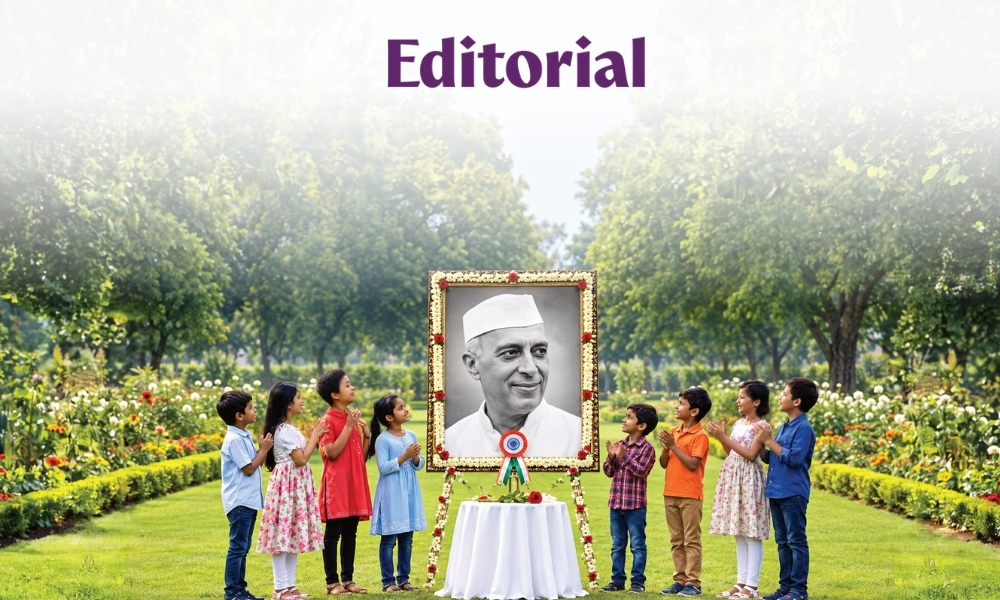
November should be a month of national reflection. It brings two important reminders: Children’s Day, celebrated on Jawaharlal Nehru’s birthday and Constitution Day, observed on 26 November. Both acquire a deeper meaning in a time when democratic freedoms are under serious threat and children’s wellbeing remains increasingly vulnerable.
Across India, young people protesting electoral irregularities have faced detention and arrest. The controversy surrounding the Special Intensive Revision (SIR) of electoral rolls has intensified after reports of widespread voter deletions. Although the Election Commission claims that the exercise is intended to remove duplicate, deceased and ineligible voters, reports of genuine voters being excluded raise an urgent question: can electoral reform be considered successful if eligible citizens struggle to reclaim their right to vote? The ruling establishment’s vigorous defence of the Chief Election Commissioner, amid opposition demands for his removal, raises legitimate questions about institutional accountability. The government may invoke due process and the Commission’s independence, but independence must never become immunity from scrutiny. The issue is not whether an institution deserves protection but it is whether its credibility is being protected through transparency, impartiality and accountability. The Prime Minister’s silence on the concerns surrounding SIR is equally troubling. When questions arise about electoral fairness and citizens’ rights, leadership demands more than political rhetoric. It demands clear answers as silence cannot substitute for accountability.
As we remember Jawaharlal Nehru on his birthday and celebrate Children’s Day, we must confront an uncomfortable question: Can a nation truly celebrate its children when so many are unsafe even in their own neighbourhoods, schools and homes? Rape and sexual violence against women and children continue to expose deep failures in our society. In 2024, India registered about seventy thousand cases under the POCSO Act for sexual offences against children. These figures represent reported cases and the actual scale may be greater because fear, stigma and social pressure often silence survivors.
A nation’s greatness is not measured only by its power, economic growth or electoral victories. It is reflected in how it treats dissenters, protects the vote and defends its most vulnerable. The way forward lies in moving beyond rhetoric to responsibility. Protecting democracy demands independent institutions, accountable governance and citizens who refuse to remain silent in the face of injustice. Protecting children requires strong laws, effective enforcement, public awareness and a society that places their dignity, safety and well-being above all else.
Aura’s November issue talks in detail about both these concerns along with many other relevant topics, intriguing regular columns and an engaging children’s corner to mark children’s day.
Let us remember that a democracy is not measured by the strength of its institutions, but by the freedoms its citizens enjoy and the security it guarantees its children. It is neither the privilege of those in power. It belongs to every citizen, including the young person who protests, the voter whose name disappears from a list, and the child whose safety is neglected. The real test of democracy is not how comfortably the powerful govern, but how safely the powerless can question them.
0 Comments