

The author is student, a mother and a home-maker
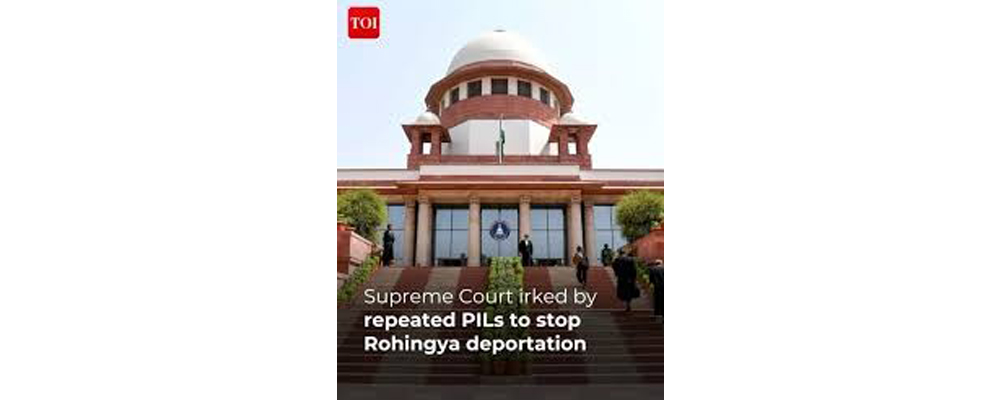
In the background of the recent Supreme Court judgment on deporting Rohingyas if they are found to be foreigners, I got a chance to have a talk with one Rohingya. However, because of the fear of the government, he didn’t share his name or his current location.
Background and Family Life
The speaker is a Rohingya refugee currently residing in Delhi, India. He has a large family consisting of seven children—four sons and three daughters. His children are enrolled in both government schools and madrasas, with the oldest studying in 12th grade. Despite facing many challenges, the family places value on education, leveraging the support they receive from organizations like UNHCR to keep their children in school.
Migration History
The family migrated to India in 2012, escaping a history of repeated violence and persecution in Myanmar. The speaker recounts multiple waves of ethnic violence and systemic oppression against the Rohingya people:
- In 1942, a major incident occurred involving mass killings, especially of elders. This predates the speaker’s birth.
- In 1978, persecution resumed, causing some people to flee to Bangladesh.
- Another significant wave came in 1992, the effects of which are still felt today, with many refugees still in Bangladesh.
Then came the 2012 attacks, followed by ongoing violence in 2016 and 2017.
The speaker emphasizes that oppression by the Burmese government and the Buddhist majority forced them to flee. These successive waves of targeted violence and lack of safety left the Rohingya with few choices, leading many—like his family—to cross borders in search of refuge.
Current Living Conditions in India
The speaker lives in a highly precarious situation in Delhi, with minimal access to basic amenities:
- Water: A tanker arrives only twice a week.
- Electricity: Initially unavailable, electricity was later arranged through local efforts and briefly subsidized by the local administration (SDM) after a fire broke out in their slum. However, it was later cut off due to unpaid bills.
- Sanitation: Non-existent. The speaker states they are “living in a jungle,” and the lack of toilets and emergency facilities is especially difficult for women.
- Healthcare: They rely on government hospitals and are able to receive treatment by showing their refugee card issued by UNHCR.
- Safety: There is an ongoing sense of insecurity, compounded by frequent displacements and a lack of consistent legal support.
Legal and Documentation Status
The family was granted refugee status by the UNHCR, receiving official refugee cards in 2013–14. Initially, they were also issued visas by the Indian government, but visa renewals were halted in 2018 without explanation. Since then, the family has had to live in a legal grey area, constantly relocating due to lack of formal status and pressure from authorities.
Despite the hardship, they have not received consistent support from any other organization besides UNHCR. The speaker also mentions that they have not consulted any lawyers and are unaware of any legal representation or organizations handling their case. However, he hints that some powerful, unnamed individuals might be working behind the scenes in the legal proceedings concerning Rohingya refugees.
Discrimination and Inequality
A major theme in the interview is the perceived discrimination against Rohingya Muslims compared to other refugees, particularly Buddhists and Christians from Myanmar:
- The speaker notes that many Buddhists have also come to India, yet they are not treated with the same hostility or suspicion.
- At the UNHCR office, he observed that the majority of those present were Buddhists, which raises questions about why only Rohingya are being singled out for deportation or legal action.
- He shares his confusion and dismay: “Why this discrimination against us?”
The speaker also mentions a Christian refugee, suggesting that while non-Muslim minorities have also fled Myanmar, they do not seem to face the same barriers.
This religious bias, he feels, contradicts the principles of justice. He argues that if the government is concerned about foreigners, the law should apply equally to all, regardless of religion or ethnicity.
Hopes, Beliefs, and Resilience
Amid the hardship, the speaker conveys a deep sense of faith and resilience. He repeatedly mentions trusting in Allah, accepting that whatever happens is part of divine will. He reflects on how difficult life is, particularly for women and children, but remains firm in his belief that better days may come.
Despite the overwhelming challenges, the speaker does not express hatred or anger, only a plea for fairness and dignity. He emphasizes the shared humanity of refugees and questions why, in such a large and seemingly just country like India, a small group like the Rohingya should be treated with hostility.
Thoughts on Return and International Dynamics
The speaker reflects on the possibility of returning to Bangladesh, though he admits it’s uncertain whether they would be accepted. While some relatives are already in Bangladesh, the country has absorbed over one million refugees, creating strain on its limited resources.
He describes Bangladesh as a small country with a massive refugee burden, and acknowledges that its capacity to accept more people is limited. This highlights the geopolitical complexity of the Rohingya crisis: with Myanmar rejecting them, Bangladesh overburdened, and India growing increasingly hostile, Rohingya refugees are left with no safe homeland.
Conclusion: A Cry for Justice
In the final part of the conversation, the speaker expresses his disappointment with the Indian legal system. He says they never expected such treatment from India—a country they had hoped would offer safety and opportunity. Now, facing court cases and the threat of deportation, they feel betrayed and marginalized.
He ends with a statement about equality and justice: if India is to expel foreigners, it should do so fairly and without bias. He suspects that influential backers may be driving the legal campaign against the Rohingya and calls for greater transparency.
Despite everything, the speaker’s tone remains one of quiet strength and unwavering faith—a testament to the resilience of a community that has endured decades of persecution and displacement.

0 Comments