
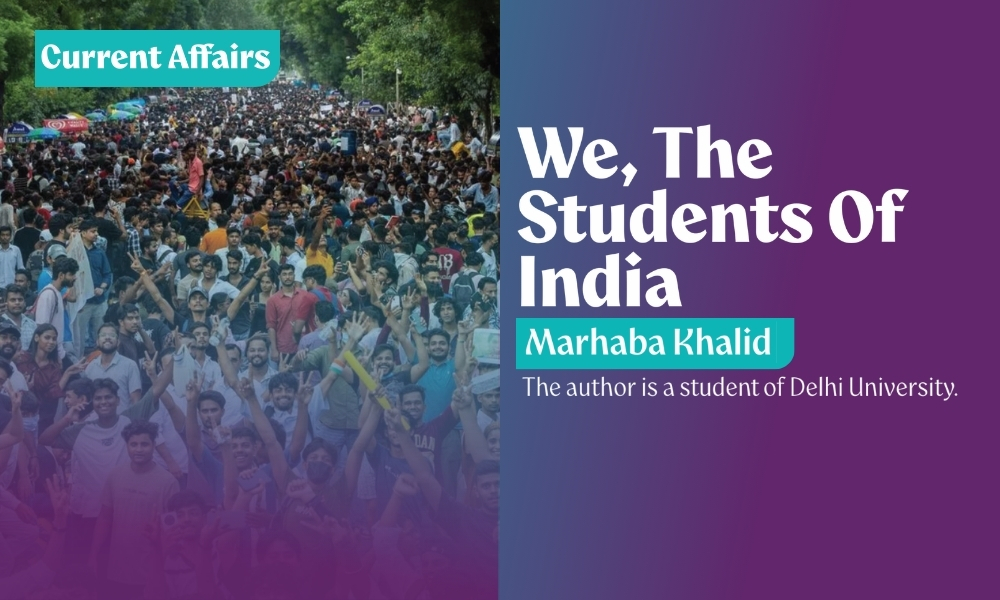
The author is a student of Delhi University
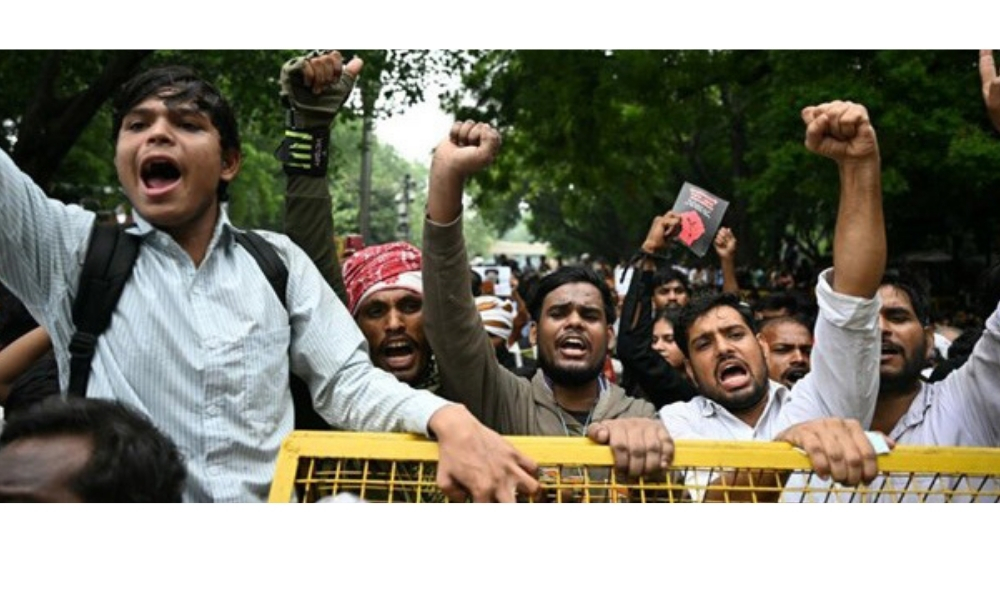
Freedom Beyond Celebration
As we reflect on India’s 79th year of Independence and the beginning of its 80th year, the occasion must be accompanied by introspection, reflection, and questions. Does freedom merely mean independence from colonial rule? Is it only about raising the tricolour, singing patriotic songs, and turning our freedom fighters into symbols of celebration? Or is it about the freedom to question, express, learn, and aspire towards the future with dignity?
Freedom is never about a single day; it is about every day. It is about opportunity, education, and the ability to shape one’s future.
But what do we see today?
The Constitutional Promises
The most important part of our Constitution, the Preamble, remains unchanged and reflects the basic structure of our nation. It does not begin with a community, a government, or an institution. It begins with the words, “We, the People of India,” reminding us that India belongs to its citizens and is founded on the promises of justice, liberty, equality, and fraternity.
What we witness today raises an important question: do constitutional values such as:
- Article 14: Equality before law
- Article 19(1)(a): Freedom of speech and expression
- Article 19(1)(b): Right to peaceful assembly
- Article 21: Right to life and personal liberty with dignity
- Article 21A: Right to education
exist only on paper? Why do these values not consistently reflect in practice within our institutions?
An Uncertain Age of Education
The real concern is the normalisation of uncertainty in a system that shapes the future. We see numerous examples today:
NEET-UG 2024 Paper Leak
Allegations of paper leaks, the grace marks controversy, and nationwide uncertainty raised serious concerns about fairness in one of India’s most competitive examinations.
CUET-PG and Examination Disruptions
Delays, technical issues, last-minute changes, and administrative confusion left thousands of students anxious about their academic futures.
University Concerns
Issues surrounding institutions such as Mohammad Ali Jauhar University and recurring debates around student activism, campus autonomy, and administrative interventions in universities continue to generate uncertainty among students.
Students’ Mental Health
The tragic incidents of student suicides across the country highlight the immense pressure, anxiety, and uncertainty faced by young people.
Protest and Voices Criminalised
Examples such as Sonam Wangchuk and Umar Khalid continue to fuel debates around dissent, protest, and freedom of expression.
A nation is not strengthened by the number of examinations it conducts, but by the confidence its youth place in the fairness of those examinations and the future they promise.
Our Legacy
India’s history is filled with examples of citizens raising their voices for justice. From the freedom struggle and Mahatma Gandhi’s Satyagraha to public movements such as Anna Hazare’s anti-corruption campaign, collective participation has repeatedly strengthened democracy. These movements remind us that peaceful protest, public engagement, and freedom of expression are not signs of disorder, but essential pillars of democratic accountability.
A Crisis of Trust
When students begin to lose faith in the fairness of educational institutions, the crisis extends beyond classrooms and examination halls. It becomes a challenge to the very foundations of democracy, equality of opportunity, and public trust.
Education is not merely a service; it is a constitutional commitment and one of the strongest pillars of a democratic society. Trust is the first casualty in this era of uncertainty, leading many young people towards disillusionment and weakening their faith in the future.
What Next?
The answer lies not in despair, but in hope and reform.
As citizens, educators, and students, we must continue to engage, question, and contribute constructively, because democracy thrives when its people remain involved. Transparency, investigation, stronger examination safeguards, institutional accountability, timely communication, and meaningful student participation can help restore confidence.
What we see today is indeed disheartening, yet accepting it is not an option.
India’s long tradition of freedom and education must continue to thrive, because India is ultimately what we make of it.
نہیں ہے نااُمید اقبال اپنی کِشتِ ویراں سے
ذرا نم ہو تو یہ مٹی بڑی زرخیز ہے ساقی
“Iqbal is not hopeless about his barren field; if this soil receives a little nourishment, it can become immensely fertile.”
If freedom gave us a nation, justice and education will determine its future.
The question is not whether India is free, but whether every young Indian feels that freedom in their future.
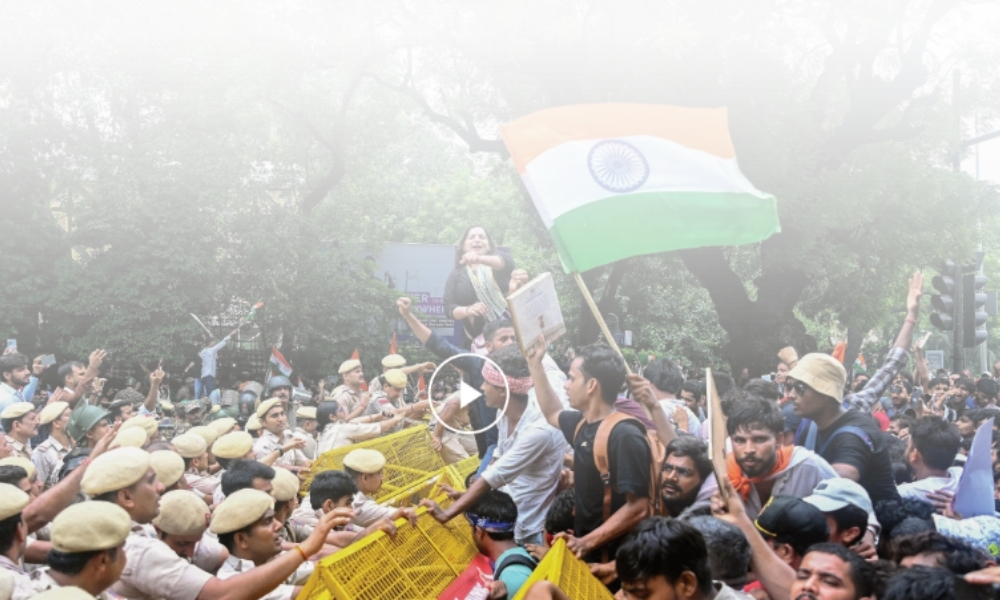
The protest at north campus was more against patriarchy than to arrest and punish the culprit.
Freedom and equality to females are the needs of the hour which must be ensured by the system.