
The author is a design graduate with a curious mind, drawn to literature, society and human experiences
A nation can have a Constitution that guarantees equality and still allow inequality to flourish. It can celebrate freedom while some of its citizens hesitate to speak. It can proclaim justice while millions continue to struggle for dignity. It can call itself democratic while the voices of the most vulnerable remain unheard. This contradiction makes examining the Indian Constitution today not merely relevant, but necessary.
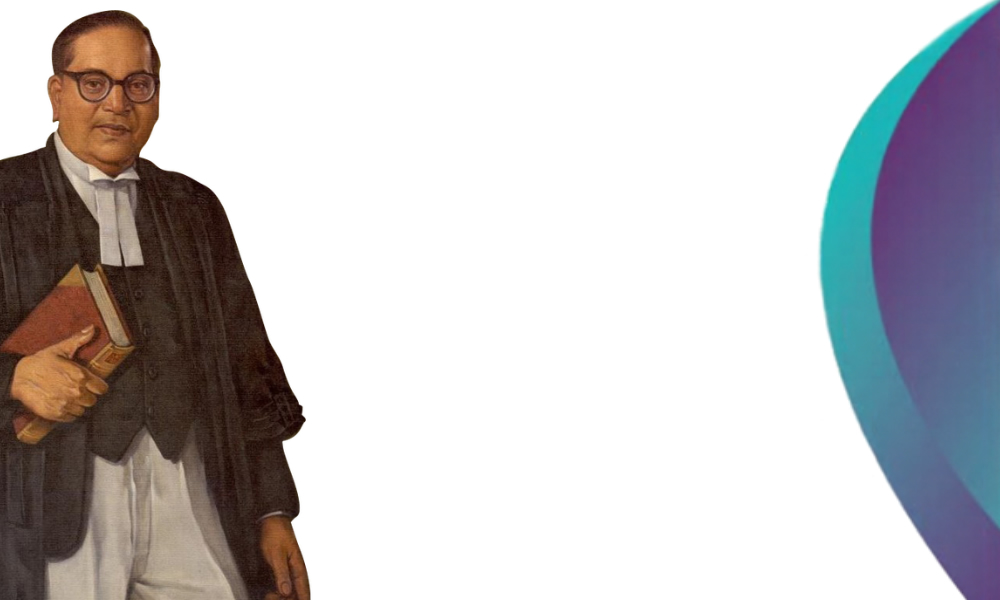
More than seven decades ago, India made a historic promise to its people. Through its Constitution, it committed itself to building a nation founded on justice, liberty, equality and fraternity. Dr. B.R. Ambedkar, one of the principal architects of this transformative document, understood that political independence would mean little if it failed to dismantle the social inequalities that had governed Indian society for centuries.
Today, as a generation grows up in an India of technological advancement, expanding aspirations and global ambitions, we must pause and examine an uncomfortable reality: Are constitutional rights becoming lived experiences, or do they remain ideals that look impressive on paper?
A Constitution That Promised More Than Political Independence
When India adopted its Constitution on November 26, 1949, it was attempting something far more ambitious than establishing a system of government. It sought to transform the social foundations of a country marked by centuries of hierarchy, exclusion and unequal access to power.
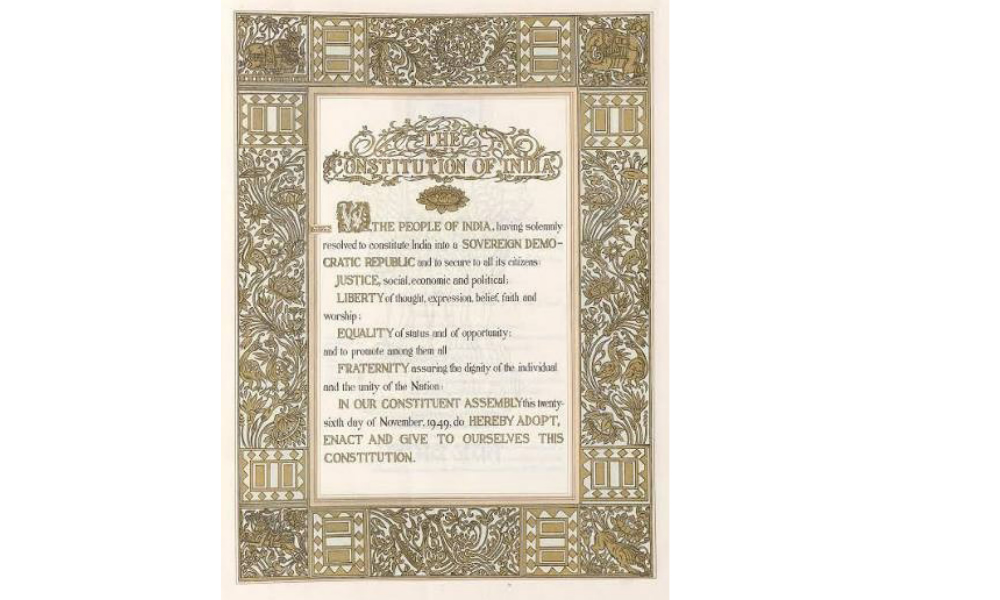
Ambedkar understood that political independence alone could not guarantee human dignity. A nation could free itself from colonial rule and still remain unfree within its own social structures. The Constitution therefore established a framework built upon justice, liberty, equality and fraternity.
These were not merely inspiring words in the Preamble. They were intended to become the lived experiences of ordinary citizens. Article 14 guarantees equality before the law, Article 15 prohibits discrimination, Article 17 abolishes untouchability, Article 19 protects freedom of expression, and Article 21 safeguards life and personal liberty.
Yet, the existence of constitutional guarantees does not automatically ensure their realisation. A student may enter a classroom with the right to equality but encounter caste-based prejudice. A woman may possess legal rights but continue to negotiate restrictions on her choices and opportunities. A citizen may enjoy freedom of expression but hesitate to voice an unpopular opinion.
The Constitution has changed the language of our rights. Has society changed its attitude towards those rights with equal determination?
Equal Votes, Unequal Opportunities
Perhaps no generation experiences the contradiction Ambedkar identified more directly than today’s youth.
In his final address to the Constituent Assembly on November 25, 1949, Ambedkar warned that India was entering a life of contradictions. In politics, citizens would enjoy equality through one person, one vote and one vote, one value. Yet, in social and economic life, inequality would continue to deny them equal standing.
Consider two young Indians preparing for the same competitive examination. Both possess equal constitutional rights and perhaps equal intellectual potential. But one has access to quality schooling, private coaching and financial security, while the other struggles with limited resources and family responsibilities. They compete in the same examination, but they do not begin from the same starting point.
Similarly, unemployment, unequal access to education and economic insecurity continue to affect the aspirations of young Indians. For a graduate unable to find meaningful employment, unemployment is not merely a statistic. It means postponed dreams, financial dependence and uncertainty about the future.
The question, therefore, is not simply whether every young Indian is legally equal. It is whether every young Indian has a fair opportunity to build a dignified life.
Ambedkar’s understanding of democracy demands that we look beyond formal equality and examine the conditions that make equality meaningful.
Caste: A Reality We Have Not Outgrown
Modern India speaks confidently about artificial intelligence, digital infrastructure, economic growth and global leadership. Yet, an old social hierarchy continues to influence new generations.
Caste has not disappeared simply because conversations about it have become uncomfortable. It continues to shape social relationships, marriage, access to opportunities and experiences of discrimination. Sometimes it operates through explicit exclusion; at other times, through assumptions, stereotypes and the quiet denial of dignity.
A revealing example came in October 2024, when the Supreme Court, in Sukanya Shantha v. Union of India, struck down discriminatory provisions in prison manuals that perpetuated caste-based occupational practices. The judgment exposed how deeply discriminatory social attitudes could survive even within institutions governed by law.
If practices rooted in caste discrimination could persist in official prison regulations decades after the Constitution abolished untouchability, we cannot honestly claim that caste is merely a problem of the past.
For today’s youth, the challenge is not simply to reject discrimination when it becomes visible. It is to question the everyday prejudices that society has normalised and sometimes passed down as tradition.
A society cannot call itself modern merely because it uses modern technology. Its true progress must also be reflected in how it treats its most marginalised members.
Freedom of Expression in the Age of Algorithms

Freedom has acquired a new dimension in today’s digital India. A mobile phone can become a classroom, a library, a newsroom and a platform for public participation. Social media enables ordinary citizens to highlight injustice, mobilise support and challenge established narratives.
But the same digital space presents serious challenges. Misinformation spreads rapidly, communal and political divisions are amplified, and public discussions frequently reward outrage rather than understanding. People are encouraged to react before verifying, judge before understanding and condemn before listening.
More troubling is the tendency to measure a person’s patriotism by whether their opinions align with dominant narratives.
A democracy cannot function if citizens begin to fear disagreement. Criticism of a government is not criticism of an entire nation. Questioning a policy is not betrayal. Asking for accountability is not hatred.
Freedom of expression is not absolute, and the Constitution recognises reasonable restrictions. However, these must remain constitutionally justified and must not become convenient instruments for discouraging legitimate criticism.
A generation with unlimited access to information but without the courage to question it is not necessarily an informed generation. Our responsibility is to develop the courage to question, the discipline to verify and the maturity to disagree without dehumanising one another.
The Question of Who Belongs
The Preamble describes India as a sovereign, socialist, secular, democratic republic. These words establish a political community in which every citizen enjoys equal constitutional standing, irrespective of religious or social identity.
Yet, religious polarisation, communal prejudice, hate speech and suspicion between communities threaten the social trust upon which democracy depends. Differences that should enrich public life sometimes become reasons for exclusion and hostility.
This is where Ambedkar’s emphasis on fraternity becomes particularly important.
Of the four foundational ideals in the Preamble, fraternity is perhaps the least discussed, yet it holds the others together. Equality cannot survive where people refuse to recognise one another as equals. Liberty becomes fragile when one community’s freedom is considered less important than another’s.
Fraternity does not demand that citizens abandon their identities or differences. It demands that they recognise the equal humanity of those who are different from them.
The strength of India will not be determined by how successfully one community dominates another, but by how securely every community can belong.
When Democracy Becomes a Personality Contest
Another significant warning Ambedkar delivered in his final Constituent Assembly speech concerned the danger of hero-worship in politics. He cautioned that excessive devotion to political leaders could undermine democratic institutions and threaten liberty.
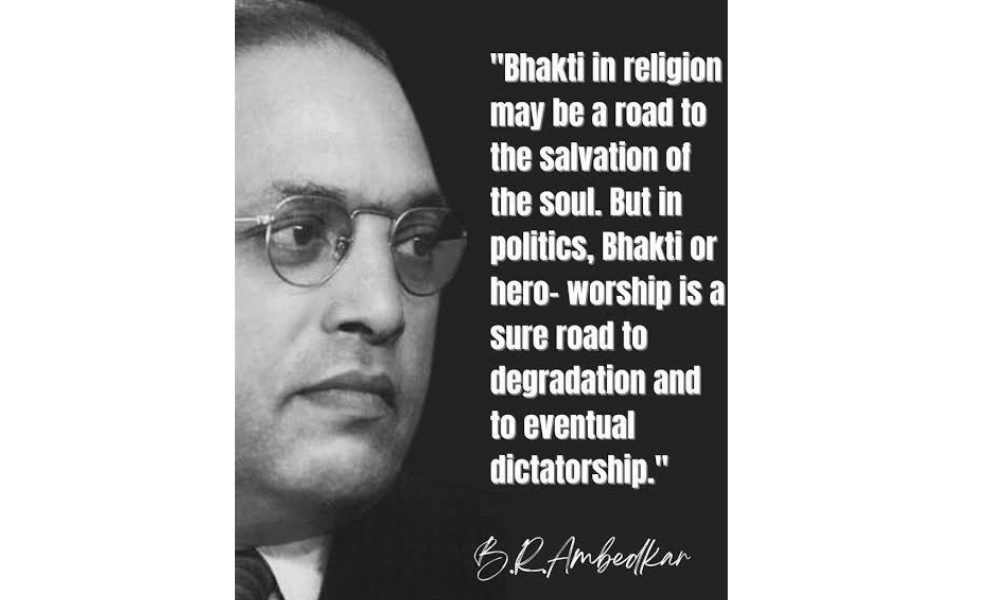
His warning deserves serious reflection today.
Political leadership is essential, and citizens have every right to support leaders and political parties. But democratic citizenship must never become unconditional political devotion. No individual, however influential, is greater than the Constitution. No government should be exempt from scrutiny simply because it enjoys public support.
The Supreme Court’s February 2024 judgment striking down the Electoral Bond Scheme further highlighted the importance of transparency in political funding and the voter’s right to information.
Democracy requires more than choosing who governs us. It requires ensuring that those who govern remain accountable to the people.
For young citizens, this means moving beyond political personalities and examining policies, decisions and institutional accountability. We must learn to evaluate power rather than worship it.
The Constitution: A Responsibility for Every Generation
For many young people, the Constitution first appears in textbooks as a collection of articles, amendments and historical events. We memorise its provisions, reproduce them in examinations and celebrate important national occasions. But perhaps we have not spent enough time understanding what it demands from us.
It demands that we question discrimination even when it benefits our own community. It asks us to defend another person’s freedom even when we disagree with their beliefs. It requires us to refuse to normalise injustice simply because it has existed for generations.
Democracy is not something we practise only during elections. It is reflected in how a student treats a classmate from a marginalised background, how a young person responds to communal misinformation, how institutions handle criticism and how society responds when the rights of others are threatened.
A generation that demands constitutional rights but remains indifferent to the rights of others has understood only half the Constitution.
India has undoubtedly made significant progress through universal adult franchise, constitutional institutions, educational expansion and social transformation. Acknowledging these achievements is important, but it must not make us complacent. A mature democracy must possess the confidence to examine its own failures.
Perhaps the greatest disservice to Ambedkar’s legacy would be to reduce him to a portrait garlanded once a year or a collection of quotations shared on social media. His ideas deserve something far more meaningful: a society willing to confront the uncomfortable realities they expose.
As young Indians, we are not merely inheritors of this Constitution. We are participants in its continuing story. We must decide whether we will simply enjoy the rights it guarantees or also accept the responsibility of defending those rights for everyone.
A Constitution is only as strong as the society that chooses to uphold it. Its ideals cannot survive on paper alone; they must find expression in our institutions, our decisions and our everyday conduct. Democracy demands more than the right to vote; it demands the courage to question injustice, the conscience to recognise discrimination and the conviction to defend the rights of others, even when they are not our own.
Perhaps the greatest threat to a nation is not the injustice it witnesses, but the injustice it learns to tolerate. The true legacy of Ambedkar will live not in how often we remember his words, but in whether we have the courage to build a society where equality is practised, freedom is protected and human dignity is never negotiable.
Political leadership is essential, and citizens have every right to support leaders and political parties. But democratic citizenship must never become unconditional political devotion. No individual, however influential, is greater than the Constitution. No government should be exempt from scrutiny simply because it enjoys public support
0 Comments