
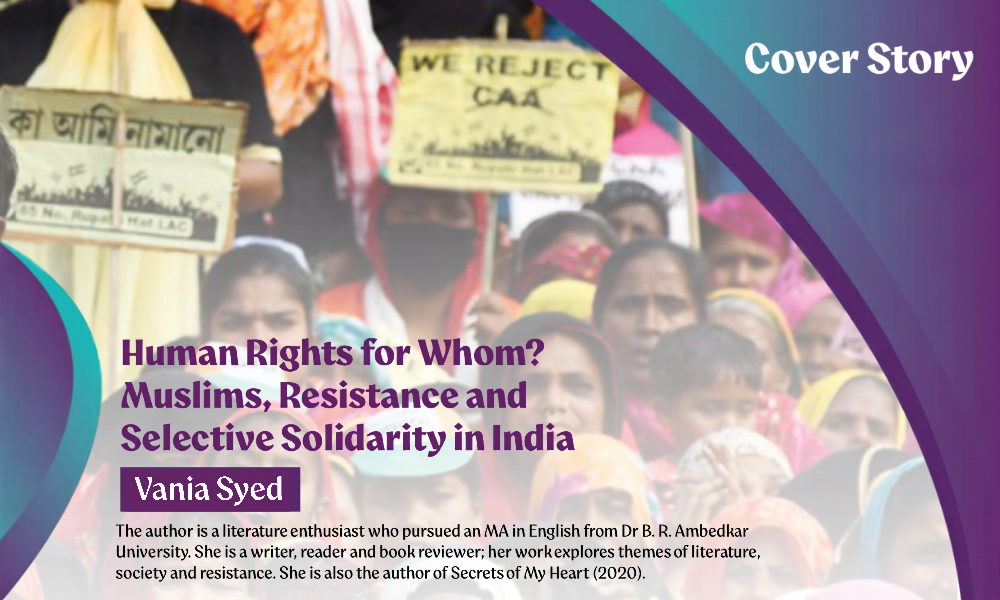
The author is a literature enthusiast who pursued an MA in English from Dr B. R. Ambedkar University. She is a writer, reader and book reviewer; her work explores themes of literature, society and resistance. She is also the author of Secrets of My Heart (2020).

There is something deeply hopeful about watching people return to the streets, reclaim public spaces, raise their voices and remind those in power that resistance is still alive. At a time when dissent often comes at a considerable cost, witnessing people come together with such determination is a reminder that collective action has not lost its power. There is a certain reassurance in seeing people refuse to remain silent, in watching them recognise that injustice cannot be confronted through silence and that democracy demands participation, courage and resistance. I find myself genuinely happy about this emerging wave of resistance in the country. Yet, alongside this hope, there is a discomfort that I cannot ignore. As I watch people come together today, I cannot help but wonder: where was this solidarity when Muslims came out onto the streets? Where was this collective determination when Muslim communities were protesting against discrimination, demanding justice and resisting the violations of their rights? Where were the voices that today speak so passionately about democracy, constitutional values and the right to dissent?
The FOMO of Resistance
For Muslims, this moment of collective resistance also carries a different kind of emotion: a sense of distance, regret and, perhaps, what can only be described as a FOMO of resistance. It is the feeling of wanting to be out there, to participate, to stand alongside others and be part of a collective struggle, while simultaneously being aware of the consequences that one’s Muslim identity might invite. The fear of surveillance, police action, legal repercussions, social targeting and the uncertainty of what might follow a protest are not abstract possibilities for many Muslims. They are shaped by experiences, memories and the realities of previous movements. This is not to suggest that Muslims have stopped resisting or that their activism belongs to the past. They continue to organise, protest and demand justice. But it is important to recognise that the freedom to participate in resistance is not experienced equally by everyone. Some can return to the streets with a renewed sense of hope, while others must first calculate the risks of being seen there. I say this not merely as someone observing these developments but as someone who genuinely wants to be a part of this resistance. There is a burden that comes with participating in revolutionary activities, questions like how would they perceive my Hijab? Would it be safe to go there in an Abaya? Or do I need to trim my beard before the protest?
Universal on Paper, Conditional in Practice
Human Rights Day is observed every year with declarations of equality, dignity, freedom and justice for all. We speak of human rights as universal, as rights that belong to every individual simply by virtue of being human, irrespective of their religion, identity or political beliefs. Yet, there seems to be another side to this universality, one that becomes visible when we look at the experiences of Muslims in India. What happens to the language of human rights when Muslims demand them? Where do the promises of equality, religious freedom, dignity and the right to protest stand when the people seeking these very rights belong to a community whose identity often places them under suspicion? What happens to the right to worship when Muslim places of worship face threats? Are these rights as universal in practice as they are in our declarations, or does their recognition depend on who is claiming them? Perhaps the most uncomfortable contradiction of Human Rights Day is that we continue to celebrate the universality of human rights without confronting the people for whom those rights remain uncertain, contested and conditional.
Under the Shadow of the Bulldozer: Mosques, Memory and the Right to Belong
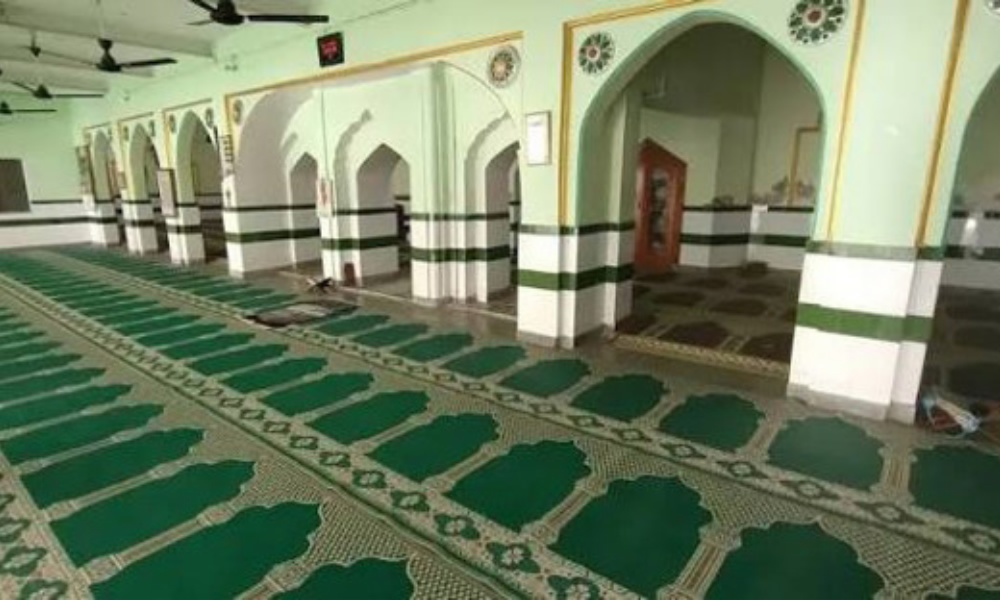
A place of worship is never merely a physical structure. For a community, it carries memories, traditions, histories and a sense of belonging that cannot be measured through the land it occupies or the walls that surround it. A mosque, in particular, is not simply a place where Muslims gather to offer prayers. It is a space through which religious identity, collective memory and community life are sustained across generations. It is where people gather in prayer, where children become familiar with their religious traditions, where communities find a sense of togetherness and where generations remain connected to a shared past. This is why threats to Muslim places of worship cannot be understood merely as disputes over land, construction or administrative permissions. They raise much larger questions about religious freedom, the security of minority communities and their right to preserve spaces that hold profound religious, historical and emotional significance.
The recurring apprehensions surrounding the demolition of mosques in different parts of the country make this question particularly urgent. Consider the Race Course Masjid in Delhi, which faced the threat of demolition amid the government’s reclamation of land in the surrounding area. In October 2026, reports emerged that the mosque’s water and electricity connections had been disconnected and that worshippers were facing restrictions on accessing the premises. The matter reached the Delhi High Court, where the Centre eventually assured the court on 29 October that no coercive action would be taken against the mosque for four weeks while the Delhi Waqf Board’s representation was considered. Although demolition was put on hold, the episode raised an important question: why should a community have to approach a court simply to seek security for a place where it has been offering prayers? The uncertainty surrounding the mosque’s future, alongside restrictions on worshippers’ access, demonstrates that the right to worship is not only about whether a religious structure physically exists but also whether people can actually access and use it.
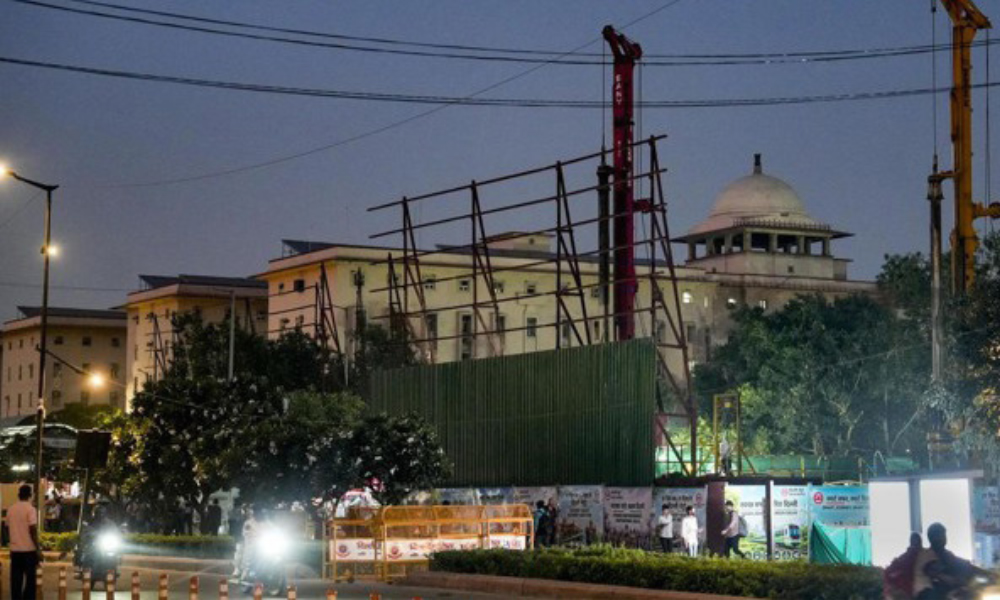
A similar concern has emerged around the century-old Qadeemi Masjid situated within the Krishi Bhawan complex in Delhi. As part of the Central Vista redevelopment project, the mosque’s future has come under question. In November 2026, the Centre informed the Delhi High Court that the mosque would have to be removed to facilitate the redevelopment of the site. The mosque’s caretaking committee, however, has sought its preservation or, if that is not possible, a reasonable and nearby alternative prayer facility. The committee has also pointed out that the mosque has served as a place of worship for employees working in Krishi Bhawan and neighbouring government offices for decades. It raises questions beyond the physical preservation of a building. What happens to the religious needs of people who have depended on an established prayer space for generations? Can redevelopment be discussed without adequately considering the religious life and everyday needs of the community that uses that space?
The situation surrounding the Shahi Masjid in Ujjain offers another important perspective. In September 2026, as the local administration prepared to remove a portion of the mosque for a road-widening project ahead of the Simhastha 2028 religious gathering, hundreds of Muslims gathered around the mosque and remained there throughout the night in an effort to prevent the removal. Their presence was not simply an expression of opposition to a draconian project; it reflected the anxiety of a community watching a place of worship become vulnerable to an impending administrative action. The situation eventually escalated, with clashes between protesters and police. Amid the standoff and fear of a larger demolition, the mosque committee agreed to remove the affected portion itself. The incident is significant because of what it revealed about the relationship between a community and its place of worship. People were prepared to spend nights there because, for them, the mosque represented something that could not simply be replaced by another building or dismissed as an obstacle to a “development project”.
Articles 25 and 26 of the Indian Constitution recognise the freedom of conscience and the right to profess, practise and propagate religion, alongside the rights of religious denominations to manage their religious affairs. These protections are not privileges granted to a community at the discretion of those in power. They form part of the constitutional framework governing religious freedom in India. Yet, when Muslim places of worship repeatedly become subjects of demolition notices, redevelopment disputes, restrictions or uncertainty, it becomes necessary to ask how securely these constitutional promises are being experienced by the communities they claim to protect. Can the Muslims expect the same seriousness, fairness and protection that the principles of religious freedom promise to every citizen? There is also an emotional dimension to these developments that often remains absent from administrative discussions and legal proceedings. When a mosque is threatened, the anxiety does not begin and end with the possibility of losing a building. It extends to the people who have prayed there for years, the elderly who have grown accustomed to offering their prayers in that space, the children who have grown up recognising it as part of their neighbourhood and the families for whom it represents a familiar and enduring part of community life. A mosque holds memories of generations; it is associated with childhood, family, religious festivals, friendships and the everyday rhythms of a neighbourhood.
On Human Rights Day, when we speak so frequently about dignity, equality, religious freedom and the universality of human rights, we must also confront what these principles mean in the everyday lives of minority communities. Protecting the right to worship must also mean taking seriously the spaces that make that right possible. The question is whether the religious freedom, dignity, memories and collective lives of the people connected to it are being given the consideration they deserve.
A Generation Refusing to Be Silenced
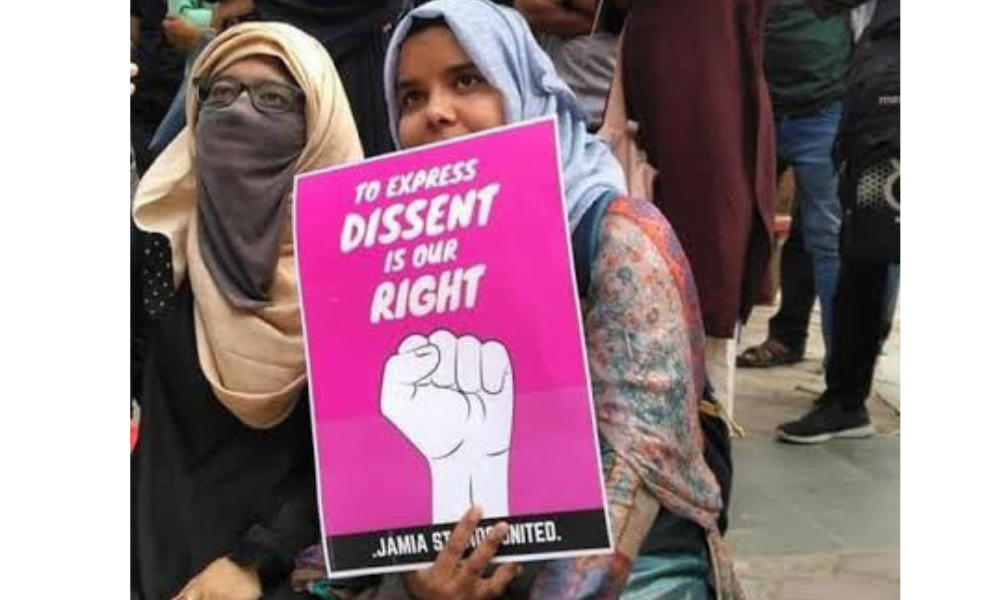
The return of student politics to university spaces such as Aligarh Muslim University (AMU) and Jamia Millia Islamia is significant for reasons that go beyond the formation of student unions. These developments represent the continued struggle of Muslim students to claim political space, demand representation and participate in the democratic life of their institutions. The recent student union elections at AMU carry particular significance. After an eight-year gap, the return of the electoral process marked an important moment for student representation. These elections were preceded by sustained student protests demanding the restoration of the union, including a 19-day hunger strike. Among the most significant outcomes was the election of Nashra Naim as the first woman vice-president in the history of the AMU Students’ Union. Her victory is not simply an individual achievement; it also marks the presence of women in a political space where their participation has historically been limited. It is a reminder that Muslim women are not waiting for someone else to speak on their behalf. They are contesting elections, taking up leadership positions and making their presence felt within institutions. At Jamia Millia Islamia, too, students have been raising their voices for the restoration of student union elections, and the administration’s agreement to hold them marks an important development in that struggle. These movements may appear institutional or campus-specific, but their significance extends beyond university boundaries.
There is also a personal cost to being politically visible, particularly for Muslims whose identities can become a reason for hostility and intimidation. I know a woman who is politically active and continues to speak about the issues she believes in. As a hijabi Muslim woman, her participation has also exposed her to threats and repercussions. Her experience brings attention to a dimension of activism that is often overlooked: the risks do not end when a protest is over or when a public statement has been made. Sometimes, the consequences follow individuals into their everyday lives. For women like her, political participation can mean having to navigate hostility directed not only at their political positions but also at their visible religious identity. Yet, what stands out to me is not simply the threats she has faced, but her decision to remain politically engaged despite them. Her story should not be reduced to one of vulnerability; it is also a story of courage, conviction and agency.
These examples point towards something larger: a generation that refuses to be politically invisible. Muslim students and young activists are finding ways to occupy spaces from which they have often felt excluded, whether through student elections, public organising, political conversations or individual acts of dissent. They are asking to be represented, but they are also insisting on the right to represent themselves. They are challenging the idea that Muslim political participation must always be explained, defended or viewed through the lens of suspicion. This generation is not without fear, nor is it untouched by the consequences of speaking out. But it continues to organise, participate and make demands. Perhaps that is what makes these developments so important. They remind us that Muslim resistance is not confined to moments of crisis, nor is it limited to responding to injustice after it occurs. It is also about building political presence, creating spaces for collective action and refusing the silence that is so often expected of a community. The struggle, therefore, is not merely to be included in someone else’s idea of democracy; it is to claim the right to shape what democracy itself should look like.
On Human Rights Day, when we speak so frequently about dignity, equality, religious freedom and the universality of human rights, we must also confront what these principles mean in the everyday lives of minority communities. Protecting the right to worship must also mean taking seriously the spaces that make that right possible. The question is whether the religious freedom, dignity, memories and collective lives of the people connected to it are being given the consideration they deserve.
DID YOU KNOW?
Human Rights for Whom?
India’s delegate Hansa Mehta successfully advocated for gender-neutral language in Article 1 of the Universal Declaration of Human Rights, changing “All men” to “All human beings” (UDHR, 1948).
A UN-linked global alliance of human rights bodies deferred the top ‘A’ rating of India’s National Human Rights Commission in 2023 and 2024 (The Hindu, 2024). It deferred the reaccreditation again the following year (ThePrint, 2025)
0 Comments