
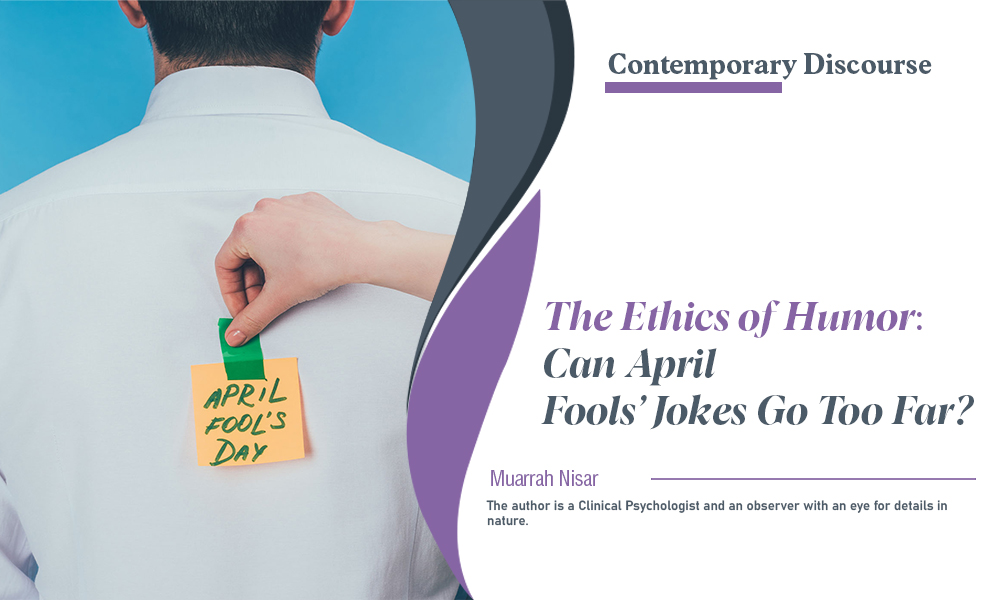
The author is a Clinical Psychologist and an observer with an eye for details in nature.
Understanding Humor in Islam and Where to Draw the Line
Humor is an essential part of human interaction. It lightens the mood, strengthens relationships, and provides relief in difficult situations. However, humor also carries an ethical dimension—while it can bring joy, it can also cause harm if misused.
In today’s world, particularly with the rising trend of April Fools’ jokes, humor sometimes crosses ethical boundaries, leading to unintended consequences. Islam encourages lightheartedness but also sets clear limits to ensure that humor does not lead to deception, mockery, or emotional distress.
April Fools’ Day: A Trend Without Thought
April Fools’ Day has become a global phenomenon, but its perception varies across cultures. In some regions, it is embraced as a lighthearted tradition, while in others, it is viewed skeptically due to its association with deception. With the rise of social media, pranks can spread rapidly, sometimes escalating beyond harmless fun to misinformation and public humiliation. Viral hoaxes, fake news, and exaggerated pranks have led to real-world consequences, including distress, backlash, and even legal repercussions.
The assumption that saying “sorry” afterward is enough to fix everything is flawed. A cruel joke or misleading statement can compromise trust, emotions, and dignity, making the victim feel belittled or deceived. Unfortunately, many fail to consider these consequences, assuming all pranks are harmless.
The Origins of April Fool’s Day: A Misguided Tradition
The exact origins of April Fools’ Day remain uncertain, but one widely accepted theory traces it to France in 1582. When Pope Gregory XIII introduced the Gregorian calendar, the new year was shifted from April 1st to January 1st. Those who continued celebrating on April 1st were mocked and tricked, giving rise to the tradition of playing pranks. Over time, this practice spread across different cultures, evolving into a day dedicated to deception.
While originally intended for lighthearted fun, modern April Fools’ pranks often prioritize shock value over kindness. The focus has shifted from innocent humor to elaborate hoaxes that can cause fear, distress, or lasting emotional harm.
Humor in Islam: A Framework of Ethics
Islam does not discourage humor. The Prophet Muhammad ﷺ himself engaged in lighthearted interactions, but his humor was always truthful, kind, and considerate of others’ feelings. One well-known example is when an elderly woman asked him whether old women would enter paradise. He humorously replied, “Old women will not enter paradise,” before clarifying with a smile that they would be made young again. His jokes never involved lies or humiliation, setting a model for ethical humor in Islam.
Principles of Ethical Humor in Islam
Truthfulness: A joke should never be based on deception. The Prophet ﷺ said,
“Woe to him who tells things, speaking falsely, to make people laugh! Woe to him! Woe to him!” (Abu Dawood)
- Respect and Dignity: Jokes should not come at the expense of someone’s honor or struggles. Surah Al-Hujurat (49:11) warns, “O you who have believed, let not a people ridicule [another] people; perhaps they may be better than them.”
Avoiding Harm: The Prophet ﷺ said, “There should be neither harming nor reciprocating harm.” (Ibn Majah)Humor should never cause mental or emotional distress. - Maintaining Social Harmony: Jokes should bring people together, not divide them. If a prank leads to misunderstanding or resentment, it has crossed the line.
Where Do We Draw the Line?
Enjoying humor is natural, but it is crucial to be mindful of its impact. Before playing a prank, consider the following questions:
- Will this joke hurt someone’s feelings or embarrass them?
- Am I lying or deceiving someone, even temporarily?
- Would I be okay if someone played this prank on me?
- Does this joke align with Islamic values of honesty, respect, and kindness?
April Fools’ Day has become a trend where pranks are carried out thoughtlessly, assuming they are harmless. But an apology after the damage is done does not undo the emotional or psychological impact. Instead of participating in a culture of deception, let’s shift our approach to humor. Jokes should uplift rather than degrade, bring smiles without causing distress, and align with the values of honesty and compassion upheld by Islam.
Conclusion: The Power of Ethical Humor
Laughter is a gift, but like all gifts, it must be used wisely. Ethical humor should bring joy without deception, respect others’ dignity, and foster genuine connection. A well-timed, kind-hearted joke can strengthen relationships, while a careless prank can leave scars.
The choice is ours.

Very insightful writeup… Humor should bring joy and not harm anyone
MashaAllah, very well explained in the light of Quran and sunnah.May Allah SWT Guide us all.May Allah SWT bless you with more knowledge, hikmat.& Accept your efforts Ameen.