
The author is pursuing her BAMS.
Ramadan isn’t just about fasting—it’s about finding moments when our hearts reconnect with our Creator. Some nights, this connection feels so powerful that it becomes unforgettable—one such night stays deeply etched in my heart.
That day had been overwhelming. I had spent hours at the hospital, dealing with difficult people and uncomfortable situations. My mind was exhausted — burdened with frustration, noise, and endless conversations that seemed to drain every ounce of energy. After hours of traveling back home, I only wanted to lie down and escape from the exhaustion.
But it was Ramadan.
I pushed myself to help my mother with Iftar preparations. Despite being drained, there was something inside me that wouldn’t let me give up — a yearning for peace, comfort, and something more. After iftar, I quickly tidied up, resisting the temptation to delay. I knew I had to get to the masjid in time for Taraweeh — I needed to be there.
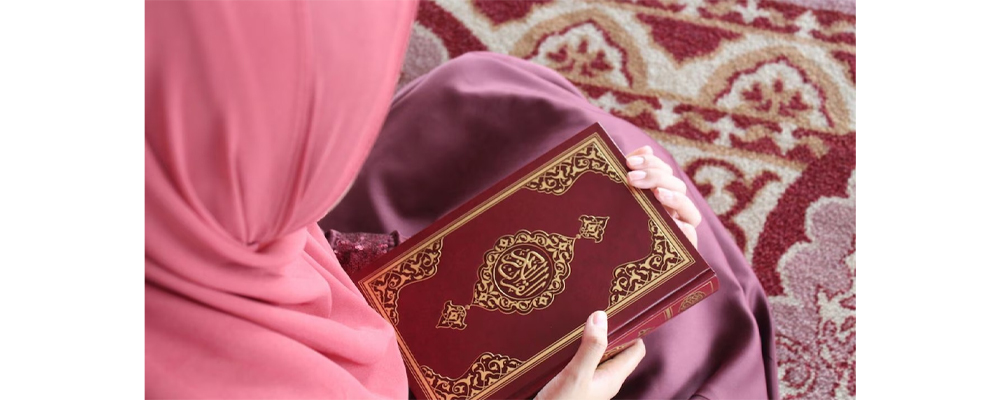
I rushed out the door, hoping to make it to the first saff.
When I reached the mosque, I saw women hurrying inside — some guiding their little children, whispering and shushing them; others adjusting their prayer mats and placing their water bottles in place. The room was alive with murmurs — greetings, whispers, and the quiet chaos of everyone finding their space.
Isha began. After the fardh prayer, the murmurs grew louder — sisters adjusting rows, moving forward, finding gaps. For a moment, it seemed impossible for the noise to settle.
Then came the call for Taraweeh — Allahu Akbar.
And suddenly, everything was still.
The whispers faded. The rustling stopped. The children quieted down.
All that remained was the sound of the Imam’s recitation — a voice so pure, so soothing, that it felt as if the words were wrapping around my heart.
It felt like time had paused.
My tired mind, which had been racing all day, suddenly quieted. The exhaustion that clung to me like a heavy cloak seemed to lift. Each verse felt like a wave, washing away the weight I had been carrying. My heart, which had felt tight and restless, now felt light — as though someone had unlocked a door inside me and let the fresh air pour in.
I stood there, still and silent, tears quietly gathering in my eyes.
This… this is what I had been longing for.
As I listened to the Imam recite, I thought about how this Qur’an—these powerful, life-giving words—first came to the earth.
Imagine the stillness of that night in the cave of Hira — when the Prophet ﷺ sat alone, seeking peace and clarity. For months, he had been retreating to that quiet space, reflecting deeply on the condition of his people and the emptiness he felt within.
And then, in that profound silence, the silence of the mountains and the darkness of the night, angel Jibreel (AS) appeared with a command that would change the world forever:
”Iqra! Read in the name of your Lord…” (Surah Al-‘Alaq 96:1)
The Prophet ﷺ, startled and trembling, had never experienced anything like it before. The weight of those divine words overwhelmed him.
The revelation didn’t just descend as words — it came with power, weight, and intensity that shook his very being. The Prophet ﷺ would sweat even on cold nights when revelation came. He would sometimes fall into deep exhaustion due to the sheer heaviness of the words. Once, while traveling on a camel, revelation descended upon him — and the camel itself sat down under the pressure.
Jibreel (AS) would deliver the Qur’an in different forms — sometimes appearing as a man, sometimes as a voice without a visible form. The most challenging form for the Prophet ﷺ was when it came like the ringing of a bell — a sound that demanded his complete focus, as if every word was being etched directly into his heart.
”Sometimes Jibreel comes to me like the ringing of a bell, and this is the hardest on me. When it departs, I have grasped what is said…” (Bukhari)
This was no ordinary book. Each word carried guidance, strength, and mercy. Every revelation wasn’t just for the Prophet ﷺ — it was for us. For every tired heart, restless soul, and person seeking peace.
That night in Taraweeh, as I listened to the beautiful recitation, I felt a glimpse of what the Prophet ﷺ must have felt — the comfort of Allah’s words soothing a weary heart.
I thought of the Sahaba — how they had experienced this Qur’an differently. For them, these verses weren’t just memorized — they were lived. They clung to the Qur’an as their guide, comfort, and strength.
I remembered the night when the Prophet ﷺ asked Abdullah ibn Mas’ud (RA) to recite the Qur’an to him. As Abdullah recited, the Prophet ﷺ began to weep — tears streaming down his face as he heard the words:
”How will it be when We bring a witness from every nation, and bring you (O Muhammad) as a witness against these people?” (Surah An-Nisa 4:41)
Even the Messenger of Allah ﷺ — the most patient, steadfast, and strong — couldn’t hold back his tears. Such is the power of the Qur’an.
I thought of Ubayy ibn Ka’b (RA), who wept uncontrollably on the following occassion:
The Prophet Muhammad (peace be upon him) recited a surah to Ubayy bin Ka’b and told him that Allah had specifically named him in it, causing Ubayy to weep.
Anas (May Allah be pleased with him) reported: Messenger of Allah ﷺ said to Ubayy bin Ka’b (May Allah be pleased with him), “Allah (SWT) has ordered me to recite to you Surat-Al-Bayyinah (98): ‘Those who disbelieve “.. Ubayy (May Allah be pleased with him) asked, “Did He name me?” Messenger of Allah ﷺ replied in the affirmative. Whereupon Ubayy (May Allah be pleased with him) began to weep. Al-Bukhari and Muslim.
Imagine the honor — being told that Allah Himself had chosen his voice to be heard.
And how must it have felt for the Sahaba when they stood for hours in Qiyam, immersed in the Qur’an, feeling their burdens lighten with every verse?
That night in Taraweeh, I felt something they must have felt. The Qur’an wasn’t just words — it was comfort. It wasn’t just recitation — it was healing. It was as if Allah Himself was speaking to my tired heart, telling me:
”I am here. I have always been here. And I will never leave you.”
I couldn’t stop my tears — not out of sadness, but because I felt whole. The emptiness I had carried throughout the day was filled with a peace I couldn’t describe.
The Qur’an is not just a book—it’s a companion for the soul. It knows the aches we can’t put into words. It speaks to our struggles, our fears, and our regrets—yet somehow, every verse feels like hope pouring into the cracks of a broken heart.
The beauty of Taraweeh is that it brings us back to this connection — standing in rows, shoulder to shoulder, feeling the power of Allah’s words wash over us. We forget the world for a while — its noise, its worries, its burdens — and for those precious moments, we feel truly alive.
And perhaps that’s the miracle of the Qur’an — no matter how tired we are, no matter how restless our hearts may feel — its words have a way of reaching us.
That night, as I stepped out of the masjid, I looked up at the sky — the moon glowing softly above, the air cool against my face — and I realised something profound:
The Qur’an is not just for Ramadan nights; it’s for every restless heart, every weary soul, every moment we feel lost or broken.
Because the Qur’an isn’t just words on a page — it’s Allah’s love, mercy, and guidance — sent directly to you and me.
And in those moments when life feels heavy, may we always remember — as long as we have the Qur’an, we will always have a way back to peace.
Ya Allah, make the Qur’an the spring of our hearts, the light of our chests, the remover of our sadness, and the reliever of our worries. Ameen.
Subhanallah! May Allah SWT enhance Sister’s capabilities; take best of your abilities for the cause of Islam & grant you grand success in both the worlds.