
The author is a doctor based in Pune with a profound interest in Islamic studies, Indian politics, and Islamic Indian history.

The Rowlatt Act and Its Impact
The British government passed the Rowlatt Act (1919) to curb growing nationalist movements and revolutionary activities in India. After World War I, Indians expected political reforms, but instead, the British feared uprisings similar to the 1917 Russian Revolution. The Ghadar Movement and other revolutionary activities had increased, making the British anxious about losing control. The act was based on the Rowlatt Committee’s recommendations to suppress anti-colonial resistance. It aimed to extend wartime restrictions by allowing arrests without trial, restricting press freedom, and suppressing protests. The British sought to crush the rising demand for self-rule and independence.
The Rowlatt Act, passed on 10th March 1919, was a brutal and oppressive law that crushed civil liberties in India. It allowed arrests without trial, secret tribunals, and press censorship, silencing any opposition to British rule. People were detained for years without evidence or legal defense, while public gatherings were declared illegal. It became known as the “Na Daleel, Na Appeal, Na Wakeel” Act.

The Anti-Rowlatt Satyagraha and Rising Unrest
The Anti-Rowlatt Satyagraha, led by Mahatma Gandhi in 1919, was a nationwide protest against the Rowlatt Act, which allowed the British to detain Indians without trial. Gandhi urged peaceful resistance, organizing hartals and protests. By the end of the month, the wildfire called Gandhi had spread all over India, and Punjab was not aloof.
On 9th April 1919, during the Anti-Rowlatt Satyagraha, Hindus peacefully took out Ram Navami processions, which Muslims wholeheartedly supported. This remarkable display of Hindu-Muslim unity alarmed the British authorities, as it strengthened the national movement against colonial rule. All the efforts of divide and rule of the British government seemed to be failing in front of their eyes.
Arrest of Nationalist Leaders
The administration of Lt. Gov. Michael O’Dwyer, on April 10, 1919, arrested Dr. Saifuddin Kitchlew and Dr. Satya Pal, two prominent nationalist leaders from Amritsar, for opposing the Rowlatt Act and promoting peaceful resistance. Dr. Satyapal and Dr. Saifuddin Kitchlew were treacherously arrested on 10th April 1919 when they went for a peaceful dialogue with Deputy Commissioner Miles Irving, who had just arrived in Amritsar.
Extremely nervous about the growing crowds and rising unrest, the British deceitfully detained them and secretly deported them to Dharamsala, triggering massive protests in Amritsar. Their arrests sparked enormous outrage, leading to widespread protests and strikes across the city. People demanded their release, but the British responded with brutal force, further fueling resentment against colonial rule.
On the evening of 10th April 1919, thousands of people marched to the Deputy Commissioner’s office in Amritsar, demanding the release of Dr. Satyapal and Dr. Saifuddin Kitchlew. In response, British forces opened fire on the unarmed crowd, killing around 20 people. This brutal act further enraged the public; they ransacked, looted, and burnt British buildings, thus intensifying protests against British rule. Five British officers were killed, and Marcella Sherwood, a British teacher, was assaulted on the street. This unleashed the full wrath of the British Raj upon the people of Amritsar, as the colonial authorities responded with unbridled repression and ruthless vengeance.
The “Crawling Lane” and British Repression
As part of their vengeance, the British forced every Indian—men, women, and even children—to crawl through a narrow passage while being brutally whipped. This lane became infamous as the “Crawling Lane” (Kodeyon Wali Gali), a grim symbol of British tyranny and humiliation.
Brigadier General Dyer’s Arrival
By evening, Brigadier General Reginald Dyer arrived from Jalandhar to control the situation in Amritsar. Reginald Edward Harry Dyer was born in India into a family of British settlers. He could speak fluent Hindi, Urdu, and Punjabi. However, despite his familiarity with Indian languages and culture, Dyer remained deeply entrenched in colonial ideology, seeing himself as an enforcer of British rule rather than a part of the land where he was born.
On April 12, 1919, Brigadier General Reginald Dyer issued a series of harsh proclamations in Amritsar to crush the growing unrest. He declared a complete ban on public gatherings, warning that any assembly would be met with ruthless force. A strict curfew was imposed, restricting movement after sunset. He prohibited any processions, including religious gatherings, and ordered that Indians must salute British officers or face severe punishment.
The Massacre at Jallianwala Bagh
On the morning of April 13, 1919, an uneasy stillness hung over Amritsar, thick with unspoken fears and simmering unrest. The city pulsed with tension; its people were weighed down by days of repression and bloodshed. As the sun climbed the sky, hundreds made their way into Jallianwala Bagh—some driven by a desperate hope to demand the release of their beloved leaders, Satyapal and Kitchlew, others seeking a brief respite after offering Baisakhi prayers at the sacred Golden Temple.
As reports of defiance against the curfew reached Brigadier General Dyer at Ram Bagh, his fury ignited like a smoldering ember bursting into flame. Without hesitation, he mobilized his forces, setting out for Jallianwala Bagh with two menacing armored vehicles, rolling steadily through the tense streets of Amritsar. Though a mere 1.7 kilometers, the journey carried the weight of impending doom. Upon reaching the entrance, the towering walls and narrow passage rendered the vehicles useless—too constricted for their brutal machinery to penetrate. Undeterred, Dyer disembarked, his iron resolve unshaken, leading his troops forward on foot.
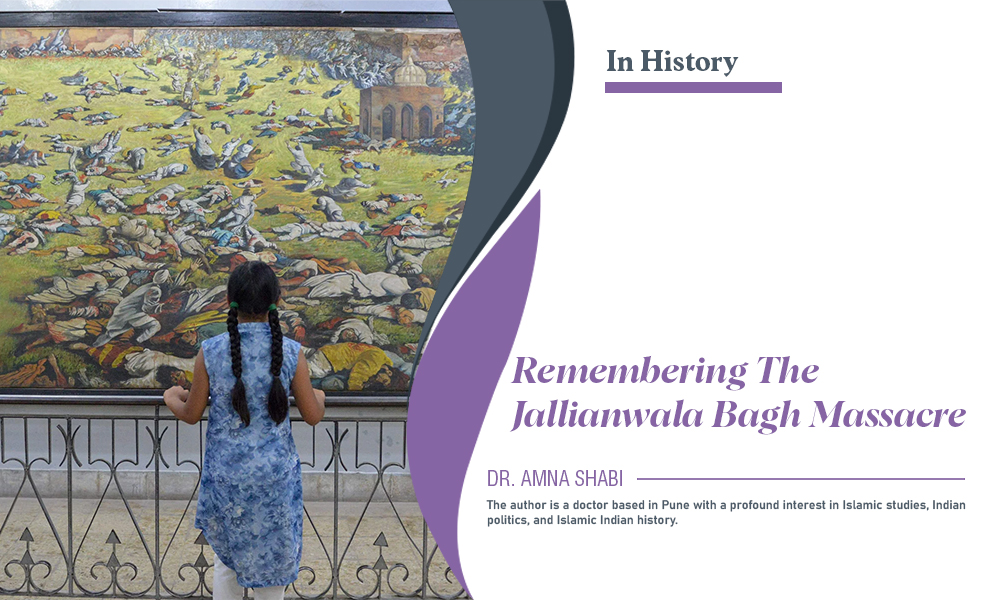
At precisely 4:30 PM, General Dyer, with cold, calculated intent, led 90 soldiers to the sole entry and exit point of Jallianwala Bagh, sealing the fate of every soul trapped within. He deliberately selected Baluchi and Gurkha troops, men with no personal ties to the people of Amritsar, ensuring they would execute his orders without hesitation or remorse. Then, without warning, the air was torn apart by the pronouncement of “fire” and the deafening crack of gunfire. For an agonizing 11 minutes, bullets rained mercilessly upon the defenseless crowd—men, women, and children scrambling in terror, only to find no refuge, no escape. Some fell where they stood, others leaped into the well, preferring drowning in a shallow well over a bullet-ridden death. When the guns finally fell silent, the earth was drenched in blood. British estimates claimed 300 dead, but the Indian National Congress counted over 1,500—a massacre that would forever stain the pages of history with its unspeakable horror.
Aftermath and the Road to Freedom
The Jallianwala Bagh massacre ignited nationwide outrage, shattering Indian trust in British rule. Rabindranath Tagore renounced his knighthood in protest, condemning the inhumanity. Gandhi, deeply shaken, issued a clarion call for the Non-Cooperation Movement, urging Indians to boycott British institutions. The brutality exposed colonial oppression, marking the empire’s inevitable decline.
Legacy and Reflections
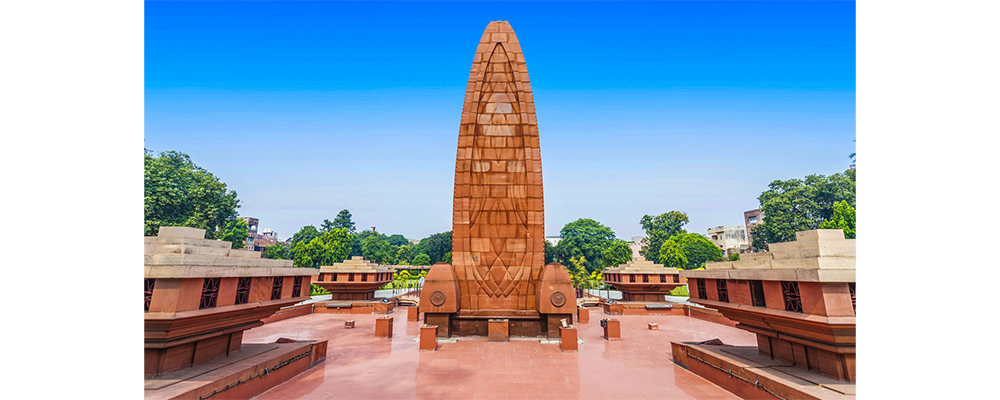
Looking back through the years, Jallianwala Bagh stands as a powerful symbol of defiance—a testament to a people who refused to be reduced to second-class citizens in their land. Today, as Hindutva-driven policies push minorities to the margins, history seems to echo itself. When oppression deepens and voices are silenced, one must ask— isn’t one massacre that has stained history forever enough?
References
- The Anarchy: The East India Company, Corporate Violence, and the Pillage of an Empire – William Dalrymple
- India’s Struggle for Independence – Bipan Chandra
- Eyewitness to Amritsar: A Collection of Accounts of the Jallianwala Bagh Massacre – Taylor Sherman
- Jallianwala Bagh, 1919: The Real Story – Kim A. Wagner
- The Butcher of Amritsar: General Reginald Dyer – Nigel Collett
0 Comments