
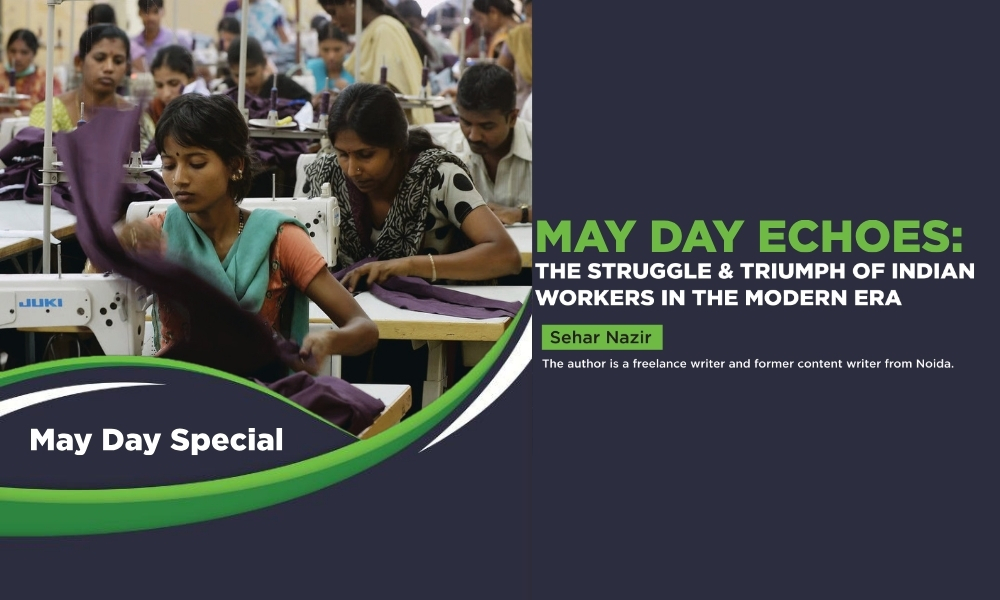
The author is a freelance writer and former content writer from Noida.
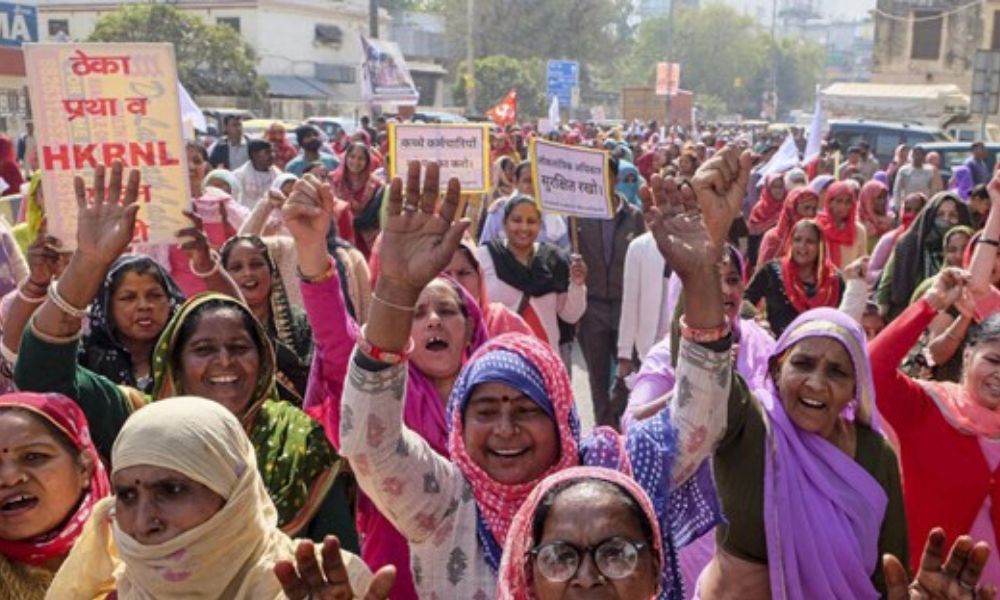
As India celebrates May Day, also known as International Workers’ Day, it’s an opportunity to reflect on the struggles and triumphs of the country’s workforce. May Day, observed on 1st May, is a holiday that honours contributions and struggles. May Day arrives again, but the question that still haunts: Did we really honour workers? Despite being the backbone of our nation, many Indian workers continue to face significant challenges, including low wages, poor working conditions and limited access to social security benefits.
“May Day’s Silent Cry; Stop the Hollow Tributes to those unnoticed and unacknowledged heroes…”
The Illusion of Growth, The Reality of Workers
Job cuts are sweeping across India, transforming what was once rare into a grim routine. Fear and uncertainty now haunt the workforce, even as headlines boast of “India rising.” On paper, the economy shines, numbers climb, companies expand, and optimism fills boardrooms. But for millions of workers, this growth feels hollow, a dazzling illusion masking deep inequality.
Every ignored barista, every overlooked cleaner, every unacknowledged security guard tells the real story. A society that fails to honour its workers while celebrating wealth is not just economically unequal, but it also suffers from spiritual poverty. True progress is not measured in GDP charts but in how we value human dignity.
Labour Day is not merely a holiday. It is a reminder of the sacred contribution of workers; their dignity, dedication, and determination. Whether in factories, offices, hospitals, or homes, labour is the backbone of our societies. Human dignity is not divisible, negotiable, or conditional. To deny it is to deny the very foundation of our collective humanity.
Informal Jobs in India: 90% of Workers Without Protection
India is frequently celebrated on the global stage as an economic powerhouse. With a soaring GDP graph and growing company growth, a lavish lifestyle for many, it is a Big Illusion! Why? Because the money and jobs aren’t reaching everyone. “We grow rich by keeping most workers poor.”
- Most Jobs Are “Informal” and Unsafe
Nine out of ten Indian workers have informal jobs. That means no contracts, no fixed salaries, no paid leave, no retirement, and no health insurance if injured. In short: work without rights, survival without security.
These are people like street sellers, farm workers, builders, and house cleaners. They work hard every day to keep the country running. But if they fall sick or lose their job, they have nothing to fall back on. The growth we hear about? It doesn’t help them much.
- Jobs Aren’t Growing, Wages Aren’t Rising
India’s economy grows fast, but it creates few new jobs. Many new companies use machines or computers instead of people.
- Wages for poor workers stay low. Even with rising prices, they earn just enough to survive.
- Rich people get richer, but the average worker sees no big change.
It’s like a party where only a few guests eat all the food, while others go hungry.
- Gig Jobs: Freedom or Trap?
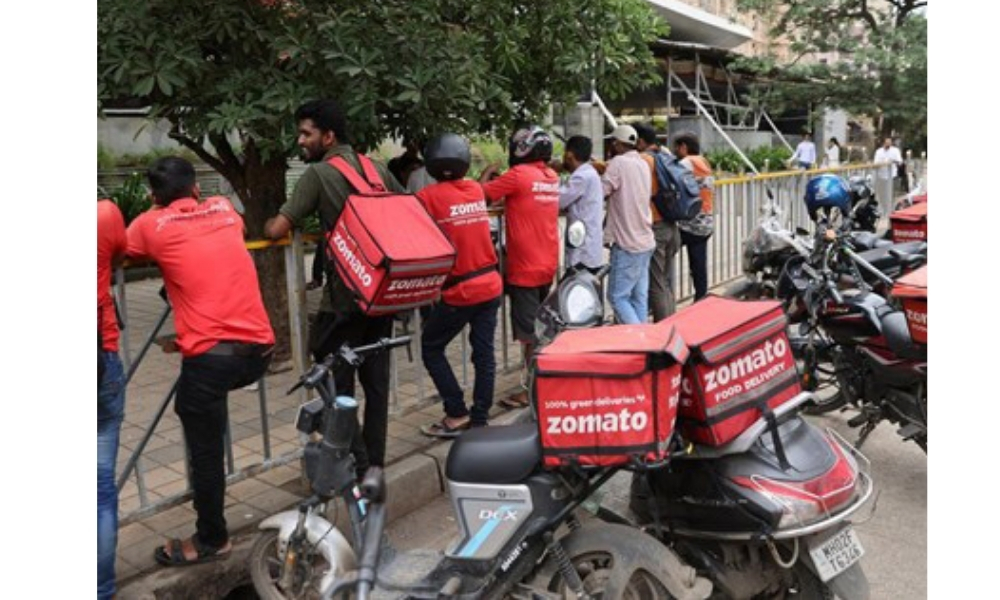
Apps like Uber, Ola, Zomato or Swiggy promise independence, but workers face endless hours, traffic, and no breaks. They buy their own bikes, fuel, and phones, yet earn only when orders come. Platforms take big cuts, while workers live under constant fear of “deactivation.” Flexibility here means insecurity, exhaustion, and poverty wages disguised as freedom.
- Women Workers Struggle More
One out of three women work for pay in India in addition to their unpaid household chores. like
- Paid women’s jobs often pay less than men’s and can be unsafe.
- No good childcare means many can’t work outside.
Women keep families going, but their work isn’t counted in “growth” numbers.
- Weaker Rules for Workers
To make business easier, some old worker protections are being changed.
- It’s harder to form unions or fight unfair treatment.
- Companies can fire people more easily without giving reasons.
This might create some jobs, but it makes life tougher for those already working.
“We can’t claim to grow when millions of workers remain invisible.”
India’s Invisible Workforce: The Hidden Army That Keeps the Nation Running
Previously, I told you that 9 out of 10 Indian workers are practically ghosts in the system. They build your homes, deliver your food, clean your offices, and power the economy; yet officially, they don’t exist!
The Great Invisibility Act
Picture this: Over 90% of India’s workforce operates in the shadows-no contracts, no job security, no safety net. We’re talking about 500+ million people who are essentially economic ninjas: they do all the work but get none of the protection.
Who Are These Invisible Workers?
Construction workers build skyscrapers but live in slums; street vendors feed millions yet earn pennies; domestic helpers survive on ₹8,000; factory workers are fired at will; farmers starve while feeding the nation; auto drivers battle traffic and insecurity.
COVID Tsunami
India’s Invisible Workforce Became Visible: and Abandoned
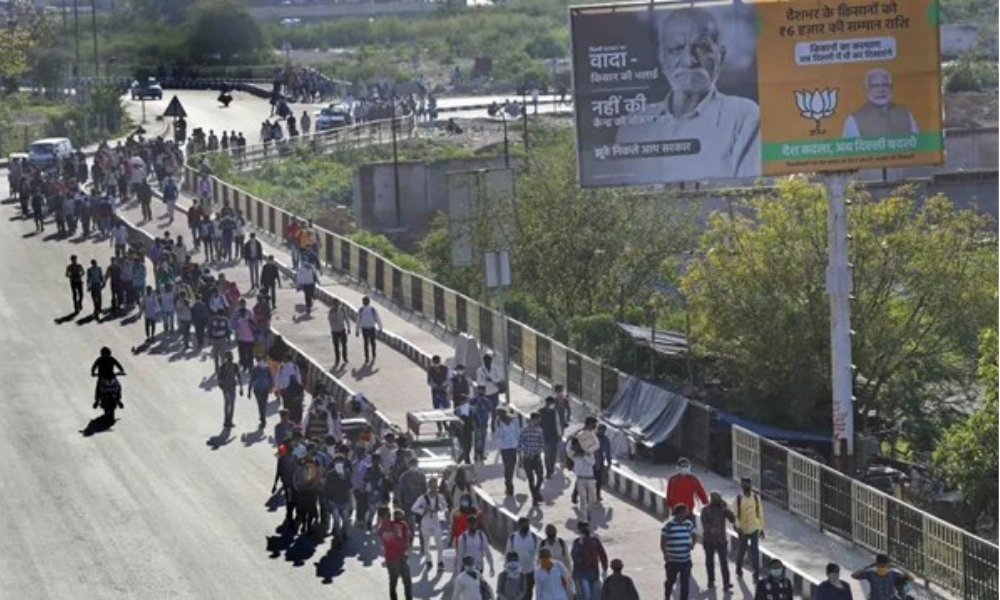
Lockdown turned invisibility into tragedy. Overnight, 120 million jobs vanished,45% of the non-agricultural workforce gone. With no contracts, savings, or government support, millions walked highways home, exposing the fragility of India’s labour system. What looked like migration was the backbone of the economy collapsing in real time, leaving workers stranded, exhausted, and erased.
The ₹10,000 Trap: Living Below the Poverty Line… Officially
Here’s th cruel irony before us: the median Indian worker earns just ₹10,000 a month, below the government’s own minimum wage. Supporting 3–4 family members on this income means barely ₹2,857 per person, per month. It’s impossible math: groceries, healthcare, and education all become luxuries. The system leaves workers trapped in poverty by design, forcing millions to survive on less than what’s officially required to live with dignity. This is not growth-it is exploitation disguised as progress.
The Post-Pandemic Reality Check
Since COVID-19, workers’ struggles have deepened. Real wages fell by 1.7% compared to 2019, while inflation erased any gains. Recovery jobs often pay less, forcing families into mounting debt just to survive. Instead of rebuilding livelihoods, the pandemic left millions poorer, more insecure, and trapped in a cycle of low wages and rising costs. For India’s invisible workforce, the promise of recovery has meant harsher realities and diminished hope.
The Great Vanity: Labour Laws That Protect Profits, Not People
India’s 2025 labour reforms were celebrated as progress, but for workers, they meant betrayal. Layoffs now need approval only if 300+ jobs are cut (earlier 100). Informal workers still get no social security. Collective bargaining was weakened. And there’s no real enforcement.
In simple terms, it’s easier to fire workers, harder for them to organise, and almost impossible to demand justice. What was promised as reform turned into the erasure of rights.
Survival Mode: No giving up
For India’s invisible workforce, every day is a competition where second place means your family doesn’t eat. Here’s what “flexibility” really looks like:
Priya’s 12-Hour Day for ₹5,500
For India’s invisible workforce, survival is a relentless contest. Priya, a domestic worker in Delhi, rises at dawn, works across two households, travels three hours daily, and earns just ₹5,500 a month. No benefits. No sick leave. No security. Only exhaustion. This is the brutal reality behind “flexibility”; labour stretched to the limit, rewarded with poverty wages, where losing means your family doesn’t eat. Too harsh to digest this bitter reality:
Monthly earnings: ₹5,500 for working 12+ hours daily, 6 days a week. Benefits: Zero. Sick days: Zero. Job security: Zero.
The Gig Economy Illusion
Meet Akash: Uber Driver’s Reality Check
India’s 7.7 million gig workers are sold the dream of freedom, but the reality is exploitation. Akash, an Uber driver, works 12-hour days yet fears one bad rating could end his livelihood. No minimum wage, no sick leave, and algorithms decide their fate. “Flexibility” here means insecurity, exhaustion, and poverty disguised as independence.
They call us ‘partners,’ but we can’t negotiate rates. They call it ‘flexibility,’ but if I don’t work 12 hours, I can’t pay rent. They say I’m ‘independent,’ but one bad rating and I’m unemployed.
The Construction Puzzle: Building India, Breaking Lives
India’s infrastructure boom rests on 50+ million migrant workers earning ₹200–400 a day. They endure 10–12-hour shifts under the sun, cramped living conditions, no safety gear, and no healthcare. They build skyscrapers they’ll never afford, living lives closer to modern slavery than progress.
Modern slavery in India doesn’t wear chains, it wears uniforms, carries tools, and hides behind the word ‘informal.’
The Modern Slavery Experience
Modern slavery in India isn’t chains and whips; it’s hidden in everyday labour. Millions of construction workers, domestic helpers, and migrant labourers endure poor wages, 12-hour shifts, unsafe conditions, and no contracts. They build skyscrapers, feed cities, and power industries, yet live in slums, starve, or collapse from exhaustion. Their exploitation is normalised as “informal work,” but in reality, it’s a system where survival replaces dignity, and freedom is traded for desperation.
Women in the Invisible Economy: Double Invisibility
Female workers face a special kind of invisibility, ignored by both the formal economy and their own families’ financial planning.
The Double Burden Reality:
- Low-paid formal work (if they can find it)
- Informal work (often unrecognised by family)
Seema’s Story: Tailoring Dreams
Seema works from home, stitching clothes for a local boutique. She earns ₹4,000/month working 8 hours daily, but her husband considers it “pocket money,” not real income. When she got sick, there was no income-and no sympathy.
Women’s labour fuels the economy, yet remains invisible in both workplace and home.
The Health Time Bomb: When Bodies Break Down
Working in India’s informal sector is not just economically harsh; it’s physically deadly. With 90% lacking health insurance, workplace injuries become personal burdens, chronic illnesses go untreated until critical, and mental health is ignored entirely. Early death rates are far higher than in the formal sector, exposing a hidden health crisis. For millions, survival means sacrificing well-being, as broken bodies and neglected minds silently fuel the nation’s growth while paying the ultimate price.
The Pandemic Revealed Everything:
During COVID-19, informal workers faced an impossible choice:
- Work and risk death (from virus exposure)
- Stay home and risk death (from starvation)
Most chose to work. Many died.
The Human Cost: Dreams Deferred, Lives Destroyed
India’s invisible workforce, nearly 500 million people, lives in survival mode. Dreams vanish daily: children lose schooling, healthcare is out of reach, entrepreneurship is impossible, and dignity erodes when exploitation existsi t’s about the right to live with dignity and opportunity.
The Ticking Time Bomb: The old social contract, work hard, stay quiet, hope for change, is collapsing. Anger is rising: labour protests grow, migration patterns shift, informal groups organise, and youth reject exploitation. Unless dignity and protection are restored, India risks a social and economic upheaval driven by those who refuse to remain silent.
The Path Forward: Making the Invisible Visible
The solution is clear, though politically difficult. India must act decisively: register every worker to guarantee basic rights, ensure healthcare and social security, follow them wherever they go, strictly enforce labour laws to deter violations, protect collective bargaining, and set fair minimum wages that allow families to live with dignity. These steps are not optional; they are the foundation of a just economy and the only path to honouring the nation’s workforce.
On this Labour Day, let us pledge: no worker will remain invisible, no contribution will go unrecognised, and no dignity will be negotiable. India’s future depends not on GDP charts, but on the justice only, we extend to those who build our nation.
On a final note: A Nation’s Soul Test
How a nation treats its workers reflects its values. When 90% of India’s workforce remains unseen despite building the country’s economy, it is not just an economic issue, but it is a moral one. The question is less about whether India can afford to act, and more about whether it can afford the cost of neglect.
From Hollow Tributes to Human Dignity
As the sun sets on another May Day, we must ensure the “Silent Cry” of our invisible workforce is finally heard. True triumph for India lies not in its rising GDP, but in turning hollow tributes into a lasting promise of dignity and protection for those who build our nation. Only when the shadows are lifted can we truly celebrate.
“A nation’s greatness is measured by how it treats its weakest members”
DID YOU KNOW?
🛠️ May 1 traces back to the Haymarket Affair in Chicago, where workers were protesting for an 8-hour workday.
⏰ The demand for “8 hours work, 8 hours rest, 8 hours leisure” became a global labour standard after these protests.
🌍 Over 80 countries officially observe Labour Day on May 1, though some (like the U.S. and Canada) celebrate it in September.
🇮🇳 In India, the first Labour Day was celebrated in 1923 in Chennai by the Labour Kisan Party of Hindustan.
🚩 The red flag, symbolising workers’ solidarity and struggle, became closely associated with labour movements worldwide.
[3018]a9bet Official Login | Pinakamabilis na GCash Casino sa Pinas,a9bet ang iyong gateway sa legit online slots philippines. I-download na ang app para sa mabilis na laro at alamin kung paano maglaro ng baccarat. Mag-register na! visit: a9bet