
The author is a freelance writer and former content writer from Noida. A postgraduate in Mass Communication and Journalism from Kanpur University, she currently resides in Bareilly, UP
How Healthy Boundaries Shape a Peaceful Home
Real freedom at home begins with respect, personal space, and the right to be heard. When every family member feels safe to express themselves, the home becomes a place of trust, comfort, and healthy growth.
“When love listens, freedom lives.”
Every home carries boundaries — not to limit us, but to protect the peace we share. Gentle rules help each heart feel safe, respected, and connected.
“Personal freedom and home restrictions coexist to create a safe structure for growth.”
Freedom and boundaries are not enemies — they are partners.
When Protection Turns into Control
In our homes, we cherish freedom, yet often live under restrictions. This paradox demands understanding and open communication to foster healthy relationships.
But when restrictions grow too rigid, they begin to suffocate. The sweet home slowly becomes a silent battlefield, where people feel controlled, misunderstood, and emotionally drained.
“Home is where the heart is… but what if the heart is only allowed to beat to someone else’s rhythm?”
This is the quiet rebellion within four familiar walls:
A daughter’s first “no”,
A son’s unspoken dream,
Walls growing taller than love,
And hearts quietly breaking.
“A home that silences dreams and refusals stifles the heart and soul of its children.”
Every choice had been decided — school, clothes, friends, future — all wrapped in the name of love. This is the story of children who were loved so tightly they could not breathe.
Love that demands silence is not love.
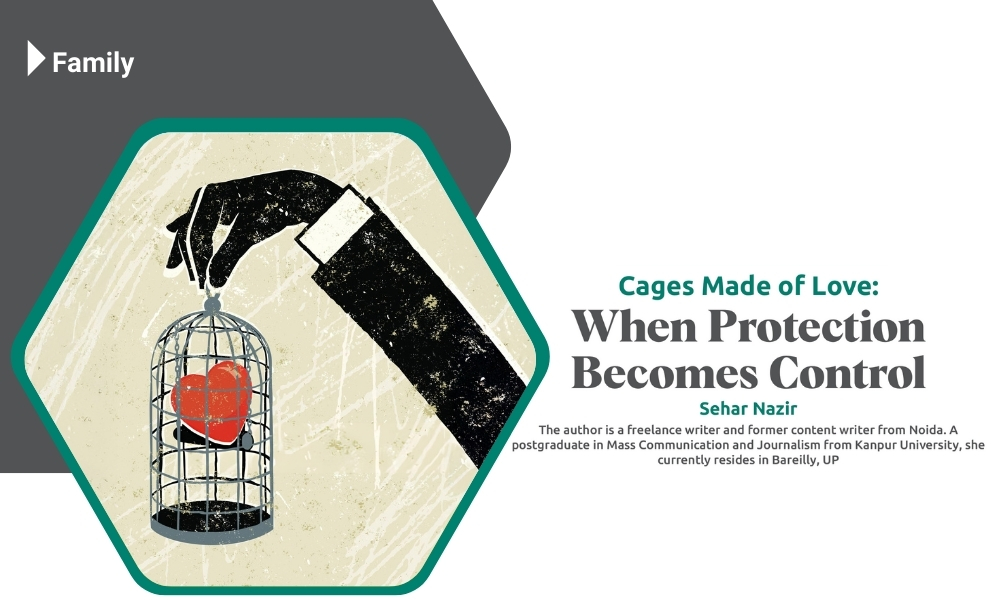
It is a cage with the word “family” painted on the bars.
And some of us break our wings against those bars —
until we realise we were born to fly.
The Freedom We Never Talked About
The Quiet Violence of “I’m Only Protecting You”
We have all heard these words:
“I’m just keeping you safe.”
“I know what’s best for you.”
“This is for your own good.”
They sound like love. They feel responsible, even noble. But too often, they are velvet gloves over an iron grip.
When a child’s instincts, choices, and voice are repeatedly overridden in the name of protection, we are not shielding them from the world. We are teaching them that the world cannot be trusted — and worse, that they themselves cannot be trusted.
A child who is never allowed to make mistakes learns that mistakes are catastrophic.
A teenager whose every decision is corrected learns that their judgement is defective.
A young adult whose emotions are constantly managed learns they are too fragile to feel.
The result is not safety, but dependence disguised as devotion.
We raise people who scan rooms for the strongest opinion before forming their own.
Who apologise for existing too loudly.
Who, at thirty, still seek permission to be angry, sad, or ambitious.
This is not protection.
It is slow-motion identity theft.
Love That Teaches, Not Shrinks
The parents who control the tightest often love the hardest. Many are simply repeating the only childhood they knew — terrified that freedom equals danger because freedom once meant pain to them.
They are not villains. They are survivors, passing down survival strategies that no longer serve.
But love is not a contract that says: “I will keep you safe if you remain small.”
Real love says:
“I will teach you how to cross the street, then let you cross it.”
“I will sit with your heartbreak, not erase it.”
“I will trust you before you earn it — because that is how trust is built.”
The bravest parenting choice is not preventing the fall.
It is teaching how to land — and then stepping back.
One day, we will not be there to catch them.
If all we taught them was how to be caught, they will spend a lifetime waiting for arms that never come.
Let them scrape their knees.
Let them choose wrong sometimes.
Let them speak and be heard, even when their voice shakes.
The world is far less dangerous than a life spent doubting one’s own competence.
Raise adults you would trust with your own heart.
That is the only protection that lasts.
An Islamic Foundation for Personal Freedom
“No soul bears the burden of another.”
(Surah Al-An‘ām 6:164)
This verse affirms that every child has their own identity, accountability, and moral space.
Islamic teachings offer timeless guidance on dignity, balance, and purpose. When understood through a gentle Islamic lens, they bring clarity to human relationships — including family life.
Children as Amanah (Sacred Trust)
In Islam, children are not possessions. They are an amanah — a sacred trust.
Disregarding a child’s “no” or silencing their dreams contradicts Islam’s emphasis on justice, mercy, and respect within the home.
“There is no compulsion in religion. Truth stands clear from falsehood.”
(Surah Al-Baqarah 2:256)
Children have the right to refuse what is harmful, sinful, or unjust. Believers are commanded to uphold justice even if it stands against parents or family.
The Qur’an makes it clear that children are not required to obey parents in wrongdoing or injustice (29:8, 31:15). Islam promotes conscious obedience, not blind submission.
Freedom Within Four Walls: An Islamic Lens
In many homes, freedom feels like a negotiation.
A teenage girl is denied a study group “for her safety.”
A boy hides his tears because “men don’t cry.”
A mother abandons her art to cook another meal.
A father skips rest to meet expectations.
These quiet sacrifices reveal how love and tradition can cage those they intend to protect.
Islam does not demand fear-based restriction. It demands balance rooted in wisdom. The Qur’an and Sunnah emphasise dignity, knowledge, and kindness — not control disguised as piety.
Girls and Protection
For girls, protection often becomes confinement. Yet the Prophet ﷺ made seeking knowledge obligatory for every Muslim, male and female. Safety must never mean silencing ambition. Secure pathways honour both caution and growth (16:97).
Boys and Emotional Freedom
Boys are given outward freedom but denied emotional expression. Yet the Prophet ﷺ wept, showed affection, and served his family. True strength is mastery over anger, not suppression of feeling.
Parents and Burnout
Parents sacrifice endlessly, yet Islam does not sanctify self-erasure. The Qur’an commands kindness to parents (17:23–24), while balance, shared responsibility, and honest conversation are also acts of worship.
Gradual Freedom
Children need boundaries — but suffocating ones breed resentment or helplessness. The Prophet ﷺ advised stages of parenting: play, teaching, and friendship. Explaining the why behind rules transforms restriction into preparation for adulthood.
The Middle Path of Freedom
Islamic freedom is neither Western individualism nor cultural authoritarianism. It is the middle path — rights balanced with responsibility, protection tempered by empowerment, and love rooted in justice.
“And among His signs is that He created for you homes of tranquillity, and placed between you affection and mercy.” (Qur’an 30:21)
True freedom in Islam means freeing the heart from harm and choosing what preserves dignity, justice, and peace.
Islamic freedom in the home means:
- freedom from sin and oppression
- freedom to fulfil sacred rights and duties
- freedom shaped by mercy and justice
- —not absolute individualism, but balanced liberty within Allah’s limits (4:19).
Closing Reflection
“Let our homes echo mercy, not fear; voices, not silence.”
When families embrace this balance, the home becomes a reflection of Jannah — a place where every soul is trusted to grow, guided to choose wisely, and loved enough to fly.
Masha Allah. Worth reading.
[5918]777b Login Oficial | Mejores Slots y Depósitos en Oxxo,777b es tu portal de entretenimiento. Descarga la app oficial, disfruta las mejores slots y aprende cómo jugar ruleta online. ¡Regístrate y comienza hoy mismo! visit: 777b