
The author is a freelance writer with a background in content writing. After writing in niches like tech, finance and digital marketing, she has now pivoted towards social and political issues.
It’s a chilly winter night on the farm. Everyone is fast asleep. All but one…
On silent feet the Tomten visits the dreaming cows, the slumbering sheep and the children sleeping soundly in their beds. He whispers softly to each of them, making sure they are safe and warm.
In Astrid Lindgren’s The Tomten, a mysterious folklore gnome watches over a farm on a long, cold winter night. As the world is engulfed in cold and darkness, this little guardian moves between sleeping animals offering warmth and reassurance. For centuries, winter has been a time of the year when families gather around the fire, share food and stories and mark the changing of seasons through festivals and rites. The winter solstice – the shortest day and the longest night in the Northern Hemisphere – has always occupied a special place in this seasonal imagination. It occurs when the North Pole is tilted farthest away from the Sun. The darkness of winter and the return of longer days have influenced calendars as well as inspired winter customs, storytelling and traditions across different societies around the world. Ancient monuments like Stonehenge, Newgrange and Cahokia Woodhenge are aligned with the sunrise or sunset on the winter solstice.
What Is the Winter Solstice?
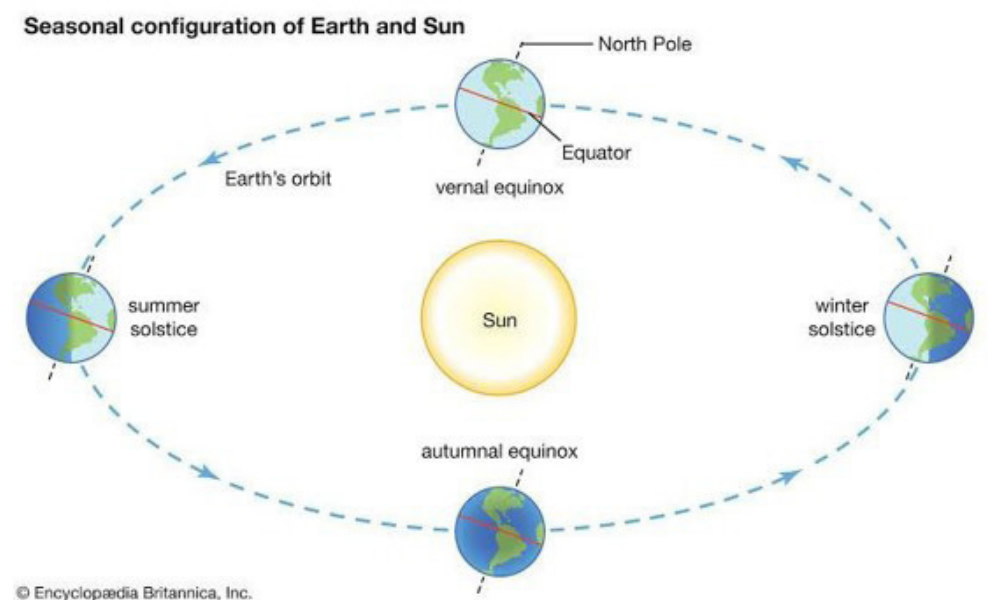
The word ‘solstice’ is derived from two Latin words: “sol” (sun) and “sistere” (to stand). The winter solstice is also known as “The Day the Sun Stands Still.” The Sun appears to have paused as the seasonal movement of its daily path reaches its northern or southern limit before the direction of travel is reversed. The Earth rotates on an axis tilted approximately 23.5 degrees relative to the plane of its orbit around the Sun. As the Earth revolves around the Sun, one pole is tilted towards the sun, while the other pole tilts away from it. In June, the Northern Hemisphere is tilted towards the Sun. The arc of the sun across the sky grows longer, resulting in longer hours of daylight in the Northern hemisphere. In December, the Southern Hemisphere is tilted towards the Sun. The daylight arc in the Northern Hemisphere starts shrinking. Near the December solstice, the sun reaches its southernmost position.
The winter solstice marks the exact moment when the Northern Hemisphere is tilted farthest away from the Sun. It usually happens around December 21 or 22 at the same second around the world. As less sunlight reaches the earth, the winter solstice is the day of the year with the least amount of daytime. Every day after the winter solstice, the days become increasingly long until we reach the longest day of the year, also known as the summer solstice. It usually occurs between June 20 and June 22. For people living in the Southern Hemisphere, the winter solstice takes place in June as seasons are reversed below the equator. Although the winter solstice occurs at a specific moment in time, the term is commonly used to refer to the day on which it occurs.
Significance of the Winter Solstice
For ancient communities, changes in the position of the sun were practical as well as meaningful. The amount and direction of sunlight affected the timing of agricultural work, length of the working day, sowing of crops and mating of animals. Livestock would be slaughtered so they wouldn’t have to be fed during winter. It was probably the only time of the year with an abundant supply of fresh meat for feasting and celebrations. Before the advent of modern clocks and digital calendars, ancient societies relied on the tracking of the sun to predict seasonal changes. A careful observation of the movement of the sun served as the foundational anchor for early human calendar systems.
Since prehistoric times, winter solstice has been a significant time of the year in many cultures, marked by festivities and winter rituals. In parts of ancient Europe it symbolised the death and rebirth of the Sun or of a Sun god. Cultural traditions have long told fireside stories about mythical creatures who steal the sun, play tricks on hapless humans or try to eat them in the darkness. In Greek mythology, angry, hairy gnome-like creatures called Kallikantzaros lived underground and tried to cut down the tree of life. They could only be killed by the sunlight and would appear during the solstice to wreak havoc on homes and villages. But sometimes solstice stories are also attributed to benevolent gods and goddesses who would see us through the leanest time of the year. In Italian folklore, La Befana is an old woman who flies on a broom on the eve of Epiphany (5–6 January), leaving behind sweets and gifts for well-behaved children.
Ancient Civilisations and the Winter Solstice
As ancient societies relied entirely on the seasons for their survival, the solstice was a time to honour the forces of nature. They developed traditions and monuments to celebrate the occasion.
1. Stonehenge in England
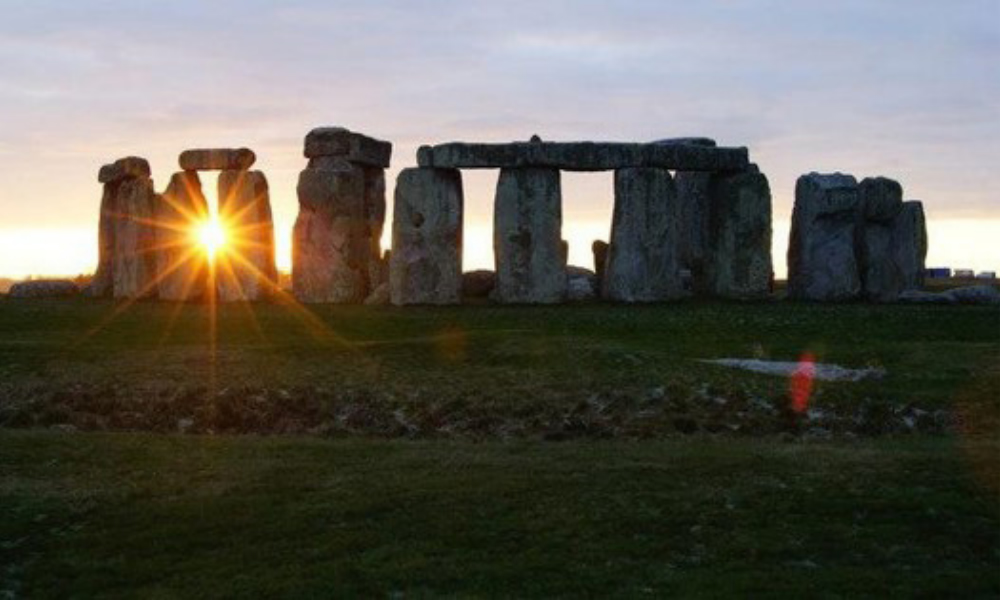
Stonehenge is a prehistoric man-made circle of standing stones located in Salisbury Plain in Wiltshire, England. It is believed to have been built around 5,000 years ago. Stonehenge is made up of huge stones called ‘sarsens’ which weigh around 25 tons each accompanied by smaller bluestones which weigh around 4 tons each. The most remarkable feature of the monument is its astronomical alignment. During the summer solstice, the sun always rises over the Heel Stone – a single large sarsen stone which stands outside of the main monument. And it always sets at the same place on the winter solstice. This suggests that Stonehenge was built as a celestial observatory or may have served as a giant calendar. Archaeological evidence suggests Stonehenge has served as a cemetery. Other theories suggest it may have been a place of healing. The precise purpose for building Stonehenge remains a subject of debate even today.
Stonehenge Sunset (1). Photo: Peter Trimming, via Wikimedia Commons (CC BY-SA 2.0).
2. Ancient Rome and Saturnalia
Saturnalia is an ancient Roman pagan festival, celebrating the harvest and honouring Saturn, the god of agriculture and time. It started on December 17 and lasted till December 23. During this week of celebrations, all work came to a halt. It was the most joyous time of the year for the Romans which they spent in gambling, feasting, music, merrymaking, giving gifts, making mischief and socialising. During this time, slaves feasted with the masters and had the freedom to say and do what they liked. Homes and temples were decorated with evergreens and lamps were lit to ward off bad spirits.
3. The Roman Festival of Sol Invictus
The Dies Natalis Solis Invicti, or “The Birthday of the Unconquered Sun” was an ancient Roman festival dedicated to the sun god Sol Invictus. It was celebrated annually on December 25. This holiday was a part of religious reforms introduced by the Roman Emperor Aurelian in 274 CE. It elevated Sol Invictus to a central position in Roman worship. The selection of December 25 for celebration of Sol Invictus is linked to the winter solstice as it was believed to be a victory of light over darkness. Temples dedicated to Sol Invictus would hold special ceremonies and sacrifices. Rites included offerings of incense, wine and food. Candles and lamps were lit symbolising the return of light and warmth. Apparently 30 chariot races were held in Rome on December 25 for the ludi Solis. As the Roman festival coincides with Christmas, the influence of Sol Invictus on early Christianity has been a topic of much debate. There is no direct evidence but the alignment of the dates is often noted by historians.
4. Newgrange in Ireland
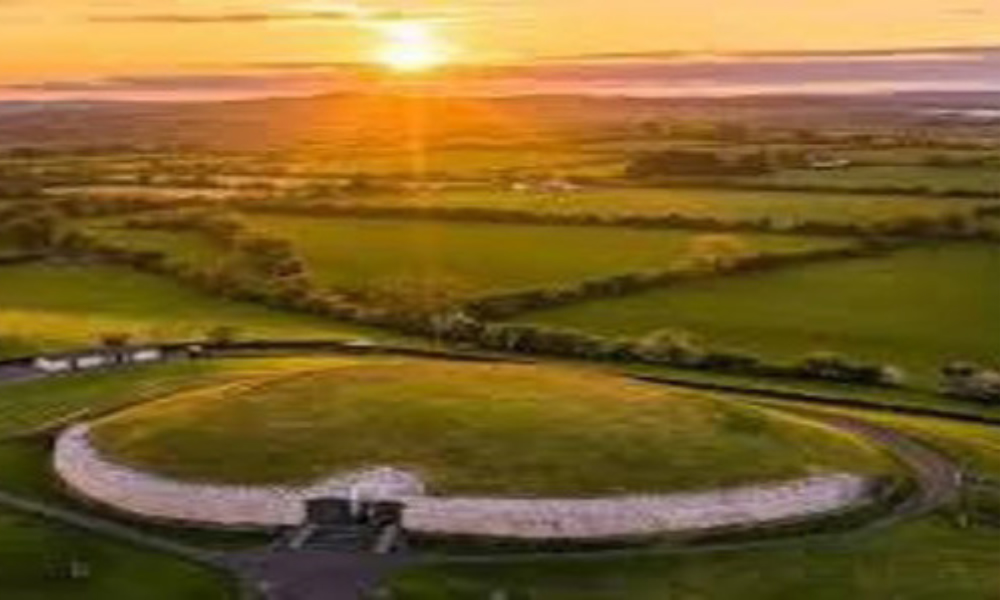
Newgrange is a prehistoric monument located in County Meath in the Boyne Valley in Ireland. Built around 3200 BC, it predates both Stonehenge and the Egyptian pyramids. It is a passage tomb, built as a part of a larger complex known as ‘Brú na Bóinne’, which houses two other ancient sites, Knowth and Dowth. The monument is a kidney-shaped mound covering around 1.1 acres of land. It is surrounded by 97 large kerbstones, many of which are engraved with Neolithic megalithic art. A 19-metre-long passage leads to a cruciform chamber with a corbelled, water-tight roof and three recesses. The tomb was built with its passage and chamber facing the rising sun at midwinter. A small opening above the entrance allows the winter sun to send a beam into the chamber. The alignment occurs over several days around December 21 with the sunbeam illuminating the inner chamber for around 17 minutes. This precise alignment with the sun suggests that the intent of the people who built it was to mark the beginning of the new year.
Winter Solstice Traditions Across the World
Each culture has a unique way of celebrating the winter solstice, combining astronomical observations with their local customs and beliefs. It has been marked with major events like:
Dongzhi Festival in China
Dongzhi is a major traditional Chinese festival celebrated around December 21-23 marking the winter solstice. The festival marks a turning point in time when yin (darkness and cold) energy transitions to yang (light and warmth) with the return of longer days. It was first celebrated by the Zhou Dynasty, but became an official holiday during the Han Dynasty. People worship heaven and their ancestors and visit family and friends. It was believed that heaven worship would bring a good harvest and health in the coming year. Chinese people believe that spring will come after nine periods of nine days after the winter solstice. In Northern China people count Nines of Winter during the coldest part of winter. People enjoy delicacies like dumplings in Northern China while families in the South make and eat glutinous rice balls called tangyuan and drink rice wine. Other specialities include wonton soup in eastern parts of China and mutton soup in the north and west.
Yalda Night in Iran and Afghanistan
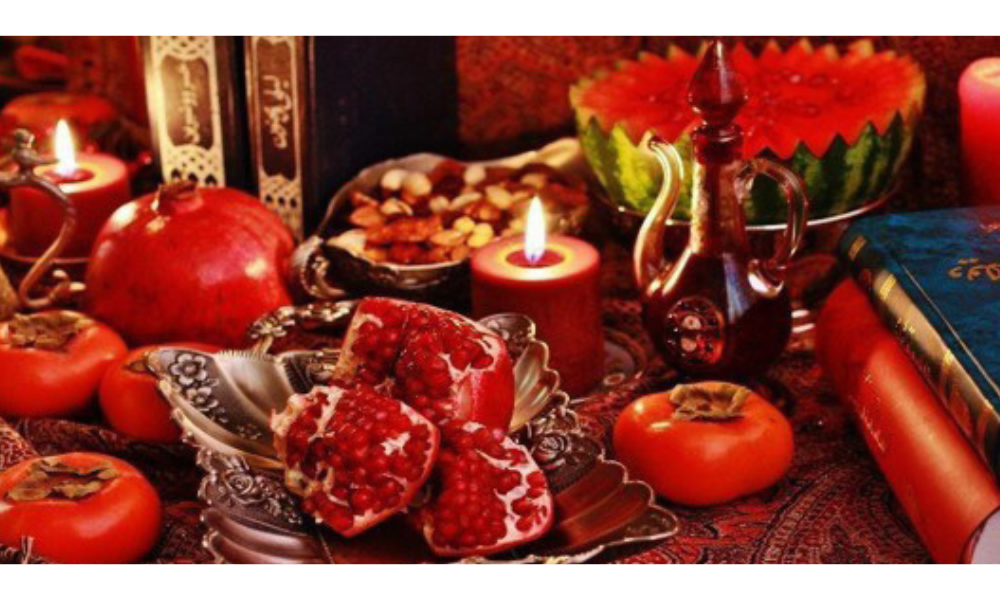
Yalda night also known as Shab-e Yalda or Shab-e Chelleh is an ancient Iranian festival celebrated on the winter solstice. It was officially included in the UNESCO Intangible Cultural Heritage list in 2022. The term Chelleh refers to the forty-day period of deep winter that follows the Yalda night. Yalda means rebirth (of the sun) and it was celebrated for the victory of light over darkness. It is an evening of merriment and festivities beginning with the sunset on the last day of fall till the dawn of the first day of winter. People gather in the homes of elders on Yalda night, eat, drink tea and sherbet. Traditional spreads feature fruits like watermelon, pomegranate, persimmon, apples, pears and nuts such as pistachios, walnuts, almonds and hazelnuts. Special foods prepared for this night include Mahi Poli, Fesenjoon, Khoresh Bademjan, Aash Reshteh and desserts like Fereni and Sholeh Zard. Elders entertain youngsters by telling stories and anecdotes. Poetry holds a special place in Iranian celebrations and people read verses from Diwaan-e Hafez and recite passages from Ferdowsi’s Shahnameh.
Inti Raymi in the Southern Hemisphere
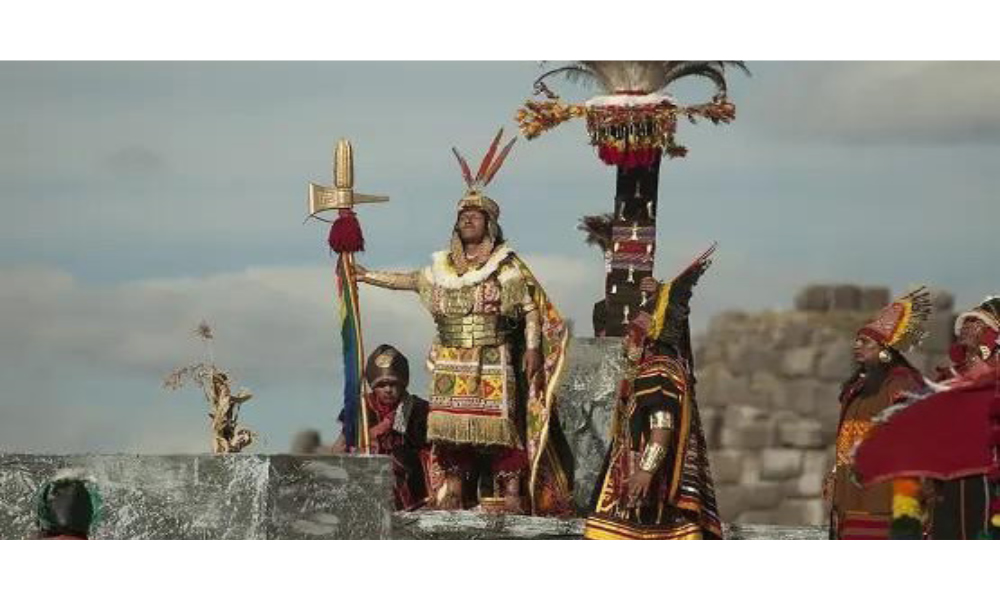
Inti Raymi meaning “Festival of the Sun” in Quechua, is an ancient Inca celebration of the winter solstice in the Southern Hemisphere. It is held on June 24, to honour Inti, the sun deity. It was established in Cusco by Sapa Inca Pachacuti in 1430 CE It is celebrated across several Andean countries that were part of the historical Inca empire namely Peru, Ecuador, Bolivia, Chile, Argentina and Colombia. The tradition is kept alive today as a historical reenactment that brings together hundreds of actors, dancers and musicians who, dressed in traditional costumes, recreate ancestral rituals with Andean music and ceremonial dances. The celebration unfolds across three historic sites in the city of Cusco which includes the Qorikancha complex, the Sacsayhuamán fortress and the Plaza of Arms. The return of the Sun on the shortest day of the year renews nature and is a reason for joy and celebrations.
Makar Sankranti in India
Makar Sankranti also known as Uttarayana or Makara is a major Hindu festival and mid-winter harvest celebration observed in India and Nepal. It marks the Sun’s transition into the zodiac sign of Capricorn (Makara) and the beginning of its uttarayana (northward journey). It usually falls on 14 or 15 January. Hindus worship Surya, the Sun god. It is celebrated all over India with different names, foods and traditions. Eating sweets, taking a dip in holy rivers and lakes and making intricate rangolis are typical celebratory practices throughout India. Families and friends gather on rooftops and fly kites. Cities such as Jaipur and Jodhpur host kite flying competitions. The city of Ahmedabad in Gujarat hosts the International Kite Festival. Enthusiasts from different parts of India and the world gather to display their kite flying skills. In many parts of India, the holiday is associated with til (sesame seeds) which are eaten in sweets made with jaggery. It is a time for thanksgiving and celebrations as it marks the end of winter harvest and onset of spring.
Myths and Misconceptions
Myth 1: Winter solstice is the coldest day of the year.
Fact: It is the day with the shortest period of daylight but the coldest weather usually comes later as the Earth’s land and water take time to cool down.
Myth 2: The entire world experiences winter solstice in December.
Fact: December marks the winter solstice in the Northern Hemisphere and the summer solstice in the Southern Hemisphere.
Myth 3: Makar Sankranti falls on the winter solstice.
Fact: The festivals are related to solar traditions but fall on different dates and belong to different calendar systems.
Conclusion
Winter solstice has held a significant place in human history not just for bringing more daylight but also as a symbol of renewal, hope and endurance. As the dark days of winter pave the way for the light of spring, the solstice becomes a time for pause, reflection and new beginnings. It is an expression of mankind’s endless striving to conquer the darkness. Even today the solstice continues to inspire people spiritually. Many see it as a time to set new goals, let go of the past or embark on a new journey. It is a reminder that even the longest night comes to an end. It teaches us not to give up hope and embrace change as a part of life. As Shelley once famously said, “If Winter comes, can Spring be far behind?”
DID YOU KNOW?
Contemporary Solstice Celebrations
Scandinavians (people who live in Denmark, Norway and Sweden) gather for Jul or Yule, a multi-day feast where yule logs are burnt and fires are lit. The festival marks the return of the Sun god.
Each year thousands of people gather at Stonehenge to celebrate the winter solstice with some of them participating in pagan rituals and ceremonies.
In Britain, some people still follow the ancient tradition of cutting the fruit of mistletoe, which is seen as a symbol of life in the dark winter months.
0 Comments