
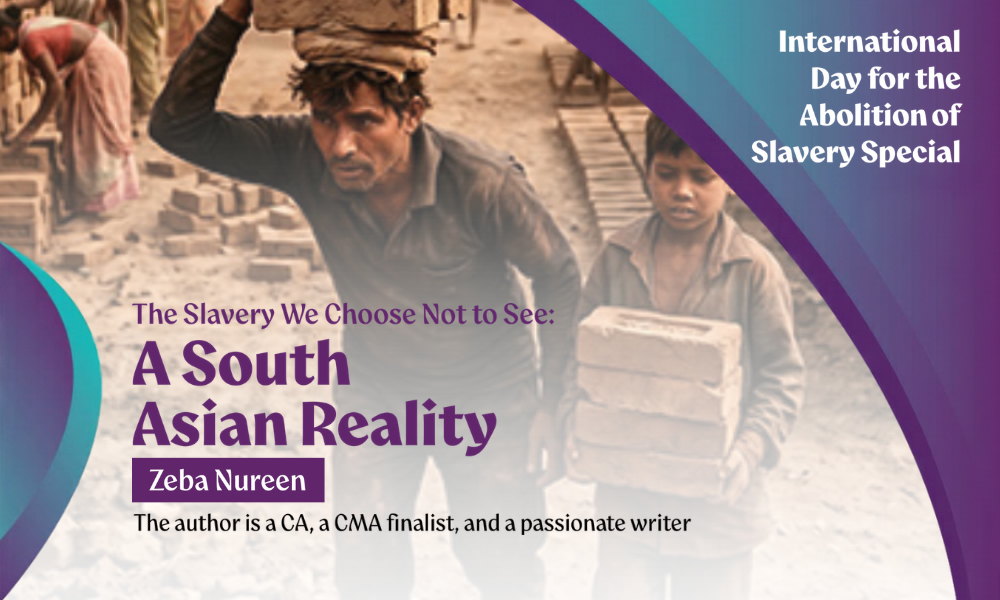
The author is a CA, a CMA finalist, and a passionate writer
When I hear the word slavery, I imagine people in chains, deprived of their freedom and forced to work against their will. It sounds like something from a history textbook, something that belongs to another century. Growing up in India, I assumed slavery was a problem the world had gradually moved beyond. However, the more I learn about modern slavery, the more I realise that it has not disappeared. It has simply changed its appearance.
Today, slavery may look like a worker trapped in a brick kiln because of an unpaid debt, a domestic worker denied the freedom to leave, or a young girl promised a better future but forced into exploitation. These situations may not always be visible, but they exist much closer to our everyday lives than we imagine.
The International Day for the Abolition of Slavery, observed on December 2, reminds us that freedom means more than simply being legally free. Nobody is truly free when poverty, threats, or debt prevent them from making their own choices.
When Poverty Becomes a Trap
One of the most disturbing aspects of modern slavery in South Asia is its connection to poverty. In countries like India, Pakistan, Bangladesh, and Nepal, many families struggle to afford food, healthcare, and education. Sometimes, borrowing money during an emergency becomes their only option.
Bonded labour occurs when people are forced to work to repay debts, often under conditions that make repayment nearly impossible. Their wages may be withheld, their debts may continue to increase, and their children may eventually be forced into labour too.
What troubles me most is the thought of children losing their childhood to circumstances they never chose. While some children spend their days studying for examinations and dreaming about their futures, others work in agricultural fields, workshops, and brick kilns simply to help their families survive. Every child deserves the opportunity to learn, grow, and dream without being burdened by poverty.
The Danger Behind False Promises
Human trafficking is another serious form of modern slavery. It can involve forced labour, domestic servitude, and sexual exploitation. Often, it begins with promises of employment, education, or a better life.
A young woman searching for work may trust a recruiter offering an attractive salary. A family may believe that sending their daughter to a city will give her access to better opportunities. However, victims can find themselves isolated, threatened, underpaid, or prevented from contacting their families.
Women and girls may face additional vulnerabilities because of gender discrimination and financial dependence. However, trafficking can affect anyone, regardless of age or gender.
I believe we must stop imagining trafficking as something that happens only in distant places. Exploitation can exist in our own cities and neighbourhoods. Someone who appears to have a job may actually be working under coercion. Sometimes, the reality behind closed doors is very different from what we see outside.
Are We Doing Enough?
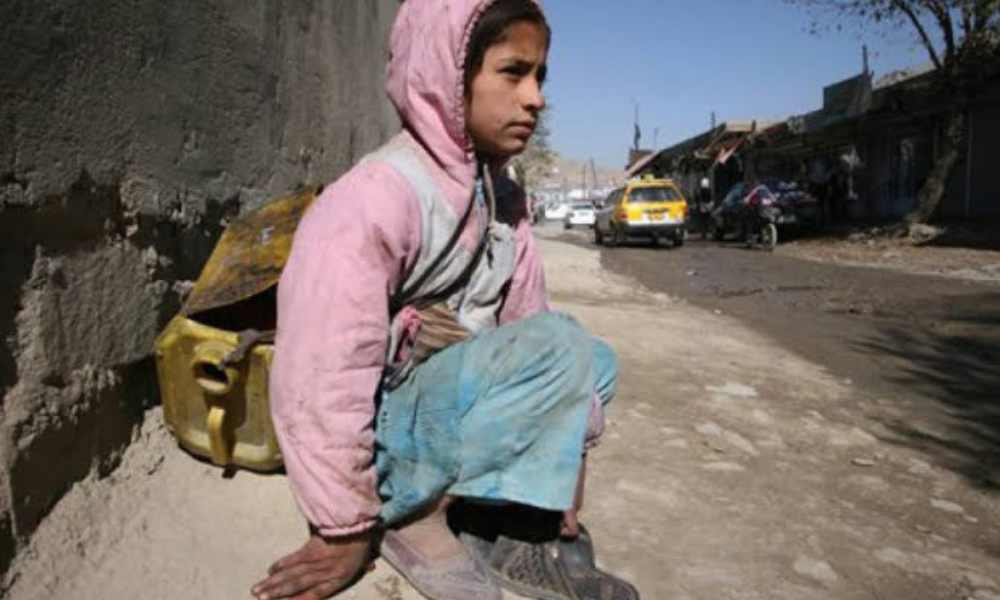
India has laws against bonded labour and human trafficking, including the Bonded Labour System (Abolition) Act, 1976. Yet, having laws does not automatically eliminate exploitation.
Victims may hesitate to seek help because they fear retaliation or losing their livelihoods. Others may not recognise their circumstances as exploitation because they have been made to believe that such treatment is normal.
Rescuing victims is important, but rehabilitation matters just as much. Survivors need safe accommodation, education, healthcare, legal assistance, and opportunities to earn a living. Without these, they may remain vulnerable to exploitation.
We also have a responsibility as ordinary citizens. We can educate ourselves, question unfair practices, support credible organisations, and report suspected exploitation to appropriate authorities. Businesses must ensure fair wages and safe working conditions instead of prioritising profit over human dignity.
Freedom Must Mean More Than Survival
For me, the most heartbreaking aspect of modern slavery is that it often targets people who are already struggling. Those with the fewest resources to protect themselves frequently face the greatest risks.
A society cannot measure progress through economic growth alone. True progress means ensuring that workers receive fair wages, children attend school, and vulnerable people can seek justice without fear.
This December 2, I hope we look beyond history and recognise that modern slavery remains a present-day reality. Its victims are not merely statistics; they are people with families, ambitions, and dreams.
I may not be able to end slavery on my own, but I can refuse to treat it as somebody else’s problem. I can raise awareness, question exploitation, and support efforts to protect vulnerable people.
The abolition of slavery will be meaningful only when nobody has to surrender their freedom to survive. Because dignity is not a privilege reserved for the fortunate; it is a basic human right that belongs to everyone.
Human trafficking is another serious form of modern slavery. It can involve forced labour, domestic servitude, and sexual exploitation. Often, it begins with promises of employment, education, or a better life.
DID YOU KNOW?
Slavery and Human Trafficking
Article 23 prohibits traffic in human beings, begar (unpaid compulsory labour), and other similar forms of forced labour (Constitution of India, 1950).
The Bonded Labour System (Abolition) Act abolishes bonded labour and extinguishes bonded debts (1976).
The Supreme Court held that compelling a person to work for wages below the statutory minimum constitutes forced labour (PUDR v Union of India, 1982).
Fifty million people were living in modern slavery in 2021: 28 million in forced labour and 22 million in forced marriage (ILO, 2022).
0 Comments