
The author is a final-year MBBS student at NHLMMC, Ahmedabad.
My grandmother spent years living with cancer. It returned, and with every recurrence came another stretch of uncertainty, another round of hospital visits, another attempt to hold on to a life that kept being interrupted by illness. What should have been ordinary years of growing older, spending time with family and collecting the little moments that make a life were, in so many ways, spent negotiating with a disease that refused to leave her alone.
There is something cruel about cancer. It does not simply occupy an organ; it slowly finds its way into the spaces around it. It takes away the ease of an ordinary day, turns hospital corridors into familiar routes, and makes words like scan, biopsy, chemotherapy and recurrence part of a family’s everyday vocabulary. It makes people wait for reports with their hearts in their throats. It makes families learn to celebrate small improvements while quietly fearing what the next setback might bring. And sometimes, despite every treatment, every prayer, every desperate hope that things might finally get better, it takes the person anyway.
I remember chemotherapy as something with a cost that could be seen in the person receiving it. The exhaustion, the weakness, the nausea, the days when the body seemed to have very little left to give. Treatment was fighting the disease, but it was also asking so much of her. There is a particular kind of helplessness in watching someone you love suffer—wanting to take even a fraction of their pain away, wishing that love could do what medicine sometimes cannot.
Eventually, we lost her. I cannot think about cancer without thinking about those years, about how relentlessly it demanded something from her, and about how little any family can control when a disease decides the course of its own story. Cancer can take lives, futures that are still unfolding, and ordinary moments that people should have had more time to live.
Yet I do not want my grandmother’s story to become only a story about cancer. She was a person long before she became a patient, with a life that deserved to be remembered for far more than what happened to her body. And perhaps that is precisely why the disease deserves our attention: because the people living through it are never just diagnoses, and the lives it affects are never just statistics.
It is easy to discuss cancer through incidence rates, survival curves and treatment protocols. It is harder to talk about what it asks of a person over the years, what treatment can take from them, and how an illness can quietly reorganise an entire family’s life.
But we need both conversations. We need to understand what happens inside the body, what we can do to reduce certain risks, and which changes we should not keep explaining away. Not because every ache is a warning, or because a healthy life guarantees protection, but because no one should have to discover the importance of awareness only after cancer has entered their home.
When a cell stops following the rules
Our bodies are extraordinarily good at maintaining order.
Cells grow, divide, repair damage and die according to tightly regulated instructions. Damaged cells may be repaired; others may undergo apoptosis, a form of programmed cell death. The immune system also helps identify and eliminate certain abnormal cells.
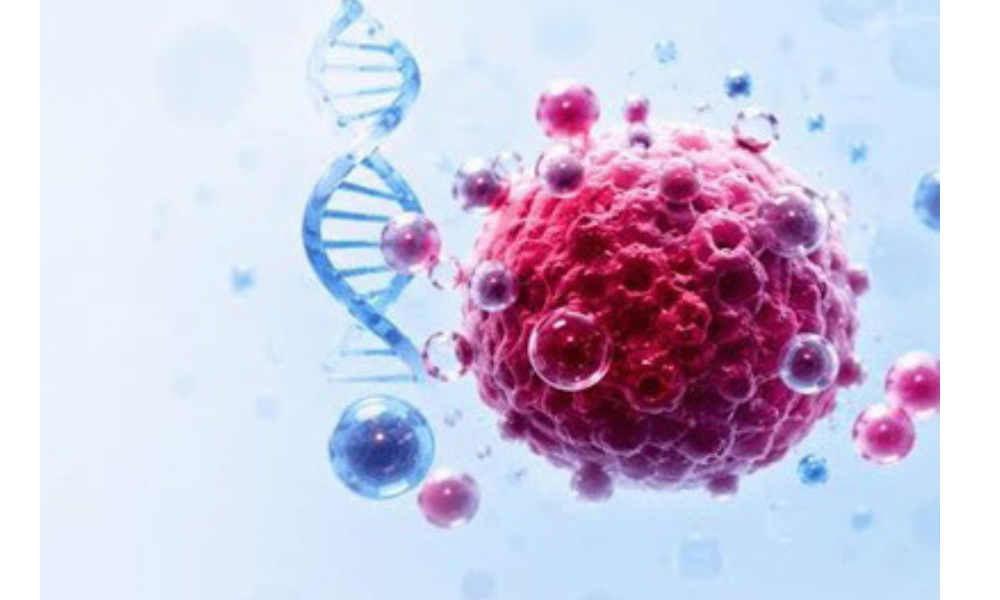
Cancer develops when accumulated changes allow some cells to evade these controls.
Think of a cell as a small organisation. It has instructions, quality-control mechanisms, supervisors and an agreed retirement policy. In cancer, several of these systems can fail. Changes in oncogenes may push growth forward, while damage to tumour-suppressor genes can weaken the brakes. Defects in DNA repair may allow additional errors to accumulate.
Eventually, some abnormal cells acquire the ability to multiply when they should not, evade normal cell death, recruit blood vessels through a process called angiogenesis, and sometimes invade nearby tissues or spread to distant organs. That last process is known as metastasis.
Cancer is not one disease with one cause. It is a family of diseases shaped by different combinations of inherited susceptibility, ageing, infections, environmental exposures and chance changes during cell division. Risk factors influence probabilities; they do not determine every individual’s outcome. WHO
The body has a vocabulary. Are we listening?
Fatigue is easy to dismiss.
So is bloating. A cough that refuses to disappear. A change in bowel habits. A small lump that does not hurt. Bleeding that seems unusual but is inconvenient to investigate.
We are good at explaining away discomfort. We blame examinations, work, ageing, irregular meals, stress or a bad night’s sleep. Sometimes those explanations are correct. The problem begins when an explanation becomes an excuse never to reassess a symptom.
Consider the difference between two people experiencing persistent fatigue. One recognises that something is wrong and seeks advice. The other continues pushing through it, repeatedly dismissing it as a minor nuisance. Neither person’s fatigue automatically indicates cancer. But the first person has created an opportunity to investigate what is happening.
The important distinction is not between people who worry and people who do not. It is between symptoms that are assessed and symptoms that are indefinitely ignored.
Warning signs that deserve medical evaluation include:
• Unexplained bleeding: blood in the urine or stools, coughing or vomiting blood, unusual vaginal bleeding, or unexplained bruising.
• Persistent changes in bowel or bladder habits: a sustained change in stool pattern, constipation or diarrhoea, increased urinary frequency, or difficulty passing urine.
• A new lump or swelling: particularly in the breast, testicle or lymph nodes.
• Persistent digestive symptoms: difficulty swallowing, abdominal swelling, continuing bloating, or loss of appetite.
• A cough or hoarseness that does not resolve, especially without an obvious explanation.
• A sore or ulcer that does not heal, including persistent ulcers in the mouth.
• Changes in a mole or skin lesion, including changes in size, shape, colour or border.
• Unexplained weight loss, persistent fatigue, fever or night sweats, or pain that remains unexplained.
Recurrent infections or an unexplained blood clot, which may sometimes be associated with an underlying illness.
These symptoms are not a checklist for diagnosing yourself. Most can have causes other than cancer. What matters is whether a change persists, worsens, recurs or appears alongside other concerning symptoms. Seek medical advice rather than waiting for every warning sign to appear.
There is another distinction worth understanding: early diagnosis is not the same as screening. Early diagnosis means recognising and investigating symptoms in someone who may already have a disease. Screening means testing people who do not have symptoms, according to recommendations for their age, risk and circumstances.
A scan is not a universal guarantee that cancer is absent. Some cancers are not visible on a particular scan, some are too small to detect, and some screening tests are designed for specific cancers rather than every possible disease.
Imagine looking through a telescope at the night sky. You might discover that a star you can see has already been shining for years before its light reached you. The moment of observation is not necessarily the moment the event began.
Cancer is not literally a distant star, and its development does not follow one universal timeline. Some cancers progress slowly; others are more aggressive. The analogy is simply this: the date we discover a problem is not necessarily the date it began.
That is why appropriate screening, timely investigation and follow-up matter. We cannot detect every disease at its earliest biological beginning, but we can avoid making the delay longer by ignoring a persistent change.
Why some people develop cancer—and others do not
It is tempting to search for one explanation. Perhaps it was stress. Perhaps it was a particular food, an inherited gene, a chemical exposure or years of poor sleep.
Sometimes a specific risk factor can be identified. Often, there is no single answer.
Cancer risk reflects an interaction between genetics, ageing, infections, behaviours and the environments in which people live and work. Some people inherit variants that increase their susceptibility. Others experience exposures that damage DNA over time. Some cancers arise partly through chance errors as cells divide, even in people who have tried to live healthily.
This is important because prevention should never become blame.
A person who develops lung cancer may never have smoked. A person who exercised regularly and ate well can still develop breast cancer. Conversely, not everyone exposed to a carcinogen will develop cancer. Risk is not destiny, and illness is not proof that someone failed to look after themselves.
What we can do is reduce avoidable risks. The World Health Organization estimates that around 37% of new cancer cases worldwide in 2022 were linked to preventable causes. That is a substantial opportunity for public health—not a promise that every cancer can be prevented. WHO and IARC
Prevention includes avoiding tobacco, reducing or avoiding alcohol, protecting skin from excessive ultraviolet radiation, maintaining a healthy and varied diet, staying physically active, reducing harmful occupational and environmental exposures, and receiving recommended vaccinations against cancer-causing infections such as HPV and hepatitis B.
It also means recognising that prevention is not always an individual choice. Clean air, safe workplaces, affordable nutritious food, accessible vaccination and reliable screening services are public-health responsibilities.
We cannot ask people to make healthy choices while ignoring whether those choices are available to them.
The fishbowl problem: what if the environment matters, too?
Picture a fish in a bowl.
If the fish becomes ill, we might examine its body, identify the infection and find a treatment. We should do that. But what if the water is contaminated? Treating the fish without addressing the water may leave the underlying problem untouched.
This is a useful metaphor for public health, provided we remember that cancer is not simply a consequence of a toxic environment. The metaphor asks us to look beyond the individual and examine the conditions surrounding them.
What do we breathe? What exposures occur at work? Is drinking water safe? Are people exposed to tobacco smoke, air pollution, ultraviolet radiation or known carcinogens? Do they have access to preventive healthcare?
Some environmental hazards are well established. Tobacco smoke contains carcinogens; ultraviolet radiation can damage DNA; certain occupational exposures, such as asbestos, can cause cancer; and arsenic-contaminated drinking water is a recognised cancer risk. Cadmium and some forms of lead exposure also have serious health implications, although the cancer evidence and classification differ by substance and exposure.
But the internet often turns the language of toxicology into a catalogue of things to fear. Not every chemical is a carcinogen, and detecting a substance does not automatically tell us whether an exposure is dangerous. Risk depends on the substance, dose, route, duration and quality of the evidence.
The same caution applies to products we use every day. It is reasonable to reduce known harmful exposures and follow evidence-based safety guidance. It is not necessary to treat every fragrance, food container, cosmetic or household product as a hidden cancer threat.
The fishbowl question is not, How do we become afraid of everything around us? It is, How do we make our environments safer, using evidence rather than panic?
Small habits, cellular consequences
The word prevention can sound like a list of restrictions: do not smoke, do not drink, do not eat this, do not sit for too long.
I prefer to think of it as giving the body better conditions in which to do its work.
A varied diet rich in vegetables, fruits, legumes and whole grains provides fibre and a range of nutrients. Limiting processed meat and reducing highly processed, energy-dense foods can support a healthier dietary pattern. Alcohol increases the risk of several cancers, and tobacco remains one of the most important preventable causes of cancer worldwide.
Sleep matters for overall health, metabolic regulation and immune function. Chronic stress can affect sleep, behaviour and well-being, and it deserves care in its own right. But evidence does not establish that emotional suppression or stress alone directly causes cancer. People should never be told that their grief, anxiety or inability to remain positive made them ill. National Cancer Institute
What matters is consistency without obsession. A walk after dinner. A meal that includes vegetables and fibre. A vaccine received on time. A cigarette not smoked. A medical appointment kept.
Here is a fascinating example: the Warburg effect. Many cancer cells use unusually high rates of glucose breakdown and produce lactate even when oxygen is available. This is called aerobic glycolysis. It is part of the metabolic reprogramming that can help support rapid growth, although cancer cells vary and may also use other energy-producing pathways.
In simple terms, cancer cells can change how they process their fuel to support the work of multiplying. But this does not mean that eating sugar directly causes cancer or that eliminating sugar from the diet will starve an existing tumour. Our bodies supply glucose to tissues throughout the body, and cancer metabolism is considerably more complicated than a simple food-in, tumour-out equation. National Library of Medicine
The problem with sitting still
We have built lives that increasingly ask our bodies to remain still.
We sit to study, sit to work, sit to travel, then come home and sit in front of a screen. For students and desk-based workers, hours can pass with barely any movement beyond reaching for a cup of tea.
Sedentary behaviour means spending waking hours sitting, reclining or lying down with very low energy expenditure. It is not quite the same as physical inactivity: a person may go for a daily run and still spend most of the remaining day sitting.
Long periods of sedentary behaviour are associated with several adverse health outcomes and may contribute to the risk of certain cancers. Regular physical activity is associated with a lower risk of several cancer types, including colon and breast cancers, and can help regulate body weight, insulin sensitivity and metabolic health. The biological pathways are complex and vary by cancer type. National Cancer Institute
One possible piece of the puzzle is insulin and insulin-like growth factor signalling. Physical activity can improve insulin sensitivity and help regulate glucose metabolism. Exercise also affects inflammation, body composition and hormonal pathways, all of which may influence cancer risk in different ways. These are not magic switches, and no single mechanism explains every benefit.
So, what does movement look like in ordinary life?
For most adults, the WHO recommends 150–300 minutes of moderate-intensity aerobic activity a week, or an equivalent amount of vigorous activity. But a target should be an invitation, not a reason to give up before beginning.
WHO physical activity guidance
Walk while taking a phone call. Stand up and stretch between study sessions. Take the stairs when practical. Walk to a nearby shop. Dance in your room. Choose an activity you can sustain rather than one you abandon after a week.
Break up long sitting periods where possible. If you have a disability, chronic illness, pain or other limitations, adapt movement to your circumstances and seek professional guidance when needed.
Having rigorous exercise or movement in our daily life leads to release of certain hormones and sweat. And sweating plays a great role in eliminating many carcinogens from our body, like cadmium, lead and arsenic. Hence, one of the goals of our activities should be to sweat as much as we can.
Women’s health: the cancers we must stop whispering about
In many communities, preventive care is delayed by embarrassment, financial dependence, limited access to healthcare, fear of examination or the belief that a woman should seek medical attention only when symptoms become impossible to ignore. Menstrual concerns are normalised without adequate assessment. Breast changes go unmentioned. Screening is postponed because there is always something more urgent to do for someone else.
Cervical cancer: prevention before disease
Cervical cancer is largely preventable through HPV vaccination and appropriate screening. Persistent infection with high-risk types of human papillomavirus (HPV) causes nearly all cervical cancers.
HPV is common, and an HPV infection is not evidence of infidelity or poor character. Most infections clear naturally; persistent infection with a high-risk type can lead to precancerous changes over time.
The HPV vaccine helps prevent infections responsible for a large proportion of cervical cancers. Screening can identify high-risk HPV infection or precancerous changes before invasive cancer develops. The recommended age and interval for screening depend on national guidance, the test used and individual circumstances. Vaccination does not eliminate the need for screening.
This is an unusually powerful example of prevention: a cancer that can often be prevented through vaccination, screening and timely treatment of precancerous changes.
Breast cancer: knowing what is normal
Breast awareness is not a substitute for mammography or other recommended screening, but it helps people recognise changes that need assessment.
A new lump, a change in breast shape, skin dimpling, nipple inversion, unusual nipple discharge or a persistent change in the breast should be discussed with a healthcare professional. Not every lump is cancer, and breast cancer can occur without a lump that is easy to feel.
Screening recommendations vary by age, risk and country. People with a strong family history or known inherited susceptibility may need an individual assessment rather than relying on general guidance alone.
The symptoms women are taught to tolerate
Unexplained vaginal bleeding, especially after menopause, deserves prompt medical evaluation. Persistent abdominal bloating, pelvic pain, feeling full unusually quickly, or needing to urinate more frequently can have many causes, but continuing or worsening symptoms should not automatically be dismissed as hormonal changes or digestive trouble.
The message is not that every period irregularity or episode of bloating signals cancer. It is that women’s symptoms deserve to be heard, investigated appropriately and taken seriously. Women’s health need not be ignored.
Conclusion
Cancer awareness is often reduced to a ribbon, a month on the calendar or a poster telling people to get checked.
Those things can start conversations. But awareness becomes meaningful when it changes what happens next.
It is a person recognising that persistent bleeding needs medical evaluation. A family learning that an HPV vaccine can prevent future disease. A workplace reducing exposure to carcinogens. A student choosing to move between long study sessions. A clinician listening when a patient says, “Something feels different.” A health system making screening affordable and treatment accessible.
None of these actions can promise that cancer will never enter a life. But each can be part of a world in which more cancers are prevented, more are found in time, and fewer people have to face the illness alone.
Before it becomes a diagnosis, let awareness become an action.
DID YOU KNOW?
Cancer Prevention
Between 30 and 50% of cancers can currently be prevented by avoiding risk factors (WHO, 2026).
37% of all new cancer cases in 2022, around 7.1 million cases, were linked to preventable causes. Tobacco was the leading cause, followed by infections such as HPV, and then alcohol (WHO, 2026)
0 Comments