
The author is a renowned journalist
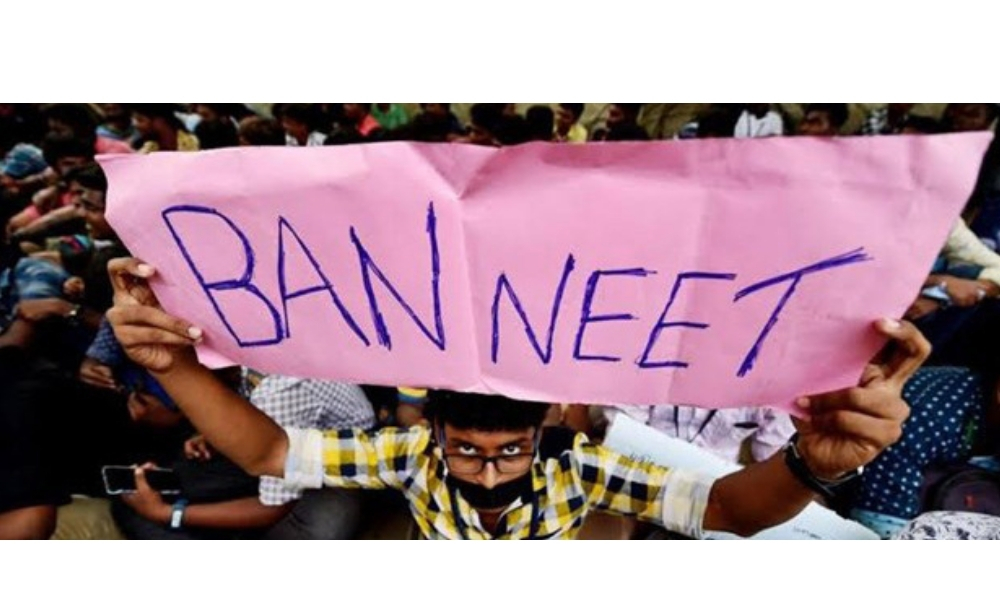
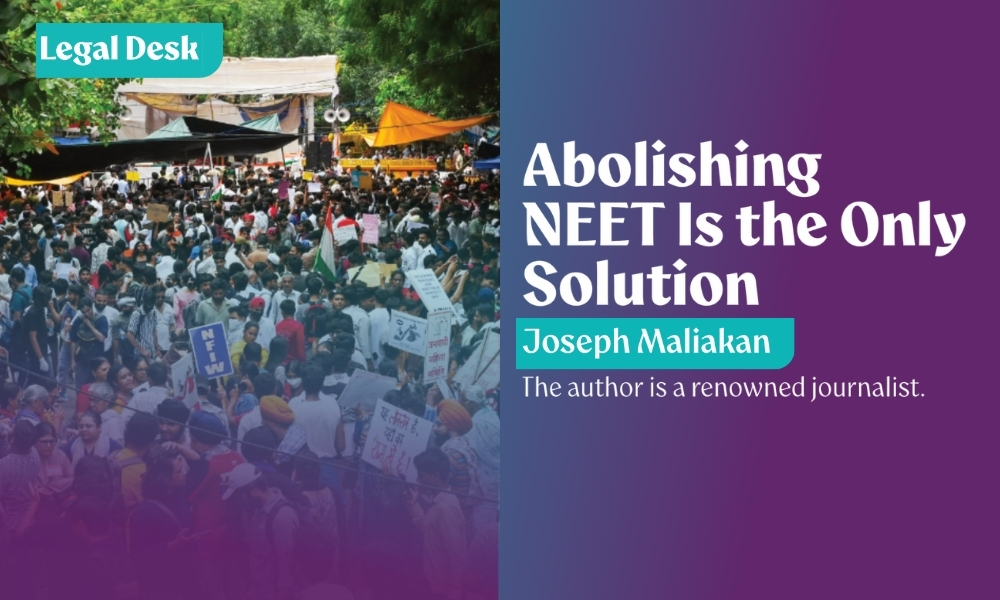
NEET suffers from severe structural flaws and has resulted in the commercialisation of medical education. This single high-stakes national examination unjustly favours urban English-medium private school students who can afford expensive private coaching institutes and penalises government school students and rural state board students.
By relying on a single multiple-choice test, the system negates all principles of education and the aims of the New Education Policy, and invalidates consistent academic performance in high school culminating in the Class 12 Board Examination.
Centralised testing encroaches upon state autonomy and results in conflict between the Union and the states, and adversely affects regional public healthcare systems. The centralised examination system has become susceptible to repeated question paper leaks and cancellation of examinations, compromising the future of millions of youth.
The unbearable pressure to succeed in the single-point examination has caused devastating mental health problems among the youth, leading to scores of student suicides every year.
The Question of Autonomy
All the Commissions on Higher Education, the Kothari Commission (1966) and the Yashpal Commission (1993), have emphasised the need for state and university autonomy in education. The Kothari Commission said that this autonomy has to be observed in the selection of students, selection of the faculty, and design of courses and themes for research.
Autonomy, the Kothari Commission had said, had to be exercised at three levels: autonomy within a university (autonomy of the individual departments), autonomy of the university system as a whole (including the UGC), and in relationship to the State and the Union.
NEET blatantly violates the principle of autonomy highly regarded by the Kothari and Yashpal Commissions. NEET is not a simple entrance examination; it has become a huge industry in which crores of rupees are invested. The fierce competition to clear NEET has resulted in the commercialisation of education and has adversely affected the mental health and confidence of students. It has also affected the chances of students from poor families clearing the entrance test, because they cannot afford the exorbitant fees charged by the coaching factories.
In this context, the country also has to re-examine the aspirations of the youth. Today, Indian society has come to believe that success in life means obtaining an engineering or medical degree. Society is totally unmindful of the special talents of the youth. Subjects like environment, agriculture, teaching, public health, social work, psychology and philosophy are not given the importance they deserve. Work in these fields does not give people proper recognition, and therefore parents blindly force their children to pursue medical and engineering education. However, the employment situation in India today is so precarious (according to an Azim Premji University study, 40 percent of the under-25 youth in Modi’s India is unemployed) that even medical and engineering graduates find it difficult to find suitable employment.
Therefore, instead of worrying about national entrance tests, we have to dismantle the hold of the coaching factories on medical and engineering education. The first step to dismantle the coaching industry is to abolish single-test entrance examinations like NEET. Secondly, we have to strengthen school and university education in all fields, not just prepare students for medical and engineering education. Education is not meant just for preparing students for employment; it is also meant for moulding thinking human beings with social responsibility. Society needs not only doctors and engineers but also good teachers, scientists, nurses and farmers. A society will progress only if it respects all kinds of work. We need to nurture people who believe in and work for equity and social justice.
The Tamil Nadu Evidence
In this context, it is important to realise that the students in Tamil Nadu, during the protests in July, demanded only one thing — abolish NEET. The demand is based on the data that the NEET examination system is inequitable. This conclusion was made by the High-Level Committee headed by retired High Court Judge A.K. Rajan, set up by the DMK government in Tamil Nadu on the impact of NEET.
The committee studied the history of NEET, the practices and flaws of the Common Entrance Examinations, the academic merit and validity of NEET, and the impact of NEET on admissions from the perspectives of academic, socio-economic and other demographic status, and other healthcare services in Tamil Nadu.
The committee collected opinions from 86,342 people by post and email. Of these, 65,007 people were against NEET and 18,966 supported it. Based on this, the committee submitted a report to the then Chief Minister M.K. Stalin in July 2021.
In 2010-11, according to the report, 2,332 students who studied under the State Education Board secured admission in medical colleges in the State, while only 14 students from the CBSE stream were admitted. But after the introduction of NEET, the situation changed drastically. 1,604 students who studied under the CBSE scheme secured admission to the MBBS course in 2020-21. This clearly indicates that NEET has significantly favoured those who studied under CBSE, obviously the upper class, at the expense of students of the state board, who predominantly come from the lower strata of society in terms of both class and caste.
In the pre-NEET period, the repeaters’ average admission rate was 8.12 percent, which rose to 71.42 percent by 2020-21 after NEET was introduced. The first-timers’ admission rate dropped to 28.58 percent after NEET was introduced in 2020-21, from an average pre-NEET rate of 91.87 percent. This shows success in NEET is primarily based on joining expensive coaching centres, spending huge sums of money, and repeatedly appearing for the entrance test.
The committee concluded that NEET undermined diverse societal representation in medical education, favouring the rich and affluent at the expense of the poor and the underprivileged. The committee therefore further concluded that NEET is biased against students who studied in Tamil-medium government schools and who appeared in the state Board examination.
The committee, in its report, warned that if NEET was continued, in a few years the healthcare services of Tamil Nadu would collapse, and there would be no doctors to be posted at the Primary Health Centres and Government Hospitals.
Among other things, the committee recommended that the State Government undertake immediate steps to eliminate NEET from being used in admission to medical programmes at all levels, by following the required legal and legislative procedures.
The Way Forward
NEET, therefore, is not a problem that can be solved by fixing question paper leaks, the resignation of the Education Minister, the appointment of a high-level committee, or the introduction of Computer-Based Testing (CBT). It is an unjust, unequal and biased system which has to be abolished without wasting further time and money.
At the end of the day, what is NEET all about? This year, more than 20 lakh students appeared for the test. Some 50 percent cleared the test, but only 6 percent of those who qualify are eligible for admission to government medical colleges, where education is heavily subsidised and seats are limited. This scarcity has led to paper leak rackets involving teachers, middlemen and examination supervisors. CBT will remove some of the vulnerabilities of national testing, but it will further aggravate the rich-poor divide.
The slot selection here is top notch. I hit a decent jackpot yesterday and the withdrawal was processed almost instantly. Love jili12345slot!