
The author is a Psychologist (MSc Clinical Psychology) and an observer with an eye for details in nature
Before we label today’s youth as “too sensitive,” we must recognise a deeper truth:
They are growing up in a world whose emotional volume has become impossibly loud.
Sensitivity is not fragility.
It is a way of hearing.
And this generation hears life at a frequency older generations never had to endure.
Imagine a radio tuned sharply and precisely.
Where others detect only background noise, a sensitive young person hears every layer, the slight shift in tone, the unintended meaning, the silence that says more than words.
This is not an overreaction.
It is perception without filters, and it deserves understanding.
A World Too Loud for a Tender Mind
Adolescence has always been emotional, but today emotions are amplified.
A teenager’s brain, particularly the prefrontal cortex, which is responsible for regulation, is still developing. Yet, it is placed in a digital arena that demands constant clarity, performance, and self-definition.
They do not simply grow up.
They grow up while being watched, measured, and mirrored back to themselves in real time.
Think of a teenager rereading a single message five times, analysing every emoji and pause, not because they are dramatic, but because they have been trained to decode everything.
Every opinion becomes public.
Every insecurity is measurable.
Every emotion is aware of an audience.
Sensitivity thrives where life is magnified. What seems like “over-sensitivity” is often a heart reacting to a world that refuses to soften its edges.
Every generation inherits noise, but this one inherited an entire storm.
Reality Check: Deep Feeling Needs Direction
Sensitivity is powerful, but without grounding, it easily becomes distorted.
Here is the honest reality:
- Overthinking can masquerade as intuition.
- Avoidance can disguise itself as wisdom.
- Self-protection can feel like emotional insight.
- And overwhelm often pretends to be sensitive.
Not every feeling is a sign.
Not every reaction is true.
In a world of constant input, emotional volume becomes confused with emotional accuracy.
The compass spins faster than it can be read.
Learning to separate emotional noise from emotional need is not suppression, it is strengthening.
Adults Feel Too, But Quieter
It is easy for youth to believe adults don’t understand.
But adults feel just as deeply only in a quieter, more concealed way.
Their sensitivity is shaped by years of responsibility.
It hides in restraint, patience, and unspoken fears.
Adults carry emotional weight carved by financial strain, caregiving, accumulated memory, and decades of expectations. Their calm does not reflect emptiness; it reflects layers.
But adults, too, must acknowledge something uncomfortable:
They sometimes dismiss young sensitivity because they had to unlearn their own.
Their generation survived by numbing what this generation is still brave enough to feel.
The difference between the generations is not intensity, it is tempo.
Youth feels everything loudly.
Adults feel everything slowly.
Recognising this builds empathy instead of distance.
Anchoring the Sensitive Heart
One of the greatest struggles for emotionally intense youth is mistaking feeling for identity:
“I failed, so I am a failure.”
“I’m overwhelmed, so I’m incapable.”
“I feel deeply, so I am weak.”
Psychology reminds us that emotions are signals, not definitions.

Philosophy teaches that the self is not found in moments of turbulence, but shaped through continuity.
Not every inner storm is a crisis.
Sometimes it is simply weather passing through.
Sensitivity becomes strength when it learns to feel without drowning and notice without assuming meaning.
Intensity is not truth, it is merely the volume at which truth speaks.
What Young People Truly Need
Young people do not need to be told to “toughen up.”
They do not need their emotions dismissed as dramatics.
And they do not need to feel guilty for having a soft heart in a hard world.
What they need is:
- spaces where their feelings are not mocked,
- adults who listen without rushing to fix,
- boundaries that protect emotional rhythm,
- and guidance that shapes sensitivity rather than silencing it.
Supporting a sensitive young person does not require solving their emotions
only helping them name them, hold them, and move through them.
Sensitivity does not need suppression.
It needs direction.
A Soft Truth in a Hard World
Perhaps sensitive youth are not “too sensitive.” Perhaps they are appropriately sensitive in a world that has normalised numbness.
Maybe their intensity is not instability,
but a refusal to become desensitised in a culture that praises emotional detachment.
A sensitive young person is someone who has not yet hardened.
Someone who still sees.
Still absorbing.
Still listens.
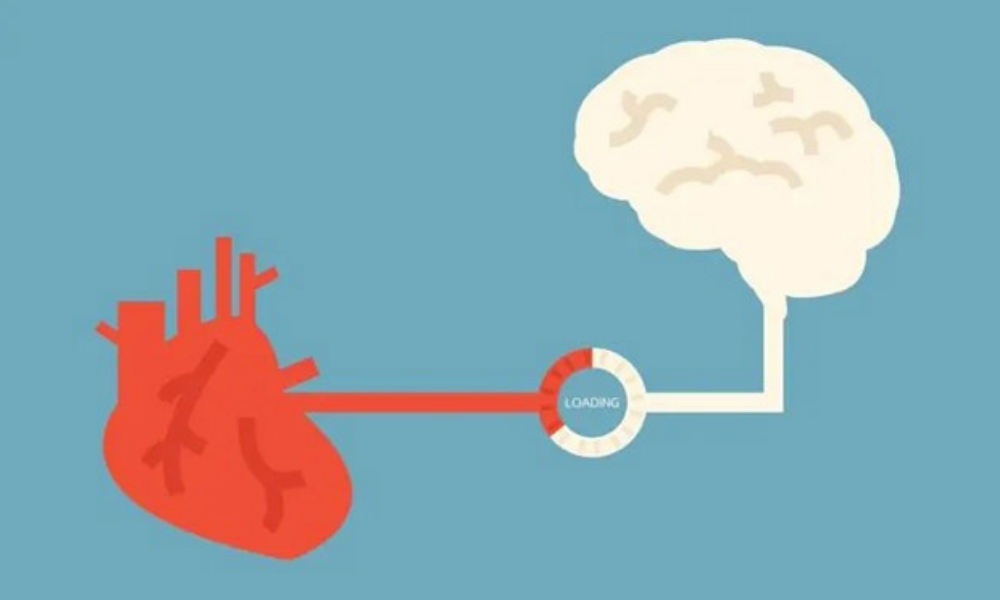
Their heart is a finely tuned instrument in a world that often forgets how to listen, and yet demands that they mute themselves.
So instead of asking,
“Why are you so sensitive?”
Perhaps the better question is:
“When did feeling less become the measure of strength?”
Because in a world that keeps turning the volume higher,
the sensitive heart is not the weakest one, it is the only one still truly awake.

Insightful