
The author is a researcher & freelance writer
Amidst widespread criticism, the Union government moved to repeal the flagship United Progressive Alliance-era (UPA-era) Mahatma Gandhi National Rural Employment Guarantee Act (MGNREGA) and introduce the Viksit Bharat—Guarantee for Rozgar and Ajeevika Mission (Gramin) Bill (VB–G RAM G Act) instead in December 2025. The Act was the world’s largest rural job guarantee in its original form but now lies diluted. Questions have also been asked about the repeal’s effects on federalism and states’ fiscal burden. While a great deal of initial focus was on the change in the name but there are major deeper problems behind the new bill. As economist Jean Dreze said, the renaming was a red herring. While it has been an open secret that the BJP government has never favoured the Act, it had a mass acceptance and has been a backbone of India’s rural poor, especially in terms of the accelerated economic crisis, and therefore, had so far been relatively untouched. While the repeal itself does not come as a shock, given the government’s open ideological stance towards the rural poor, the fact that it could effectively bulldoze such a bill without widespread vocal pushback nationwide raises alarm.
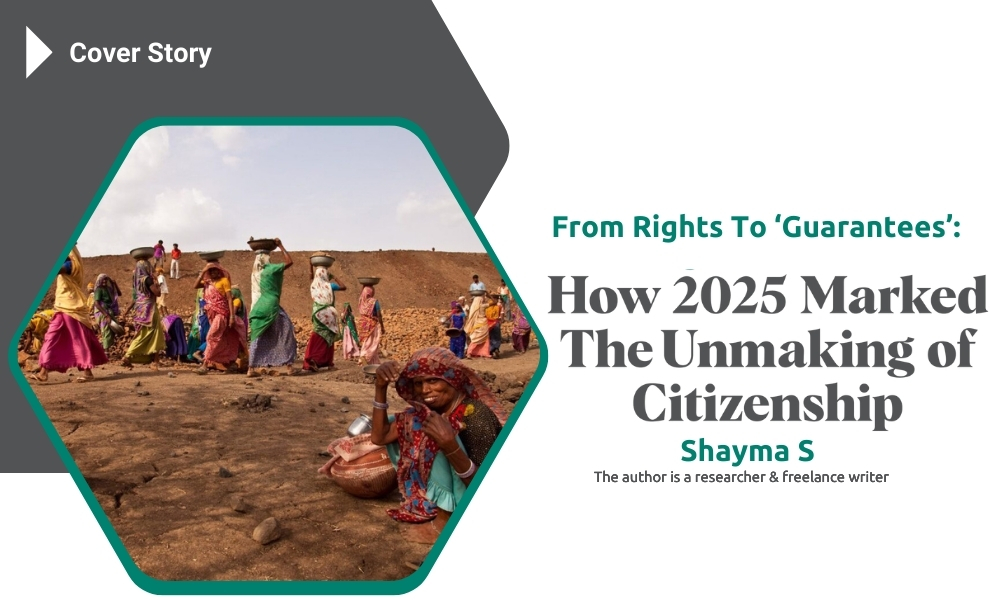
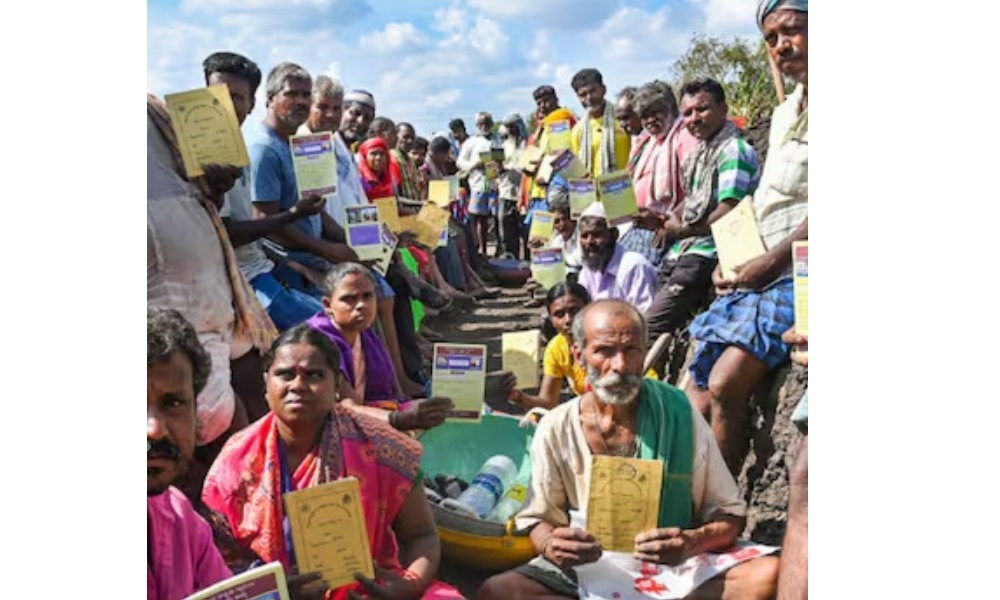
In the early 2000s, India’s rapid, urban-centric imbalanced growth left rural areas struggling with low farm productivity, climate stress, unemployment, and failed crops, triggering large-scale migration to cities and weakening village economies. To address this imbalance, the UPA government under Dr Manmohan Singh introduced NREGA in 2005 (renamed MGNREGA in 2009), marking a historic shift by making employment a legal right rather than welfare. MGNREGA was also one of the several social security acts that were of particular interest to Congress leaders like Sonia Gandhi, who pushed for them despite internal favour for a more neoliberal policy. The Act guaranteed 100 days of wage work within 5 km of villages, ensured time-bound payments, focused on creating durable rural assets like water conservation and roads, and was implemented through Panchayati Raj institutions with central funding to strengthen accountability. Although MGNREGA had its implementation challenges, its fundamental idea saw citizens as deserving of equitable and fair work, rather than the current definition of laabarthi or beneficiary accessing ‘guarantees’ that the BJP government has been pushing for. It was a citizen-centric idea that spoke in the language of rights and empowerment. The new repeal erodes this legal right to work, shifting from a demand-driven guarantee to a budget-limited, centrally controlled programme, and imposing a greater financial burden on states while diluting rural accountability and protections. The G RAM G ‘guarantee’ will not be available during at least a 60 days’ period, which all states will have to notify as “peak agricultural seasons of sowing and harvesting” in advance. This also raises questions of the fate of several other extant such acts including the Right to Information Act and the Right to Education Act.
This repeal sums up the year India has had under an anti-poor, anti-worker, anti-women and fundamentally anti-citizen Hindutva government. Over the past few years, laws that once treated citizens as rights-bearing participants in democracy have been steadily reframed as discretionary welfare schemes, subject to executive convenience. The Right to Information Act, once a powerful tool against corruption, has been weakened through amendments that undermine the independence of information commissioners and delay disclosures. The Right to Education Act has seen its spirit diluted through underfunding, school closures, and a growing push towards privatisation and digital substitution, disproportionately affecting poor and rural children. Similarly, the four labour codes have replaced hard-won worker protections with flexible, employer-friendly regimes that weaken collective bargaining, dilute job security, and normalise informality—especially for migrant and contract workers. Food security, once anchored in legal entitlement through the National Food Security Act, has increasingly been operationalised through biometric conditionalities, exclusions, and temporary extensions rather than permanent guarantees. Even welfare delivery has shifted decisively towards Aadhaar-linked, centrally controlled platforms, where exclusion errors are treated as acceptable collateral rather than governance failures.
This erosion of citizenship has also been starkly visible in the sphere of environmental governance, where public commons have increasingly been opened up for private accumulation. In 2025, the steady weakening of protections for the Aravalli range—North India’s critical ecological barrier—continued through diluted regulations, mining permissions, and post-facto clearances, despite repeated warnings about groundwater depletion, desertification, and urban heat stress. At the same time, projects like Vantara were celebrated as symbols of conservation and philanthropy, even as they raised serious ethical and ecological questions about land acquisition, wildlife captivity, and the replacement of community-led conservation with corporate spectacle and an evasion of transparency.
Finally, looking back at 2025, it is impossible to separate women’s lived realities from the broader erosion of rights and institutional accountability in India. The year gone by was marked by recurring reports of sexual violence, custodial abuse, and everyday gendered precarity, met less with structural reform and more with symbolic outrage, delayed justice, or punitive rhetoric that rarely translated into safety on the ground. This endless cycle came to light after each ‘incident’ and then subsided – as it always has. At the same time, women bore the brunt of policy shifts that hollowed out welfare and work guarantees: cuts to rural employment, shrinking care infrastructure, informalisation of labour, and the retreat of the state from health and education. For millions of women, especially those at the margins—rural workers, migrants, minorities, Dalit and Adivasi women—violence was not only physical but structural, embedded in economic insecurity, legal invisibility, and the constant negotiation for dignity. As 2025 closes, the question is no longer whether India has the laws to protect its women, but whether it has the political will to treat them as full citizens rather than expendable subjects of control, silence, or tokenistic concern. An easy way out is to constantly demand new laws or react to incidents in a knee-jerk manner. Instead, what is required is to build movements and solidarities across castes, religions, regions and political backgrounds to reclaim the formative idea of citizenship being snatched from our very eyes. If 2025 revealed how fragile women’s rights have become, it also reminded us that citizenship has never been granted—it has always been claimed, defended, and expanded through collective struggle.
0 Comments