
This article aims to shed light on the reality of postpartum depression, an experience that affects many new mothers, often in silence. Some women may not encounter PPD with their first child but may struggle with it after subsequent pregnancies. It is essential to recognise that PPD is not a reflection of a mother’s capability or strength; rather, it is a result of complex hormonal imbalances beyond her control. No mother chooses to experience this; she simply finds herself caught in its grip.
To provide deeper insight into this condition, here is the firsthand account of a new mother who wishes to remain anonymous as she opens up about her postpartum struggles.
Evenings were the hardest. I would feel fine throughout most of the day, but as night approached, an overwhelming restlessness and fear would take over. I dreaded the nights. I longed for the day to last forever, wishing the darkness would never come.
A: Honestly, there isn’t a single word that can fully capture what I felt. My emotions came in waves, one after another, overwhelming me. And before I describe them, I know some may judge—but this is the raw, unfiltered truth of what I experienced.
At first, I felt no connection with my baby. I didn’t want to hold him in my arms. I wished someone would just take him away from me, adopt him—anything. I couldn’t bear to hear him cry; each time he did, all I wanted was to push him away. I wished he had never been born. I saw him as a burden, an intrusion into my life. I had no desire to feed him, change his diaper, or even show him affection. Every time I looked at him, I was reminded of how drastically my life had changed, how my freedom had disappeared overnight. No more spontaneous outings, no more moving freely without careful planning around a newborn’s needs. He made me feel as though he had taken me away from my husband. I feared I would never get my ‘me-time’ again, never feel like myself again. And in those darkest moments, I even thought about leaving, just running away so I would never have to see him again.

Before giving birth, I had dreamed of so many beautiful moments—dressing him up, capturing his little milestones in photos, cuddling him, and talking to him. But I couldn’t do any of it. I couldn’t even manage my daily chores, which made me feel even worse, as if I had lost my ability to function, multitask, and be the person I once was.
A: Honestly, my feelings were mostly related to the baby, but they extended beyond that. I often felt guilty for my husband, believing I had become a burden to him. It frustrated me that I couldn’t control my emotions and would break down in front of him. I saw myself as a test for him from Allah, something he had to endure rather than a partner he could rely on.
I also felt deeply for my family. It seemed like no one truly wanted to take care of the baby, and I was forcing them into a role they hadn’t chosen. I believed they were only doing it out of obligation, simply because they were my family and had no other choice.
I lost all confidence in myself. Once a strong, independent girl who would go out of her way for others, I had become the most dependent. I had always prayed to Allah never to be dependent on anyone, yet here I was—struggling to complete even the simplest tasks. Doing laundry, washing the baby’s soiled clothes, cooking—everything felt impossible.
I know that all new mothers face challenges during the first month as the baby adjusts to the world, but for those experiencing PPD, even the smallest struggles feel magnified. Things that wouldn’t typically be a concern became overwhelming, triggering endless hours of tears.
A: I believe everyone must understand that PPD is a serious condition that requires support, professional help, and proper treatment. I tried my best to control myself whenever I felt the urge to cry. I would talk to anyone who could comfort me, and while it helped momentarily, the same thoughts would return, leaving me feeling disgusted with myself all over again.
That’s when I finally decided to seek help from a psychiatrist and shared everything I was going through. I remember her words: “You are clearly struggling to control your emotions.” After listening to my entire experience, she diagnosed me with PPD and suggested medication, assuring me that it would help me feel better. I was taken aback—medication? How could that possibly change my thoughts?
But let me be completely honest: within a week of starting treatment, the crying stopped. I felt more in control of myself and could care for my son much better than before. I am so grateful that I decided to see a psychiatrist despite the discouraging remarks from those around me. People kept telling me, “You’re not mad. You don’t need a psychiatrist. You’re just overthinking, that’s the real problem. You’ve lost your Iman.”
I firmly believe that making dua and turning to Allah is essential during difficult times, but it’s also important to recognize that postpartum depression is not a reflection of one’s faith. It is hormonal imbalance that requires medical attention. Many elders dismiss it, saying, “This never happened in our time—we gave birth to 10, 15 children without any issues.” And yes, even today, some women don’t experience baby blues at all. But just as there are mothers who don’t struggle today, there must have been many in the past who silently suffered, unknowingly damaging their relationships with those around them simply because they didn’t realize they had PPD.
What truly matters is that mothers acknowledge their condition. Just as we wouldn’t hesitate to visit a doctor for a fever or cold, PPD also requires treatment. The sooner you seek help, the quicker are your chances of recovery.
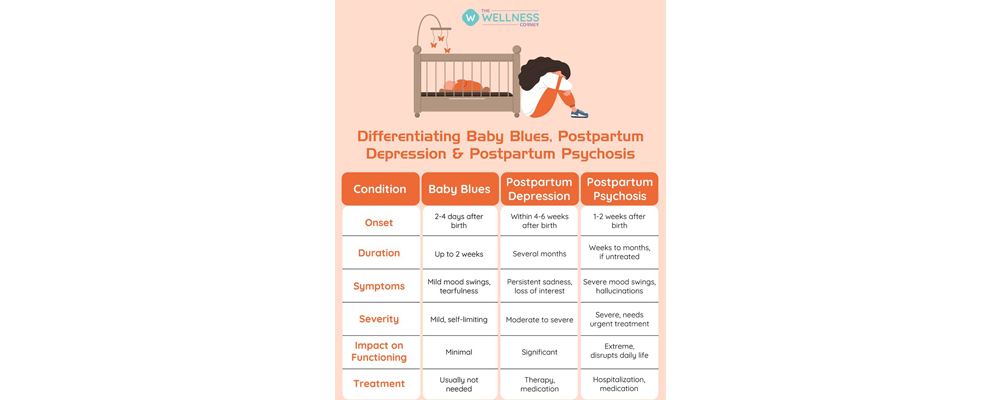
I had to visit the doctor every month so she could assess my symptoms and determine whether my dosage needed to be adjusted. Some patients require a higher dosage to feel better. One of my friends, for example, had hers increased after her first consultation. In my case, my dosage remained the same, but I had to continue taking the medication for at least three months. At times, I wanted to stop taking them altogether. However, it’s crucial to understand that psychiatric medications cannot be stopped abruptly. They need to be gradually reduced under medical supervision. Even during the tapering phase, I had to take them every day, but my dosage was slowly decreased so that my body could learn to regulate my hormonal levels on its own.
Additionally, I consulted a psychologist who conducted several therapy sessions, teaching me how to manage my emotions effectively. Alhamdulillah, by the seventh month, I was able to discontinue my medication completely. And I feel no shame in admitting that I took medication for a mental health condition and that, by the grace of Allah, I am now doing well.
Even after those seven months had passed, he never taunted me. Not once did he make sarcastic remarks or mockingly call me a “mental patient” or imply that I needed mental help. That kind of sensitivity and understanding is vital. PPD is not something to joke about at the time and not later. It’s not a story to laugh over. No one chooses to experience postpartum depression, and it should never be treated as something trivial.
I’m not saying that every mother with PPD needs to take medication, but there is no harm in consulting a psychologist or psychiatrist. They have the expertise to guide us in the right direction and determine what will help us feel better. Let them assess our condition and decide what works best. I remember my psychiatrist explaining that for some women, behavioral counseling alone is enough, and they feel better within days. However, for others, the recovery process can take months.
There is no harm in attending counseling sessions. Even after you start feeling better, don’t rush to stop therapy or medication. Give yourself time. In Sha Allah, the days will pass, and soon enough, you’ll be able to discontinue your treatment. But in the meantime, don’t lose hope. Seek help without hesitation.
There is no shame in getting treatment. It doesn’t matter what others say—you don’t have to share your struggles with the world. But for your own well-being, your mental health, and your safety, make the choice to get treated early. You deserve it.
Very very nice article, hats off to you saima..😇
Article is very good, explained very well,bringing out the insight of PPD.
Alhamdulillah, May Allah SWT reward you immensely dear, for this is the need of the hour for our Umma,to hold on iman ,dua& dawa.
Subhanallah.
Aameen
Alhamdulillah, May Allah SWT reward you immensely dear, for this is the need of the hour for our Umma,to hold on iman ,dua& dawa.
Subhanallah.
Aameen
Masha Allah very well explained….I am also gone through all of this..I also take medicine for PPD and Alhumdulillah by the grace of Allah it is helpful for being well
Alhamdulillah Great job May Allah reward you .