
The author is an MBBS student with a passion for healthcare. In addition to her medical studies, she is a writer, contributing to journalistic writing, poetry, and creative content.
India’s coasts are choking on plastic, sewage, dredge spoil, and development dreams sold as progress. Yet the most determined defenders of our shores aren’t policy think tanks or beachfront condo owners—they’re fisherfolk, Dalit sanitation workers, Adivasi forest defenders, women’s collectives, and Muslim & coastal caste communities for whom the sea is food, faith, and future. This story reframes “beach cleanups” from weekend photo-ops to a people’s environmental justice movement.
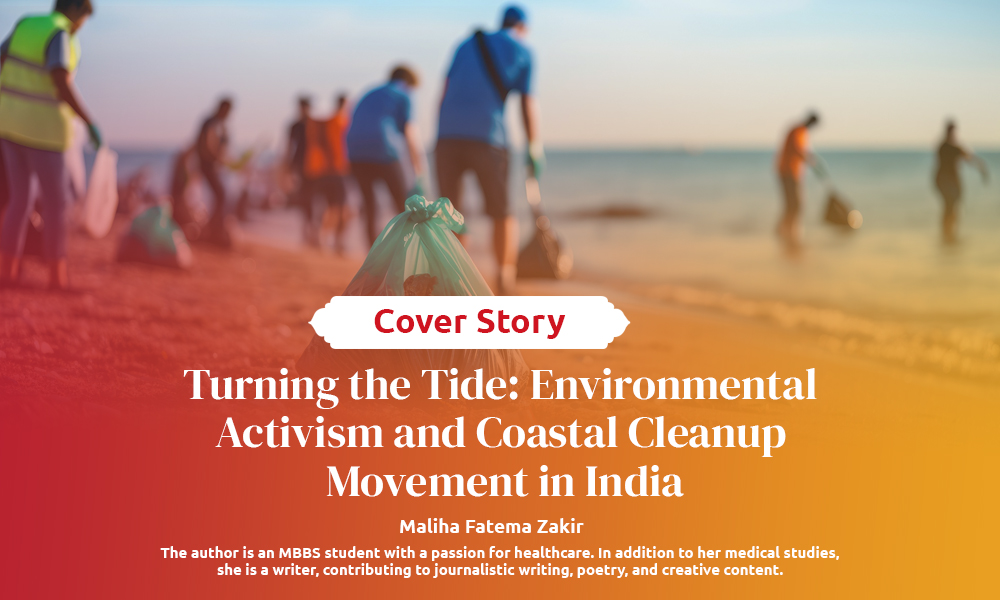
Earlier this year, I visited Mumbai — a city I’ve always adored for its vibrancy, street food, and especially, its beaches. As a beach lover, I was eager to experience the sea breeze and the iconic sunset at Juhu Beach. But the moment I arrived, my excitement was quickly overshadowed by disappointment. Instead of soft golden sands, what met my eyes was a grim collage of waste: plastic bags, leftover food containers, broken glass, and discarded footwear strewn across the shore. Later, during a boat ride, I witnessed something even more disturbing — waves of waste floating toward us, forming an unrelenting stream of garbage riding the tides. The ocean, a symbol of freedom and power, was being choked by human neglect.
This was a sobering wake-up call. We have so proudly inherited our natural resources — rivers, forests, oceans — only to defile them through our own carelessness. It is high time we clean up what we’ve so selfishly dirtied. Awareness is no longer optional. Ocean conservation isn’t the sole responsibility of a few NGOs or government bodies — it’s every individual’s duty.
That shock was real—but to be honest, Juhu is only the part of the crisis the urban middle class sees. Travel a little further—to Mahim Creek, fishing hamlets in Versova, cyclone-hit Odisha villages, the mangroves choking behind luxury towers, the trawler-jammed shores of Tamil Nadu—and the picture sharpens. Waste isn’t an eyesore; it’s a public health threat, a caste issue (who handles it), a livelihood collapse (when fish ingest it), and a political failure in planning, regulation, and accountability.
India produces an estimated 3.4 million tonnes of plastic waste annually, and much of this waste finds its way into the sea via rivers and urban drainage systems. The country’s 7,500 km long coastline, home to millions of livelihoods, is now grappling with rising levels of marine pollution. Beaches like Versova, Juhu, and Marina, once pristine and picturesque, are now battle zones between pollution and preservation.
Government and independent assessments put India’s annual plastic waste generation in the millions of tonnes; leakage into rivers and drains sends a steady stream coastward. 7,500 km of coastline supports fishing, salt pans, ports, tourism, Navy bases, and densely packed settlements—yet coastal waste systems are patchy to nonexistent in many districts. Marine debris harms small-scale fisheries first: broken nets, reduced catches, contaminated fish, and unsafe landing sites. Rotting organic waste + plastic traps water which leads to an increase in mosquitoes, skin disease, and gastrointestinal infections. There is the climate late link: Blocked drainage worsens storm-surge flooding; eroded coasts amplify cyclone damage for low-income settlements. In short, marine pollution is not just an environmental issue—it’s caste, class, livelihood, gender, and governance rolled into one. As is often quipped, environmentalism without class/caste questions is just gardening at best. India’s response to this crisis has gained momentum in the past decade, thanks to coordinated efforts by NGOs, citizens, students, and even corporate and naval personnel.
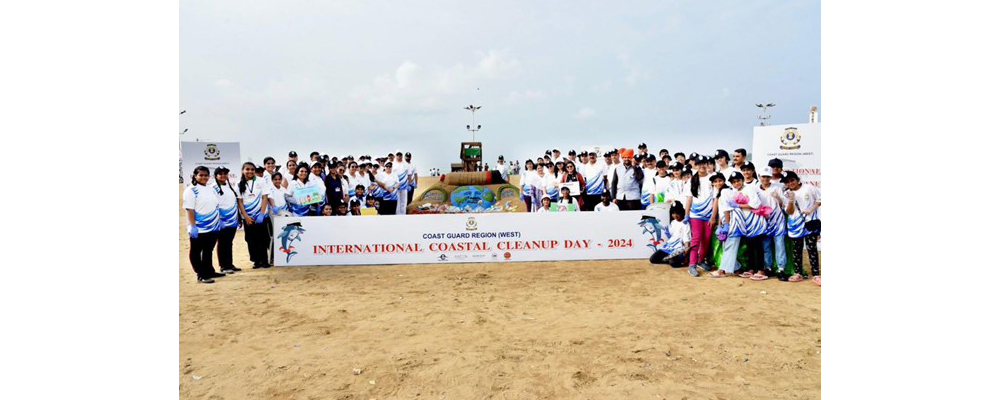
The Indian Maritime Foundation (IMF), in partnership with the International Coastal Cleanup (ICC), organizes large-scale cleanups across Indian shores. These events focus not just on removing waste, but also on educating volunteers about marine ecosystems and the importance of responsible consumption. Additionally, while the media loves before/after drone shots of “transformed” beaches, in reality, large chunks of the work are done, week after week, by contract sweepers (often Dalit), informal waste pickers, fisher youth groups, madrasa students, women’s self-help collectives, and local civic bodies that rarely trend online.
Grow Billion Trees, a green startup turned environmental powerhouse, removed over 10,000 kilograms of marine waste in 2023 alone. Their strategy goes beyond cleanup — they emphasize segregation, recycling, and local training programs to ensure sustainability.
Meanwhile, United Way Mumbai’s “Clean Shores Mumbai” initiative works at the grassroots level, engaging schools, colleges, and citizens to adopt beaches and take ownership of their upkeep.
Forest Rights & Livelihood
- Dongria Kondh (Odisha) stopped Vedanta’s bauxite mining in Niyamgiri Hills through gram sabha resistance.
- Secured legal recognition under Forest Rights Act (FRA) for Adivasi communities.
- Protected biodiversity and indigenous land rights.
Water & River Protection
- Mithi River Cleanup (Mumbai) driven by slum communities, including Muslim fisherfolk, after 2005 floods.
- Dalit women in drought-prone Maharashtra led watershed revival, creating local water security.
- Bottom-up climate resilience against floods & droughts.
Anti-Pollution & Land Defense
- Unnao Tannery Protest (UP): Muslim leather-workers & Dalit laborers fought industrial pollution poisoning rivers.
- Sterlite Plant Shutdown (Thoothukudi, Tamil Nadu) after Adivasi and fisherfolk-led protests against toxic emissions.
- People’s power forced shutdown of polluting giants.
In 2023, India took a global step by leading the G20 Beach Cleaning Campaign. This national drive brought together thousands of volunteers across all 13 coastal states, underscoring the government’s growing commitment to marine sustainability.
Environmental activism in India is witnessing a silent but powerful revolution — led by women. These women are not only challenging pollution but also redefining gender roles and community leadership.
In Odisha’s Ganjam district, local women have found a way to fight pollution and poverty simultaneously. They collect marine debris and transform it into handmade products like baskets, bags, and jewelry. These eco-products are now sold in urban markets, providing them with a stable income and dignity.
Saalumarada Thimmakka, the 105-year-old environmentalist from Karnataka, planted hundreds of banyan trees alongside roads using her meager earnings. She has shown that change does not always require funding — it requires heart and consistency. These women prove that the fight for clean oceans is as much about equity and inclusion as it is about ecology.
Women’s involvement in cleanup efforts is crucial not just for environmental outcomes but also for community development. In many coastal areas, women are responsible for managing water, preparing food, and safeguarding family health — giving them an intuitive connection to the well-being of their environment.
By bringing them into leadership roles in cleanup campaigns, marine policy-making, and eco-enterprises, we create resilient, informed communities that can defend their ecosystems and adapt to change.
Moreover, initiatives that combine cleanup with skill development offer long-term solutions. When waste becomes a source of income, and clean beaches bring back tourism and pride, conservation becomes a community habit — not just an event.
NGOs are now blending environmentalism with travel — offering “voluntourism” experiences where people can clean beaches while exploring coastal beauty. From the shores of Goa to the mangroves of Kerala, travelers now participate in cleanups, biodiversity documentation, and awareness campaigns. It’s a hands-on way to learn, unlearn, and reconnect with nature — and it’s popular among the youth, who seek purpose-driven travel.
My visit to Juhu Beach may have begun with disappointment, but it ended with reflection. The ocean — vast, ancient, and wise — doesn’t ask much. Just that we protect it, respect it, and treat it like the life-giving entity it is.
India’s coastal cleanup movement is a rising tide, and women are its most consistent, committed sailors. But they cannot do it alone. If each of us took responsibility for our waste, participated in cleanups, and supported sustainable policies, our oceans would have a fighting chance.
What is the Vizhinjam Protest?
The Issue
- Protest led by fisherfolk in Kerala, many from Dalit and Christian communities.
- Against Adani’s deep-sea port project at Vizhinjam.
- Concerns: coastal erosion, loss of homes, fish depletion, and lack of rehabilitation.
Why It Matters
- Highlights climate justice and livelihood rights.
- Big projects often ignore voices of those most impacted.
- Environmental damage = cultural and economic displacement.
What We Can Learn
- Development vs. Displacement: Question who benefits and who pays the price.
- Community Resistance Works: Sustained non-violent protests gain global attention.
- Inclusive Climate Action: True sustainability includes local, marginalized voices.
Let the shores we walk on be clean not just for Instagram photos, but for the generations to come — who deserve to inherit not waves of plastic, but waves of promise. If we want clean coasts that stay clean, we need systemic changes—not just one-day cleanups. The first step is making waste segregation and last-mile collection reach the fishing hamlets, coastal slums, and peri-urban panchayats, not just gated communities. Without this inclusion, the problem simply shifts from one neighborhood to another.
Another critical measure is enforcing Extended Producer Responsibility (EPR) with real accountability. Brands must report how they manage their plastic waste. During community cleanups, volunteers can document and photo-tag branded trash and send this evidence to state pollution boards, creating pressure for compliance.
Stormwater and drainage systems are another weak link. Most of the garbage that ends up on beaches travels through drains. Mapping these outfalls, especially during different seasons, provides municipalities with data for structural fixes that can prevent trash from reaching the sea.
Fish markets and landing sites also need structured waste management. From ice packaging and nylon net scraps to polystyrene boxes, segregated bins and buy-back incentives can ensure this waste is handled at the source. Similarly, strict enforcement of Coastal Regulation Zone (CRZ) rules is vital to stop illegal reclamation and sand mining, which destabilize shorelines and worsen debris problems.
Finally, linking cleanup to livelihoods can create lasting change. Training women and youth in recycling and upcycling—sorting, baling, and shredding plastics—can connect them to district recycling units. This approach turns cleanup into income, dignity, and local ownership.
From Participation to Power: A Reader Action Checklist
Change begins with small, consistent actions. Start by joining or organizing a monthly community cleanup, and make it data-driven. Track branded litter and submit evidence to Pollution Control Boards to demand EPR enforcement. Support fisherfolk and waste-picker unions, and lobby for municipal contracts that pay fair wages.
Cut single-use plastics at their root: banish them from events, schools, madrasa kitchens, and community spaces. Equip local drives with practical resources: gloves, masks, and boats for trash hauling. Most importantly, hold your representatives accountable. Ask the basic but powerful question: Where does our waste go after collection? Push for transparency dashboards so the answers are public.

At awe. So much info gathered by you. The same feelings I have whenever I visit a beach. In case you are part of any initiatives in beach clean up, would like to connect. Would love to do my bit
Masha Allah your collection of data and description is thought provoking. 👍if you are related to some cleanup movement practically, than i wish you give some… Practical pts to make people realise that they are inviting danger illnesses rather clean up…. Movements…
Individuals realizations are important part…
In fact it is global problem which require…. Many hands, like minds to work on plastic….. Issues.