
Zesty Aromatic Spoon (ZAS) is a pseudonym for a writer whose readers are already familiar. with her reflective take on life. Through vivid storytelling, ZAS explores the deeper connections in food, travel, & human interaction. Keep guessing
Dear Aura Readers,
Aaachoo!
Bless me. Or better yet, send soup.
Yes, you guessed it, I’m writing this under the glorious influence of a flu that’s not exactly dramatic enough to show up on a thermometer but manages to drag my soul across the floor. It’s that sneaky kind, the kind that wraps itself in a warm blanket of fever, a dull headache tucked somewhere behind your eyes and a general sense of ‘meh’ that even coffee can’t cure.
Ah, the monsoon, that poetic season of petrichor and puddles, also moonlights as a delivery agent for infections that seem to have evolved beyond the reach of modern medicine. These bugs don’t flinch at antibiotics or blink at steam inhalation. At this point, the only effective treatment is… patience.
I remember once urging my husband to take paracetamol, to which he replied with a wisdom-laced smirk: “If you take medicine, your cold will last seven days. If you don’t, it’ll last a week.” Yes. Read that again.
However, here’s where it gets interesting: illnesses in our part of the world often come with their own unique food culture. And trust me, it’s a fascinating one.
When someone in the family falls ill, the women of the house don their invisible white coats and instantly transform into a hybrid of doctor, nutritionist and emotional support unit, who are armed with age-old wisdom and unmatched determination. Their sole mission is to nurse the patient back to health faster than a passenger jet landing ahead of schedule.
And let me clarify that’s not one-size-fits-all. Their remedies are as tailored as designer outfits. Toddlers get one version of comfort food, elders another, and teenagers get a glare along with the kanji and medicine. Amidst all the usual chaos of running a household, these women seamlessly begin crafting separate menus for separate illnesses, fevers, stomach bugs, and sore throats – each comes with its own culinary protocol.
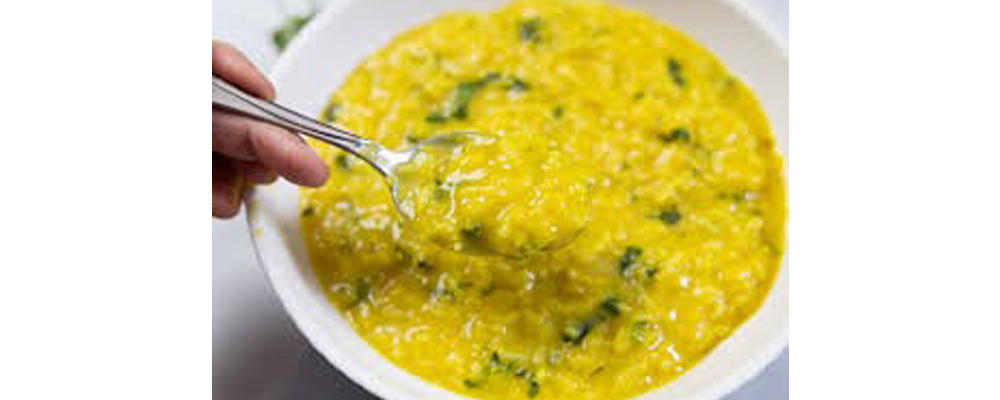
One dish, however, makes a grand entry no matter the diagnosis, is the humble porridge, also known as congee, kanji or depending on which part of India you’re in. Indeed, a punishment by a spoon. My mother, for instance, was loyal to sooji ki kanji (semolina porridge) for every ailment from viral fever to mild existential crisis. And just in case we got too cosy with the blandness, she’d serve it with a fiery dry chutney made from dry coconut, garlic, and red chilli. This combination practically demanded you recover quickly or at least pretend to.
Sometimes she’d pour out a warm glass of rice starch water to hydrate us, the kind you’d usually expect to see offered to plants or livestock. We drank it because resistance was futile and, well, there was no Wi-Fi back then to distract us from our fate.
At my in-laws’ place, rice was never cooked in its starchy water. That precious liquid was typically collected and passed on to the neighbour to feed her buffalo. But the moment someone sneezed or even looked pale, that same starch water was reclaimed like ancestral property.
My mother-in-law would ceremoniously ladle a spoonful of cooked rice into a bowl of this reclaimed rice water, add a pinch of salt and serve it with the seriousness of a Michelin-star dish sometimes accompanied by a slice of mango soaked in vinegar or a shy piece of pickle, as if to say, “Here, find joy in this suffering.”
One day, I opened the tiny pressure cooker, the one dedicated exclusively to fever-time meals and noticed something unusual. The rice bubbling inside wasn’t the usual polished white I was familiar with. It looked a bit too earthy and rustic. Curious, I asked my mother-in-law what kind of rice it was, and without missing a beat, she said, “That’s matta rice. We use it only for porridge.” Only for porridge? This rice had a VIP pass to the sickroom!
But to my surprise, somewhere between my scepticism and the second serving, I grew fond of it. It had a slightly nutty texture, the honest-to-goodness bite, it tasted like the kind of rice that had stories. Stories of grandmothers, monsoon coughs, home remedies and unsolicited advice about whether or not to drink water standing up.
And just like that, matta rice earned its place in my list of acquired tastes.
No Indian home remedy saga is complete without the arrival of kaada (a homemade medicinal brew of spices). Kaada was given the celebrity status during the COVID-19 lockdown when everyone was searching for “best kaada for covid prevention” on the net, apart from baking and food videos. Kaada is a murky, bubbling potion brewed with more suspicion than science; no two kaadas are ever the same. Each household has its top-secret formula handed down like family jewels. Some contain tulsi, ginger, pepper, clove, cinnamon, and if your immune system is truly under threat, a stray twig from the curry leaf plant that’s been ignored all year.
The smell of kaada alone is enough to make you question your will to recover. Mothers serve it in steel glasses that could scald your fingertips and then look at you expectantly, like, “Now sip this nectar and rise like a phoenix.” But one sip in, you’re more likely to descend like a confused pigeon.
Islam & Health: Key Teachings
Body as a Trust
“Do not throw yourselves into destruction…” (Qur’an 2:195)
“Your body has a right over you.” (Sahih Bukhari)
• Caring for health is a religious duty.
Balance & Moderation
“Eat and drink, but do not waste.” (Qur’an 7:31)
“No human fills a vessel worse than his stomach.” (Ibn Majah) • Practice portion control & avoid excess.
Purity & Protection
“Cleanliness is half of faith.” (Sahih Muslim)
Alcohol & harmful substances are forbidden (Qur’an 5:90).
•Maintain hygiene and avoid self-harm.
Then comes haldi doodh (turmeric milk), which is our desi version of liquid gold. It’s so sacred that the moment someone in the house sneezes, the entire kitchen echoes with, “Haldi wala doodh pilao!” Never mind if the poor soul has lactose intolerance, a broken leg or heartbreak, haldi doodh is the one-size-fits-all elixir of life. And dare you question its taste? Someone will quickly remind you of its benefits and how modern science also agrees.
And just when you think the worst is over, enters the neighbourhood aunty with a PhD in unsolicited advice and a collection of cures that have never seen the inside of a medical journal.
“Crush a few neem leaves, mix them with honey and smear them on the soles of the feet.”
“Boil guava leaves and inhale the steam.”
“Keep a betel leaf on the head for a cooling effect, beta.”
You nod politely, hide your sarcasm and promise to “definitely try it.”
Next in the grand buffet illnesses are the dreaded diarrhoeas, mysterious stomach bugs and the ever-suspicious “something I must have eaten.” And with them came the first item on our healing menu- nimbu paani (lemon juice), but not the cheerful summer picnic variety.
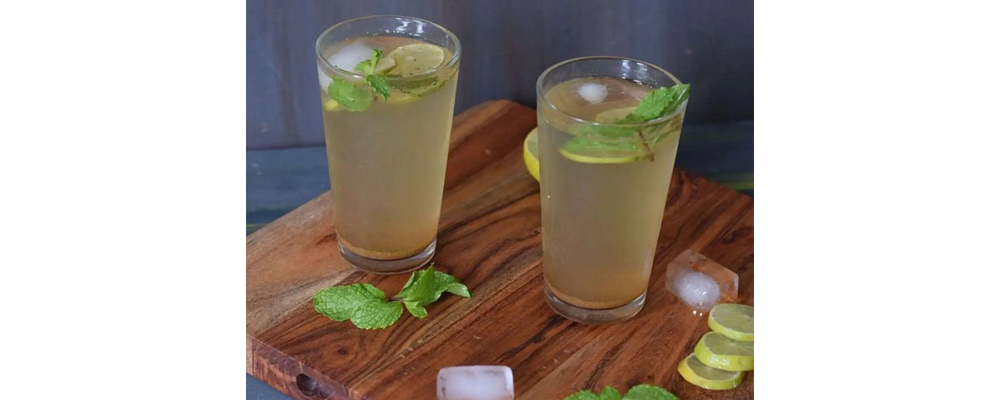
No, this was the medicinal version, lemonade laced with so much salt it could make the ocean blush. Sugar was invited reluctantly, in the tiniest spoonful, only to keep the drink from tasting like liquid regret.
Back then, there was no mention of ORS sachets or fancy electrolyte drinks. Who needed WHO-approved formulas when you had a determined mother stirring lemon juice and salt with the intensity of a lab technician? The moment anyone so much as muttered, “Stomach’s a bit off,” a glass of salty nimbu paani would appear at your bedside like an ancient potion, no debate, no escape.
And you were expected to sip it with gratitude, even if your taste buds screamed for mercy.
Once the stomach settled, or at least stopped conducting internal revolutions, came the cautious but ceremonious reintroduction of solid food. This phase was not unlike re-entering society after a scandal – slow, bland, and closely watched.
First came the hero of all recovery meals, plain white rice. No ghee, no tadka, no friends. Just lonely, overcooked rice that clung together like it was recovering from trauma too. Sometimes, in the form of Khichdi, or if you were lucky (or had behaved dramatically enough), you got a spoonful of curd with it, stirred until smooth, and served with the seriousness of a hospital discharge form.
Then came boiled vegetables, so overboiled that even their original identities were questionable. Was that carrot or lauki? No one knew. The taste was irrelevant; the point was “easy to digest” and “won’t offend the stomach.”
The re-entry into the world of spicy, happy food was handled like high-level diplomacy. A tiny bit of dal on day three. One chapati on day five. And heaven forbid you ask for a pickle, you’d be met with a gasp and an instant diagnosis of “you’re not fully recovered yet!”
Yes, I do agree that as bland as these meals were, they were seasoned with care, concern and the occasional side-eye from someone who swore they told you not to eat outside food in the first place. Whether it’s the tasteless rice porridge or mushy overboiled vegetables, the food culture around illness in our homes is less about recipes and more about family bonds. It’s a language of love, which is spoken fluently by our mothers and grandmothers in spoons and ladles. Every bland porridge, suspicious kaada and unsolicited nuskha comes wrapped in layers of worry, affection and the deep desire to see you well, even if it means feeding you rice water usually reserved for the neighbour’s buffalo.
In a world of ORS sachets and clinical precision, these kitchen cures may not always make it to medical journals, but they’ve earned their place in the healing archives of our childhoods.
We are reminded that health is among the greatest blessings we often take for granted. We are advised to take care of our health and receive necessary treatments.
In every moment of weakness, we need to firmly believe that true healing comes only from Allah, Ash-Shafi, the Ultimate Healer. Along with medicines and remedies, it is His infinite mercy that brings relief and recovery. As the Qur’an beautifully says, “And it is He who heals me when I am sick.” (Surah Ash-Shu’ara, 26:80). Turn to Him not just with prescriptions, but with prayers. Trust that His healing will without doubt touch both the body and the soul.
Next time you’re handed a bowl of kanji, a spoonful of turmeric milk, or a suspicious glass of nimbu paani with way too much salt, sip with sabr, smile with shukr, and always know that beneath all that drama is a heart full of dua.
Now, don’t forget to share what the go-to dish is in your home when someone falls ill. Share the comfort foods you were served (or still serve) during sick days; we promise, no judgment will be made here!
🤍🤍🤍