
The author is a student of psychology, with a passion for understanding and helping people and the worlds they create.
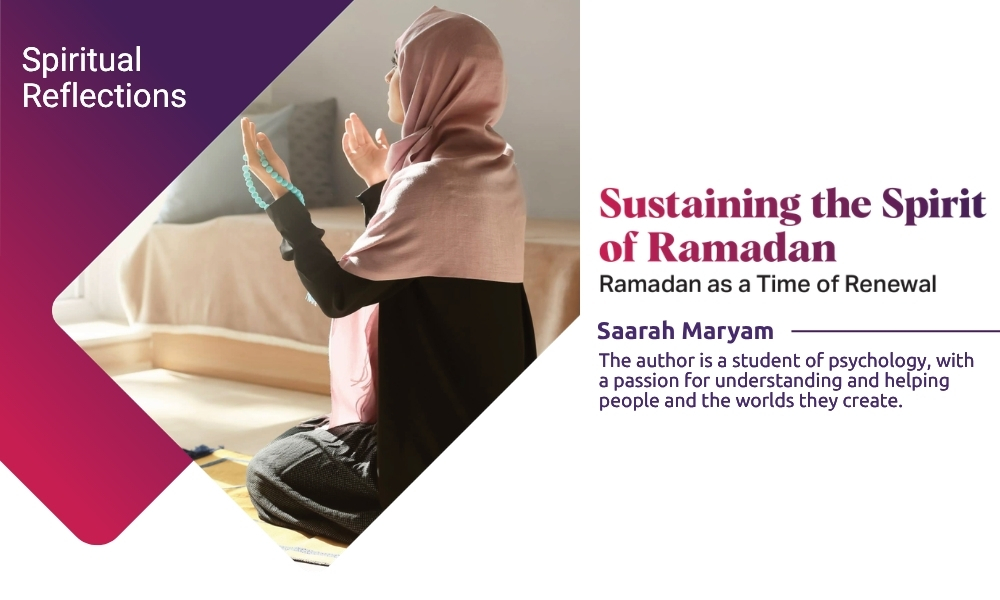
During Ramadan, many Muslims increase their acts of worship. They pray more regularly, read the Qur’an daily, and spend time remembering Allah through dhikr. These habits create a spiritual rhythm that brings peace and clarity. After Ramadan, it is important to maintain at least a portion of these practices instead of abandoning them completely.
And worship your Lord until there comes to you the certainty (death).
(Surah Al-Hijr 15:99)
This verse highlights that worship is not limited to a particular month. Ramadan strengthens our relationship with Allah, but that relationship must continue beyond it. Even if the intensity of worship decreases slightly due to daily responsibilities, consistency is what truly matters. A few pages of the Qur’an each day, regular voluntary prayers, or daily remembrance of Allah can help keep the heart spiritually alive.
The Prophet ﷺ also emphasized consistency in worship. He said:
The most beloved deeds to Allah are those that are consistent, even if they are small.
(Sahih al-Bukhari, Sahih Muslim)
This Hadith teaches an important lesson: maintaining small, regular acts of worship after Ramadan can be more valuable than performing large acts only occasionally.

Charity Beyond Ramadan
Ramadan is also known as the month of generosity. Muslims are encouraged to give zakat, sadaqah, feed the poor, and support those in need. Many people feel a strong sense of compassion during this time, but charity should not be limited to Ramadan alone.
The Prophet Muhammad ﷺ was known for his generosity throughout the year, but his generosity increased even more during Ramadan. This example shows that charity is a constant part of a Muslim’s character, not a seasonal act.
Those who spend their wealth in charity by night and day, secretly and publicly, will have their reward with their Lord.
(Surah Al-Baqarah 2:274)
Continuing charity after Ramadan can take many forms. It may include helping a struggling family, donating regularly to a cause, feeding someone in need, or even offering emotional support to others. Charity is not always financial; acts of kindness, good words, and helping others are also forms of sadaqah.
Carrying Ramadan’s Discipline Forward
One of the most powerful aspects of Ramadan is the discipline it teaches. For an entire month, Muslims refrain from food, drink, and other desires from dawn to sunset purely for the sake of Allah. This practice strengthens self-control and reminds believers that faith requires patience and restraint.
However, the real test comes after Ramadan ends. The discipline learned during fasting should influence everyday behavior — whether it is controlling anger, avoiding harmful habits, or maintaining modesty and honesty.
O you who believe, fasting has been prescribed for you as it was prescribed for those before you, so that you may attain taqwa.
(Surah Al-Baqarah 2:183)
Taqwa is not meant to disappear once Ramadan ends. Instead, the month serves as a reminder that believers are capable of self-discipline and spiritual growth. Maintaining good habits — such as regular prayer, mindful speech, and patience — ensures that the lessons of Ramadan continue shaping a person’s character.
Ramadan can be compared to a spiritual reset. It offers believers the opportunity to cleanse their hearts, seek forgiveness, and reconnect with their purpose. If these changes disappear immediately after the month ends, the deeper wisdom of Ramadan is lost.
The goal of Ramadan is to inspire a long-term transformation. A person who prayed consistently during Ramadan should feel motivated to continue praying regularly. Someone who experienced the peace of reciting the Qur’an should try to keep that connection alive. Similarly, the generosity and empathy felt during Ramadan should remain part of daily life.
Maintaining these habits does not mean perfection. Everyone faces moments of weakness or distraction. What matters is the intention to continue striving toward spiritual growth and staying connected to Allah.
Ramadan is a powerful reminder of what believers are capable of achieving when they dedicate themselves to faith and discipline. The real success of Ramadan is not measured by how devoted one is during those thirty days alone, but by how much of that devotion continues afterward.
By sustaining spiritual habits, continuing acts of charity, and preserving the discipline learned through fasting, Muslims can carry the spirit of Ramadan throughout the year. In doing so, Ramadan becomes more than just a month of worship — it becomes a lasting influence that shapes a believer’s character, actions, and relationship with Allah.
Ultimately, the end of Ramadan is not the end of spiritual growth. Instead, it is the beginning of applying its lessons in everyday life.
DID YOU KNOW ?
Autism is a spectrum, not a single condition
Autism Spectrum Disorder (ASD) includes a wide range of strengths and challenges. Each individual experiences it differently, which is why awareness focuses on acceptance and inclusion rather than a “one-size-fits-all” understanding.
0 Comments