
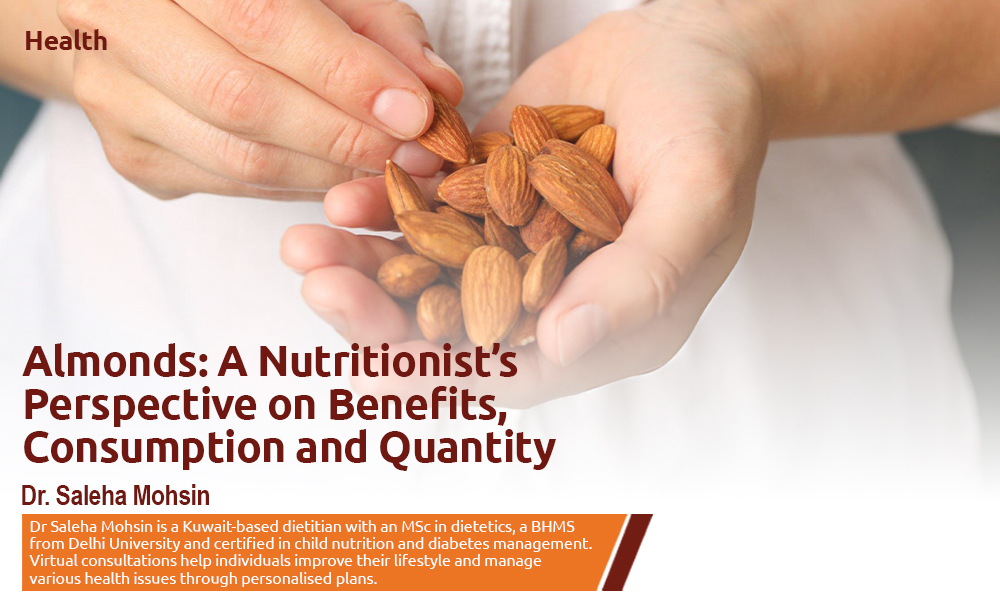
Dr Saleha Mohsin is a Kuwait-based dietitian with an MSc in dietetics, a BHMS from Delhi University and certified in child nutrition and diabetes management. Virtual consultations help individuals improve their lifestyle and manage various health issues through personalised plans.
Almonds (Prunus Amygdalus) are among the world’s most nutritious foods. However, once native to Central Asia, almonds are now produced worldwide, with America being the largest producer, followed by Spain and Australia. Often referred to as the ‘king of nuts,’ almonds provide numerous health benefits due to their rich composition of macro- and micronutrients. Let’s explore the advantages of almonds, along with the ideal ways and recommended quantities to consume them.
Nutritional facts of Almonds
Almonds are recognised as rich sources of proteins, dietary fibre, healthy fats, vitamins, minerals, and many essential micronutrients. They contain 4% water, 18% protein, >50% fat, 3% carbohydrates, and 13% dietary fibre.
Almonds- Nutritional facts per 100gm
Source – Indian food composition tables (2017)1
Health Benefits of Almonds
| Calories | 609kcal |
| Protein | 18g |
| Carbohydrate | 3g |
| Total Fat | 58g |
| Dietary Fiber | 13g |
| Calcium | 228mg |
| Iron | 4mg |
| Potassium | 699mg |
| Magnesium | 318mg |
| Phosphorus | 466mg |
| Folate | 36µg |
| Niacin | 3mg |
| Thiamine | 0.15mg |
| Riboflavin | 0.26mg |
| B5 | 0.73mg |
| Vitamin E | 25mg |
Almonds have been used as a health-promoting food since ancient times. Indeed, the numerous health benefits of almond consumption cannot be overlooked.
Reduces blood cholesterol:
Regular consumption of almonds reduces the total cholesterol and LDL (bad cholesterol) and increases good cholesterol (HDL). In cases where cholesterol is mildly raised, a daily intake of 20g of almonds for 6 weeks significantly improves the lipid profile, as shown in the study.2
Manages Diabetes:
Almonds are necessary for people with diabetes as they lower fasting and postprandial blood glucose in T2DM. This effect is attributed to their protein, fat, and flavonoid richness, which promotes slow gastric emptying. Almonds also lower glycosylated haemoglobin (Hb1Ac) and provide good diabetic control.
Reduces Obesity:
Regular consumption of almonds with a calorie-deficit diet helps to reduce body weight, especially waist circumference. Hence, almonds are highly useful in reducing abdominal obesity. They can prevent you from overeating by providing a feeling of fullness.
Improves Heart Health:
Almonds minimise the risk of coronary heart disease by lowering LDL, controlling glucose levels, managing body weight, and reducing inflammation.
Keeps the skin young:
Almonds protect against oxidative stress due to flavonoids, MUFA, and vitamin E. Almonds regularly can boost skin health by providing nourishment and protection.
Improves gut health:
Almonds and almond skin improve the intestinal microbiome and provide dietary fibre. Almond skin is a great prebiotic, detoxicant, and antiviral. Therefore, almonds must be consumed whole with the skin.
Ways to Consume Almonds
How many almonds should you consume in a day?
A person’s age, weight, and lifestyle all influence how many almonds they should consume daily. A balanced diet comprises 35 grams of nuts and oilseeds daily. So, the quantity of any sort of nut should be less than 35g and divided into portions among meals.
Serving size of almonds:
Source-ICMR 2024
Precautions while consuming almonds
Almonds are tree nuts, and they are among the most common food allergies. Nut allergies are indicated by abdominal discomfort, nausea, bloating, itching, and difficulty swallowing. In such cases, almonds and other nuts must be completely avoided.
| Age | Serving size |
|---|---|
| Infants 9-12 months | 5g |
| Children and adolescents | 10g |
| Adults | 20g |
| Pregnant women | 20g |
Almonds are high in phytic acid, which can
decrease the absorption of minerals like iron, calcium, and zinc. Hence, they must be consumed in limited quantities, preferably after soaking overnight.
ALMOND FLOUR PANCAKES
These gluten-free pancakes are an ideal breakfast option. Pair it with honey and fruits to make it balanced.
Nutrition profile
Serving size: 3 small pancakes (this recipe includes two serving sizes)
Calories:730 kcal
Protein: 28 g
Carbohydrates: 29 g
Fat: 118 g
Calcium: 314 mg
Iron: 5 mg
METHOD
Take 1¾ cups almond flour in a mixing bowl. Add one teaspoon of baking powder and ¾ teaspoon of salt. Whisk them together.
In a separate bowl, whisk together almond milk (1/4 cup), two eggs, one tablespoon of brown sugar and olive oil (2 teaspoons) until well combined.
Pour the wet ingredients mixture into the dry ingredients and stir well to make a thick, fluffy batter.
Pour the batter into a pan to make small pancakes. Flip and cook for 1-2 minutes on each side.
Serve with fruits and honey.
Conclusion Almonds are a versatile, nutrient-rich food that can improve your health significantly when taken in moderation. Almonds can be a valuable addition to your diet as a snack or incorporated into recipes. However, to extract the maximum benefits from this superfood, consult a dietitian for personalised advice on including them in your meals.
- T.Longvah RA, K. Bhaskarachary, K. Venkaiah. Indian Food Composition Tables. 2017.National Institute of Nutrition, ICMR
- Barreca D, Nabavi SM, Sureda A, et al. Almonds (Prunus Dulcis Mill. D. A. Webb): A Source of Nutrients and Health-Promoting Compounds. Nutrients. 2020;12(3):672. doi:10.3390/nu12030672
- NIN-ICMR Expert Committee, Dietary Guidelines for Indians- 2024r meals.
About the Author: Dr Saleha Mohsin is a Kuwait-based dietitian with an MSc in dietetics, a BHMS from Delhi University and certified in child nutrition and diabetes management. Virtual consultations help individuals improve their lifestyle and manage various health issues through personalised plans.
0 Comments