
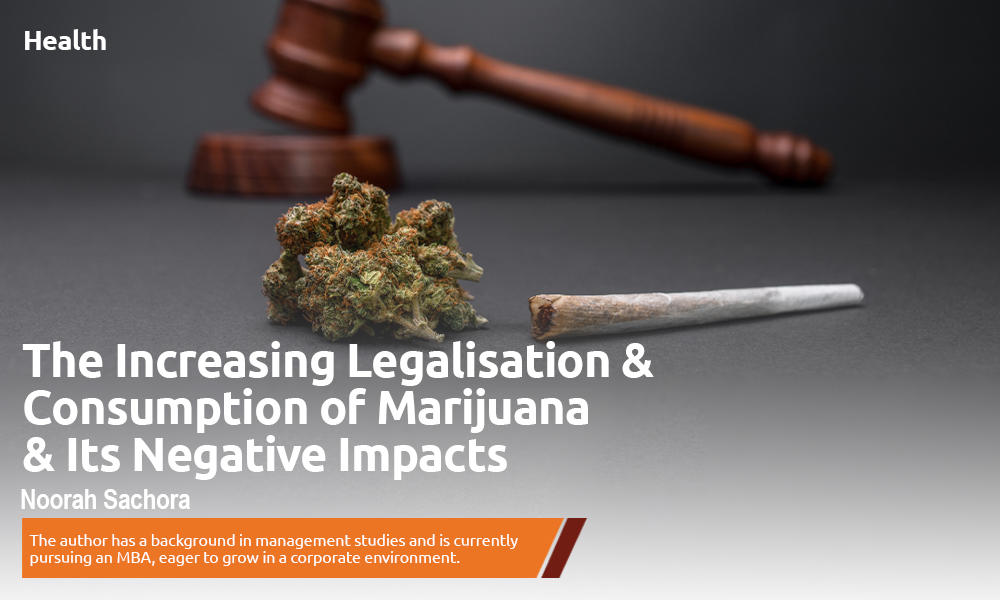
The author has a background in management studies and is currently pursuing an MBA, eager to grow in a corporate environment.
Introduction to Marijuana
Marijuana, which is also known as Cannabis, Weed or pot, is a drug that comes from the cannabis plant. This plant has been in use for centuries for medicinal purposes. It refers to the plant’s dry stems, leaves, seeds, and flowers. It contains intoxicating as well as non-intoxicating components. It is consumed as a cigarette, which is called a joint, or the cigars that have been emptied of tobacco and refilled with marijuana. Marijuana is also mixed with food and beverages or is also brewed as tea.
Health risks of marijuana Consumption
Clinical studies have found that the health risks posed by the consumption of marijuana outweigh its benefits. It can lead to extreme conditions such as schizophrenia, psychosis, and other form of substance use disorders. Using marijuana, whether occasionally or over a long period, increases the risk of vehicle accidents. Smoking cannabis can also lead to health issues like bronchitis, pneumonia, breathing problems, mini-strokes, heart attacks, and a condition called cannabis arteritis, which affects blood vessels. Studies have shown a positive association between marijuana smoking and cancers of the lung and an increased risk of developing other cancers. Moreover, the interactions between cannabis and chemotherapy (or any drug) are largely unknown. The legalisation of marijuana would mean that it would be available for use at the customer’s will, just as tobacco and alcohol are available. Several Department of Health and Human Services (HHS) agencies, including the Food and Drug Administration (FDA), Substance Abuse and Mental Health Services Administration (SAMHSA), and National Institute for Drug Abuse (NIDA), evaluated in the past and concluded that neither the safety nor effectiveness of marijuana for general medical use was supported by any reliable scientific studies, nor by any data involving humans or animals.
Legalisation and Economic Implications
As of 2024, 37 states and Washington, D.C. have moved to legalise marijuana, whether for medical use, recreational use, or both. These legal changes have created economic changes in the flourishing industry of legal cannabis companies. In the US the rate of deaths related to cannabis overdose has increased post-legalization, as reported by the Centres for Disease Control.
While the increase in the legalisation of marijuana would ramp up the economic benefits of the country, the control of its consumption and its availability will be challenging. As for young adults, it can pose a significant threat to their health and be a great distraction. In India, cannabis is called by different names such as charas, ganja, and bhang – which is used in Indian drinks such as thandai and bhang lassi which is one of the most common legal uses in India.
Impact on Youth
The younger generation is experiencing an era of greater personal freedom and increasing affluence but is also more susceptible to addiction and facing challenges in personal relationships. The introduction of another psychoactive substance could aggravate issues in a society already grappling with the harmful effects of tobacco, alcohol, and pan masala. The promotion of such substances among millions is a heavy price to pay for the protection of the individual freedom of a few. Our next generation cannot fall prey to these substances, or else they will be trapped into a lifestyle that does not hold any sense of purpose in life, that is a life that is filled with indiscipline, hopelessness, isolation, insecurity and a grim future According to the United Nations Office on Drugs and Crime World Drug Report of 2016, the retail price of Cannabis in India was US $0.10 per gram, the lowest of any country in the world. The International Narcotics Control Board’s 2019 annual report noted that “India is among those countries worldwide with the greatest extent of illicit cannabis cultivation and production.
Economic Benefits of Legalisation
States that have legalised marijuana have seen several economic benefits. Direct tax revenue generates funds for the state, and states employ thousands of employees to supervise the sector’s administration, distribution, and production. Companies in the cannabis sector boost local economies by increasing consumer spending and creating jobs. Decriminalising marijuana use for medical and/or recreational purposes also lowers the costs of policing drug laws.
In conclusion, protecting future generations from the detrimental effects of addiction and its associated challenges is essential for fostering a healthier, more productive, and secure community. The collective good must take precedence to ensure a brighter, more stable future for all.
0 Comments