

The author is a PhD researcher in Political Science
Reading & Its Importance in the Era of Book Journaling and Goodreads

Opinions on the state of reading today are sharply divided. A recent article in The Atlantic argues that college students struggle with reading, highlighting a decline in reading skills. One commentator attributes this drop to the shift from the phonics method—where students are taught to recognise individual sounds—to whole language learning. This approach emphasises organic learning in a classroom setting. According to critics, this transition did not yield positive results, leading to a decline in literacy rates.
Another major flaw in the education system is the failure to build reading stamina among students. The ability to read longer texts, extract meaning, and engage with the material critically has not been cultivated effectively. As a result, even students who gain admission to elite universities often struggle to read an entire book.
The situation is not much different in the Indian context. Government surveys and available data indicate reduced reading and comprehension abilities among students. The rote-learning system, which emphasises memorisation and over-understanding, further compounds this issue. Since students primarily read textbooks and are not encouraged to engage with additional literature, reading skills remain underdeveloped. If students are not taught how to read properly, reading will never become pleasurable; instead, it will always feel like a burdensome task.
This lack of critical reading habits is reflected in the genres that dominate Indian bookstores and online booksellers like Amazon. Self-help and romance novels are the most popular categories, but the selections within these genres often do little to encourage critical thinking or moral introspection. Instead, they tend to reinforce existing problematic mindsets. For instance, the popularity of books that focus on getting rich quickly or dark romance novels that romanticise domestic and intimate partner violence raises concerns about the kind of narratives being absorbed by readers.
Reading Matters More Than Ever
In an era dominated by doomscrolling, infinite scrolling, reels, and short-form content, the ability to engage in deep reading is becoming a lost art. These digital habits promote quick dopamine satisfaction, making it harder for people to immerse themselves in longer, more complex texts. Reading, by contrast, is an inherently critical exercise that forces individuals to slow down, process information, and engage in meaning-making.
An essay in The Atlantic cites neuroscientist Maryanne Wolf, who argues that deep reading—sustained immersion in a text—stimulates several valuable cognitive functions, including critical thinking and self-reflection. These benefits are largely absent when people merely skim content or engage in reading through short bursts of fragmented information.
An essay in The Atlantic cites neuroscientist Maryanne Wolf, who argues that deep reading—sustained immersion in a text—stimulates several valuable cognitive functions, including critical thinking and self-reflection. These benefits are largely absent when people merely skim content or engage in reading through short bursts of fragmented information.
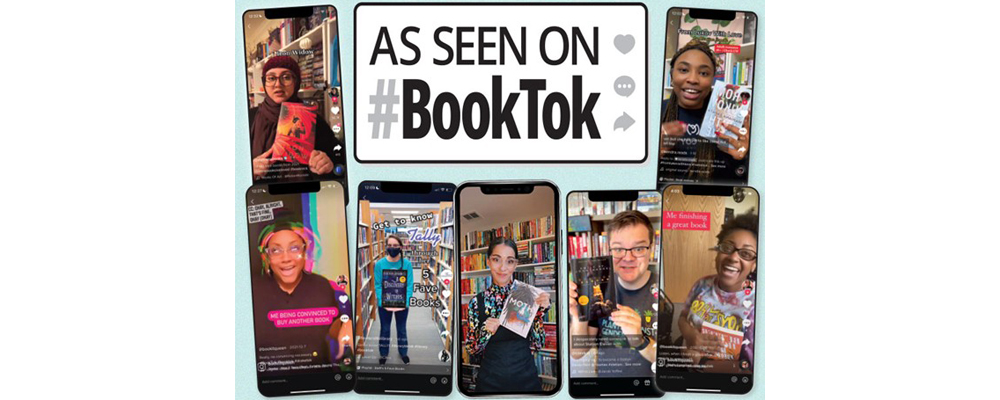
Has BookTok and Bookstagram Helped or Exacerbated This Problem?
The impact of BookTok and Bookstagram on reading culture is a topic of much debate. Supporters claim these platforms have revived interest in books, drawing more people into reading. While this is undeniably true, it is worth questioning whether reading 100–200 books a year—mostly from limited genres such as fantasy and romance, as frequently promoted by book influencers—fosters deep reading.
Nilanjana Roy warns that such trends might turn people into “skimmers”—readers who consume an enormous amount of content from multiple sources without fully comprehending or contemplating it. The rise of BookTok and Bookstagram has undeniably expanded readership, but whether it has nurtured meaningful engagement with literature remains a critical question.
Nilanjana Roy warns that such trends might turn people into “skimmers”—readers who consume an enormous amount of content from multiple sources without fully comprehending or contemplating it. The rise of BookTok and Bookstagram has undeniably expanded readership, but whether it has nurtured meaningful engagement with literature remains a critical question.
So, how does one get back into ‘deep reading’?
It might sound obvious, and you may come across several resources for this issue online, but it boils down to two main steps:
- Eliminate distractions. Go cold turkey. Take a break from social media. It’s easier said than done, but your attention span will thank you.
2. Start reading long-form works, specifically the classics. Pick one and commit to finishing it. You don’t have to set a time limit; you can just commit to absorbing the story, reflecting on the themes, correlating the ideas with what you already know, etc.
The decline in reading stamina and comprehension skills is a pressing concern, especially when digital distractions are at an all-time high. If reading is to retain its value as a critical thinking and intellectual growth tool, efforts must be made to encourage deep, meaningful engagement with books. This requires reforming educational approaches, broadening the types of promoted literature, and fostering a culture where reading is seen not as a chore but as an enriching experience.

References:
Why everyone stopped reading – Jared Henderson
The Elite College Students Who Can’t Read Books – The Atlantic
How to regain the habit of deep reading – Nilanjana Roy (Financial Times)
In today’s society, where many have lost touch with books, this article can serve as a beacon of enlightenment for all readers. Social media has become a significant distraction that diminishes the power of reading.