
This is an account of my trip to Qatar. I visited on 27th December 2024 as part of an international programme conducted by Al-Mujadilah, a mosque and centre for women under the Qatar Foundation. Al Mujadilah is a centre and mosque exclusively for women, where women come together to explore and share many interesting activities. They also have many religious, social, and community development programmes conducted daily, weekly or monthly, ranging from calligraphy, Qur’an, art classes and so on.
Sheikha Moza binth Nazer founded Al Mujadilah with a mission to nurture the next generation of creative, intellectual Muslim women who are committed to the growthof themselves and their communities and to foster a Muslim society where all women are engaged, their participation and contributions acknowledged and recognized, and their concerns and perspectives shape contemporary Muslim thought and open public discourse.
As part of their global programme, I was selected for Riāya, a young adult stewardship program, as one of the international participants out of many applicants. Riāya is a one-week leadership and capacity-building programme to provide young women between the ages of 17 and 20 a deeper understanding of Islam, its history and current global challenges. Alhamdulillah with all blessings, I got the chance to take part in this programme that happened between 28 December 2024 to 04 January 2025 at Al Mujadilah, Education City.
After a couple of months of submitting my application, I received the acceptance email for the Riaya programme. Rather than merely a dream come true, it was a testament to my perseverance.
I boarded an early morning flight to Qatar on 27th December 2024 from Trivandrum International Airport. Apart from me, two others from Germany and Pakistan were selected as international students travelling to Qatar to attend the programme. The remaining participants included four native Qataris and other international students from the U.S., Yemen, Palestine, Sri Lanka, Egypt, Pakistan, Canada, and Sudan, who were already studying in Qatar. It was a very special and exciting experience for me as it was my first international exposure.
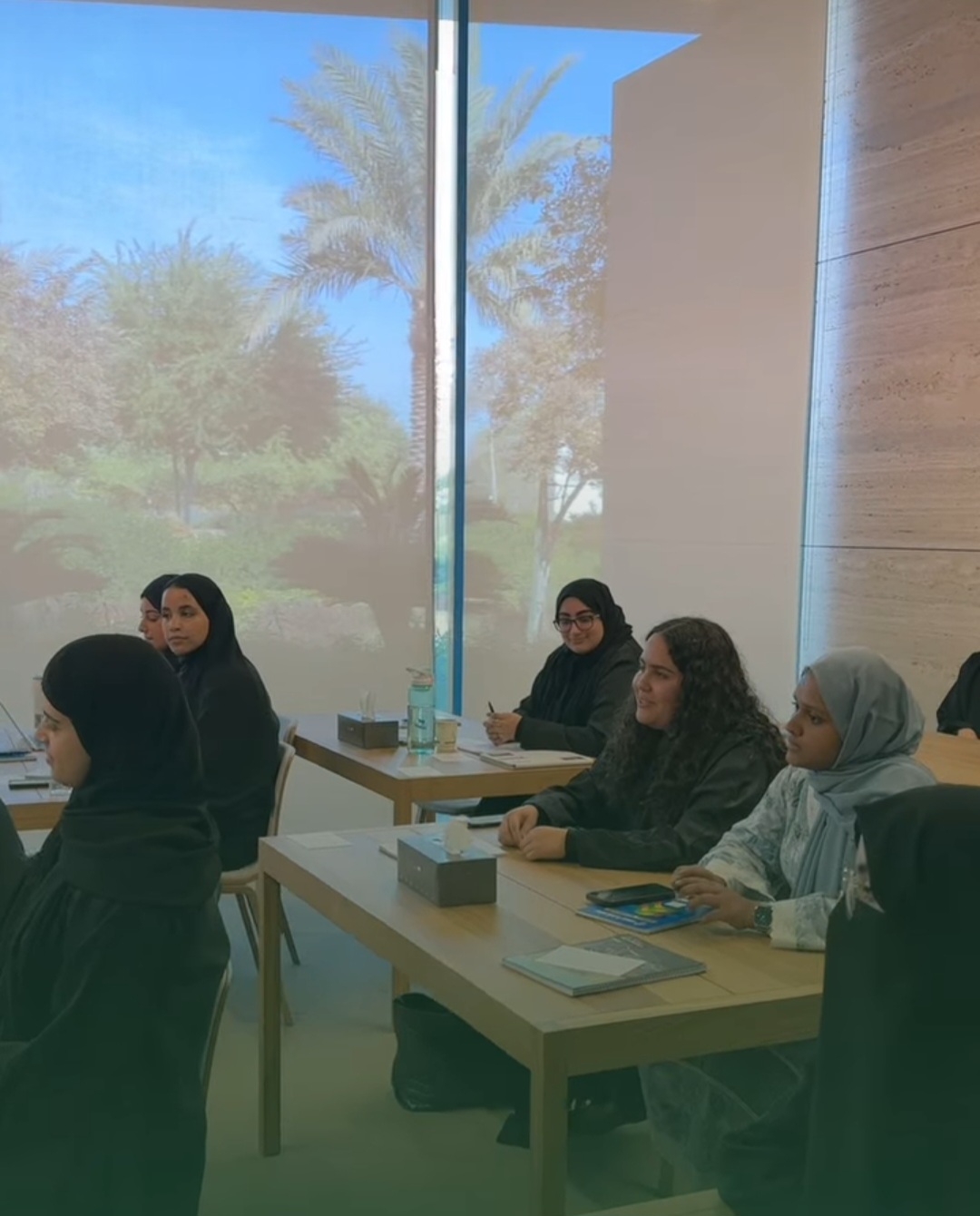
My travel experience, accommodation in Education City, and food—everything was meticulously arranged and taken care of by Qatar Foundation.
Through this programme, I had the opportunity to explore various vibrant ideas and perspectives shared by the participants during each course and workshop. The participants were pursuing diverse fields of study, ranging from high school to medical and engineering studies, as well as undergraduate programmes in chemical engineering, international politics, nutrition, psychology, and business studies. The programme started on 28th December 2024 with an introductory session led by Dr Sohaira Siddiqui, Executive Director of Al Mujadilah and
Associate Professor of Islamic Studies at Georgetown University in Qatar. From the very first day, I was deeply impressed by the active involvement of the participants. They were eager to volunteer and clarify even the smallest doubts they had about the topic, as well as to express their ideas and perspectives, even when they differed from the professors.
Following this, we had three-credit courses and two workshops, along with field trips, all led by different professors and activists. The amazing part of every course was the field trips, which provided an opportunity to explore Qatar, while also getting to know its culture and meeting people. During the travel durations, we participants also had some leisure time to spend, sharing and discussing our cultures, lifestyles, and traditions, and getting to know each other better.
Each course was assigned for one and a half hours each day, and this course ran for five days.
The first course, on Colonialism and Post-Colonialism, was taught by Dr. Lubaba Al Azami, a lecturer in Shakespeare and Early Modern Literature at the University of Manchester, U.K. She is also the founding editor of Medieval and Early Modern Orients and the author of the book Travellers in the Golden Realm: How Mughal India Connected England to the World (John Murray, 2024).
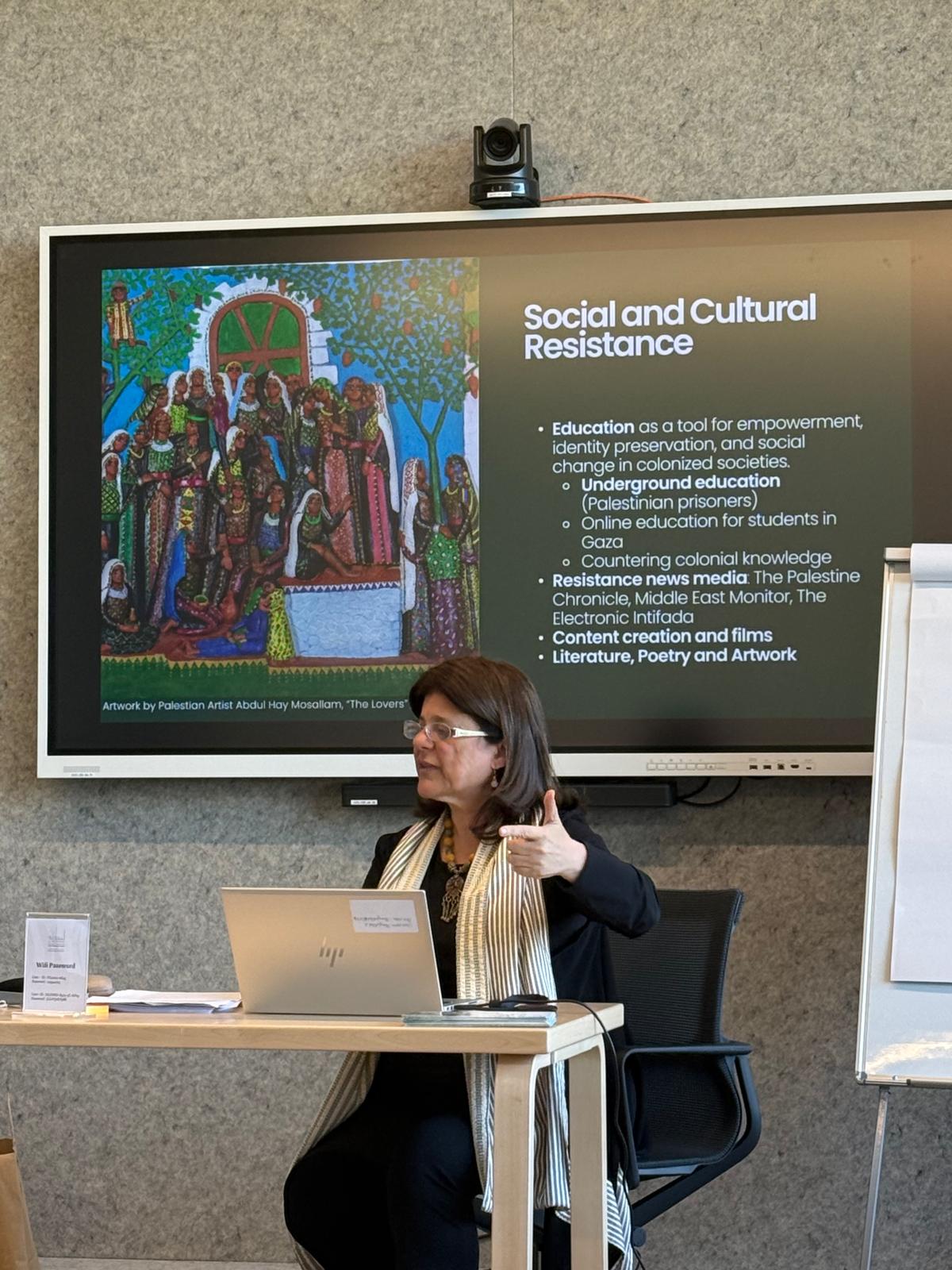
In this course, we explored a comprehensive global history, from medieval times to the present, by examining the relationships and roles of Europe, the Islamic world, and Muslim women. The history of colonisation was studied through a lens that shifted the focus away from Europe and onto the Islamic world. We discussed various topics, including the global Renaissance, English diplomacy in the Islamic world, Muslim ‘Turk’ literature in Renaissance England, and, interestingly, the portrayal of the Islamic world in Shakespeare’s works.
A key concept presented in this course was that Western Europe has not always been a colonial power and was not historically the centre of colonial authority. We explored the two largest European religious groups—Christianity and Islam. Islam dominated Eastern Europe, while Christianity dominated Western Europe, highlighting that Islam is, in fact, a European religion.
This course also included an online session with Sumaiya Rabeya, focusing on the 1971 War and Women’s Political Activism in Bangladesh. She provided invaluable insight into the history and political conditions of Bangladesh after the partition.

The course concluded with a field trip to the Museum of Islamic Art, which aligned perfectly with the course content. Dr. Lubaba guided us through the museum, explaining the contributions of Muslims and the Mughal Empire. This experience helped us gain a deeper understanding of Islamic power, technology, scholarship, military achievements, diplomacy, and governance.
The second course, on Islamophobia and Orientalism, was one of the most tremendous sessions, with everyone being highly active and engaged. In this session, participants shared their own experiences and the stereotypes they had encountered in their hometowns, whether in Germany, the U.S., Canada, Sri Lanka, and so on.
This course, focusing on Orientalism and Islamophobia, was taught by Dr. Khadija Elshayyal, a professor in Social Studies at the University of Doha for Science and Technology and an Associate Fellow at the University of Edinburgh, where she is working on the Digital British Islam project, funded by an Economic and Social Research Council grant. She is also the author of ‘Muslim Identity Politics: Islam, Activism, and Equality in Britain’ (Bloomsbury, 2018).
The session was incredible, filled with various activities, group work, case studies, and discussions on topics such as cultural wars, scapegoating, and the role of the media establishment—movies, news, etc.—in fostering Islamophobia. We also examined how the state itself contributes to shaping structural Islamophobia, with participants of the Riaya programme bringing in their ideas and experiences. A particularly engaging discussion centred around why women are always a focal point of interest, contestation, and collateral damage in the context of Islamophobia.
As part of this course, we got an opportunity to visit Al Jazeera on 29th December 2024 in the evening. The most exciting part of this course, perhaps my entire trip to Qatar, was the visit to Al Jazeera. It was a bonus opportunity for each participant, and everyone was as excited as I was. There we had a session with the journalist Muhammad Khamaiseh on the topic “Do Muslims Scare You?” In this session, we were all provided with a small book titled ‘Do Muslims Scare You? Islamophobia: A Guide for Journalists’ by Osama bin Javed. The session focused on how mainstream media, like Al Jazeera, play a role in resisting structural Islamophobia within media establishments.
After the session, we had a discussion and a questionnaire session, where I also had the opportunity to ask questions. Due to Al Jazeera’s strict security policies, entry was highly complicated, and we had restrictions on photography, as well as limited time inside. However,
Alhamdulillah, we were able to spend more than two hours there, meeting journalists and learning about how the entire media network operates. We were guided by one of Al Jazeera’s senior producers, Hind Touisatte, who introduced us to her colleagues in the creative teams, intelligence teams, content creation teams, and social media handles for both Al Jazeera Arabic and English. It was such a wonderful experience to witness the behind-the-scenes efforts of Al Jazeera which is a major news channel dedicated to bringing the truth to the people, with overtime shifts. Everyone there gave us a warm welcome, appreciating, encouraging and inspiring us to become future leaders.
The third course was particularly new to me, as it was my first time attending a session that focused on climate change and Muslim women as stewards of traditional knowledge and sustainable practices. This session was conducted by two professors. The course began by Ruba Hinnawi, an architect and the technical lead at Earthna. The session covered every aspect of sustainability—religious, social, economic, and political. Ruba Hinnawi began the session with an introduction to nature and Allah’s creation from a Muslim faith-based perspective. She guided us through teachings from the Qur’an and Sunnah, showing how they encourage Muslims to grow and regenerate the ecosystem. From Ruba Hinnawi’s session, we were able to track global development trends and discuss the milestones that shifted communities from local to global economies, as well as the transition from viewing nature as sacred to seeing it through a secular lens.
One of the most interesting topics was the role of women as stewards of traditional knowledge.
We shared the best traditional and innovative practices from our respective countries and discussed success stories of women leading change to contribute to the sustainability and resilience of their communities. During this session, we also had the opportunity for a virtual interactive session with Deema Assaf, a Jordanian architect, researcher, and urban forester, who shared her experiences in regenerating the ecosystem.
ollowing Ruba’s session, we had a session on food sovereignty and the Green Revolution by Razan Zuayter, founding partner of Sanabel Landscape Architecture. She is also the initiator of the Million Tree Campaign in Palestine and the Green Caravan program in Jordan which have collectively resulted in the planting of over 3.1 million trees since the year 2001. The campaign has helped over 43,000 farmers support their 300,000 family members. Miss Razan had a sweet and endearing personality, and we were truly overwhelmed by her affectionate approach. I loved her style of presentation, especially her unique Arab-English dialect, which added a distinct charm. Additionally, her appearance in traditional Jordanian-Palestinian attire was a beautiful representation of her heritage. The course was a crucial, critical-thinking session where we focused on the political aspects, particularly through the lens of Palestine’s land. We were also introduced to a new organization, APN (The Arab Group for the Protection of Nature), with the slogan “We resist to exist.” This was a revolutionary class that stimulated deep thoughts as we examined the powerful practices and activities of Palestinians.
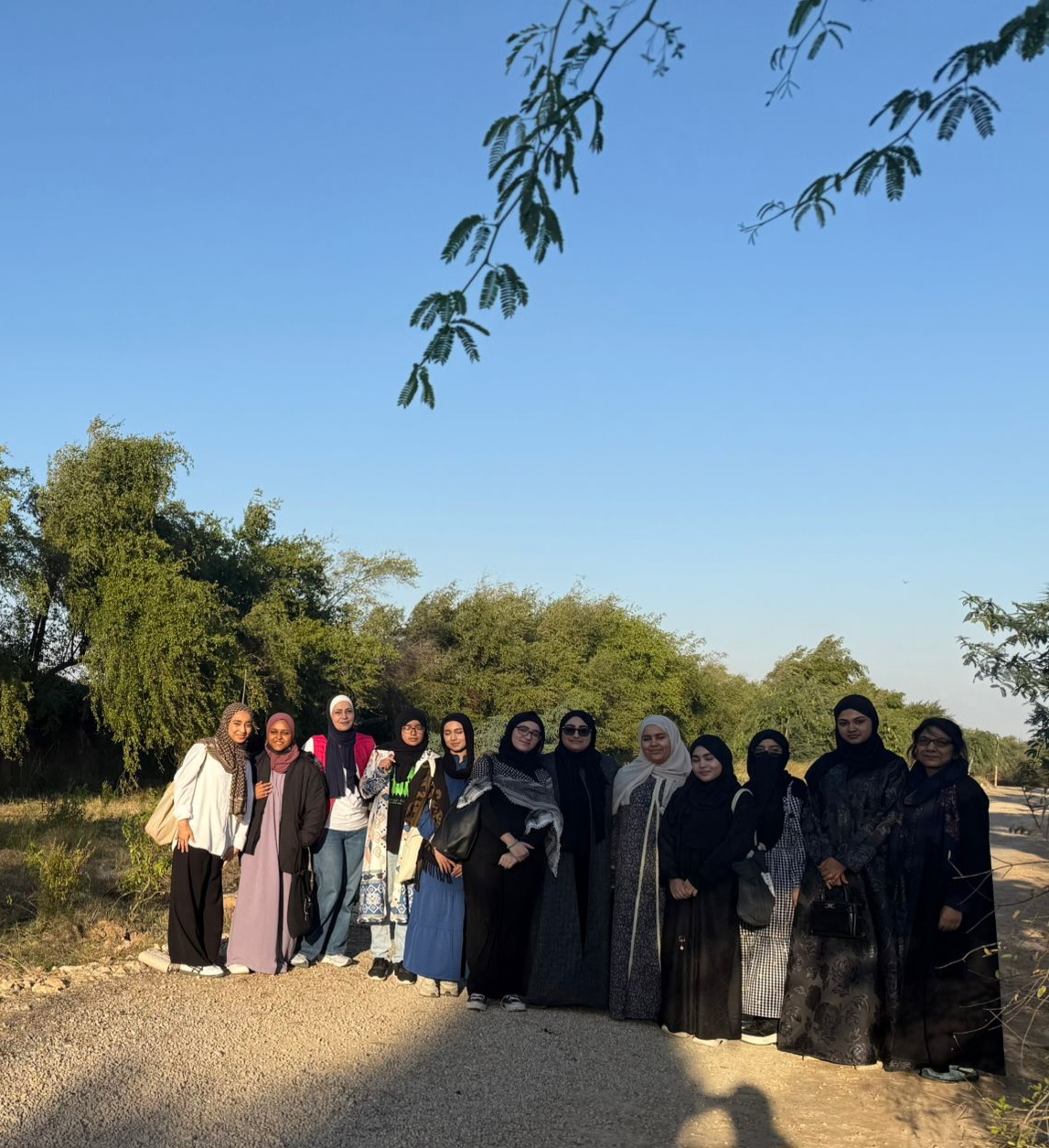
The third course concluded with an amazing, mind-refreshing trip to Torba Farm, located in Al Khor. A family-owned sanctuary, in operation since the early 1980s, also owns a large market, Torba Market. We spent the day relaxing and exploring the farm, from early afternoon until evening. The farm is special because everything is organic, allowing us to eat directly from the farm without worrying about chemicals. We enjoyed a luxurious, delicious lunch, touring the farm and learning about new herbs and plants. The most surprising part was when participants eagerly recognised plants that were common in our localities.
Finally, we returned to our rooms after sunset, having spent a beautiful time with Ruba Hinnawi, Razan Zuayter, and the other participants of the Riaya programme. On 2nd January 2025, we began our first workshop on financial literacy and management, led by Atieh Haijan, a sustainable finance researcher at Hamad Bin Khalifa University. Although I was quite weak in financial management, this session provided a profound insight into sustainable financial management through various practical exercises and problem-solving activities. The workshop was extremely helpful in understanding how financial literacy is crucial for community impact, personal growth, family stability, and breaking barriers. The concept of the ripple effect, which was introduced during the session, was particularly new and enlightening for me. On the very next day, 3rd January 2025, we had a day off as it was Friday. All of us decided to explore Qatar together, which not only allowed us to enjoy the country’s beauty but also helped the participants form stronger bonds with one another. This journey and the time spent with my fellow participants gave me a deeper understanding of their lives and cultures, which, until then, I had only known through readings and social media.
And with that, the very next day brought the hardest part of my entire journey—my last day in Qatar. On this day, we had our second workshop, which culminated in a panel discussion on Career Planning and Professional Development. The session was led by Dr. Sohaira Siddiqui and Dr. Dhabia Al-Mohannadi, Assistant Professor at Hamad Bin Khalifa University, Qatar, and was moderated by Mahveen Azam.
This session was incredibly impactful, as it helped me build a clear vision for a determined future with precise planning. We engaged in various activities that facilitated personal reflection and self-realisation, encouraging us to work towards a better and more structured future. The insights and guidance from the session have undoubtedly shaped my perspective on career growth and professional development.
With that, my journey came to an end. This experience taught me so many new and exciting things and introduced me to a group of intellectual and determined women who were approachable, kind, and incredibly supportive. I felt super safe and comfortable throughout, except for a small struggle with the cold climate.
This journey unfolded unexpectedly, bringing together a peer group from diverse nations and fostering cultural, intellectual, and personal exchanges. The moments we shared felt so precious, like once I wished I could pause forever. This programme truly helped me identify and shape the unstructured parts of myself, giving me the balance I needed to put in the effort for self-improvement.
The profound insights and enlightenment I gained through this programme provided me with a broader perspective on the world. Al Mujadilah, a serene and beautiful space run by and for women, hosted everything from prayers and faith gatherings to educational and creative courses and events. The entire team there is doing visionary work, and I truly admire their efforts. It was heartwarming to see women moving in and out of Al Mujadilah for workspaces, research, intellectual discussions over coffee, religious classes, art sessions, conferences, and summits.
Witnessing this dynamic environment of learning and growth was truly inspiring. I sincerely look forward to returning to Al Mujadilah and Education City someday, as I feel there is still so much more to read, learn, and explore. This journey has left a lasting imprint on me, and I am eager to continue my pursuit of knowledge in such an enriching environment.
And on 4th January at 7:30 AM, I flew back home, carrying with me a wealth of friendship, knowledge and a strengthened resolve for the future. Literally Al Mujadilah was an unending source of inspiration and togetherness.
0 Comments