

The author is a Counselling Psychologist, a writer and an active reader who combines her love for words with her deep commitment to mental health advocacy

We live in a world that never stops humming. The lights stay on late, our phones buzz before sunrise, and somewhere between the rush of work, family, and expectations, our minds forget what silence feels like. Beneath this constant motion, stress quietly weaves itself into our days until our bodies begin to protest. And often, that protest comes in the form of a migraine.
If you’ve ever felt that familiar throb behind your eyes after a long, exhausting day, you’re not alone. Modern life has a way of demanding more from us than our minds and bodies were built to give. The constant noise, pressure to keep up, and the subtle guilt of slowing down all of it takes its toll. Migraines have become one of the most human responses to this pace of living: our body’s way of saying, “I can’t keep doing this.”
These aren’t just headaches. They’re moments when the body and mind collide when stress, fatigue, and emotion spill over into physical pain. And yet, within that discomfort lies a message. Maybe it’s a reminder to pause, to breathe, to step back from the noise. Understanding the link between stress and migraines isn’t just about finding relief, it’s about learning to care for ourselves in a world that rarely gives us permission to slow down.
Understanding Migraine
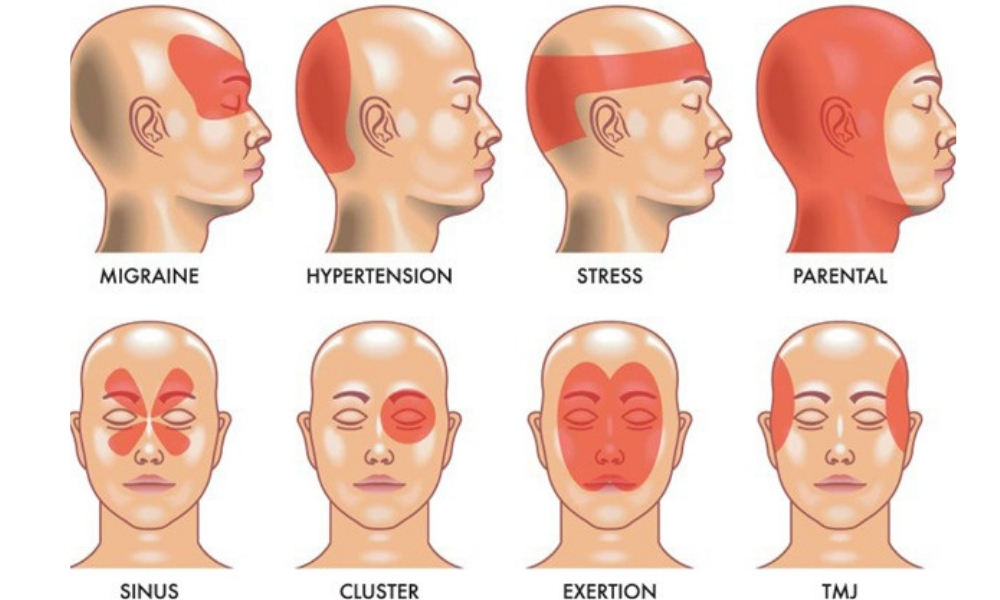
Migraine is a common and disabling neurological condition that has been known since ancient times. The World Health Organization identifies it as a major public health issue and a leading cause of years lived with disability. It is a recurring disorder marked by sudden, intense one-sided headaches often accompanied by nausea, vomiting, sensitivity to light (photophobia), and sound (phonophobia). Stress is widely associated with the onset of migraine episodes, as it can influence the mechanisms that trigger attacks. In fact, stress is one of the most frequently reported migraine triggers, with migraine sufferers often experiencing elevated stress levels. Moreover, migraine attacks themselves can act as sources of stress, creating a vicious cycle that may increase the frequency of future episodes.
Types of Migraines:
The two most common categories are:
- Migraine with aura (classic migraine): Characterized by sensory disturbances—such as visual flashes or tingling sensations—that occur before the headache begins.
- Migraine without aura (common migraine): The more prevalent type, which occurs without the warning signs of an aura.
Other, less common types include:
- Migraines in children (abdominal migraine)
- Chronic migraine
- Hemiplegic migraine
- Menstrual migraine
- Migraine without headache (silent migraine)
- Retinal or ocular migraine
- Status migrainosus, a severe, prolonged migraine attack that can last for days.
Each type varies in symptoms and severity, but all can be managed with appropriate medical care and lifestyle adjustments.
Symptoms and Stages of Migraine
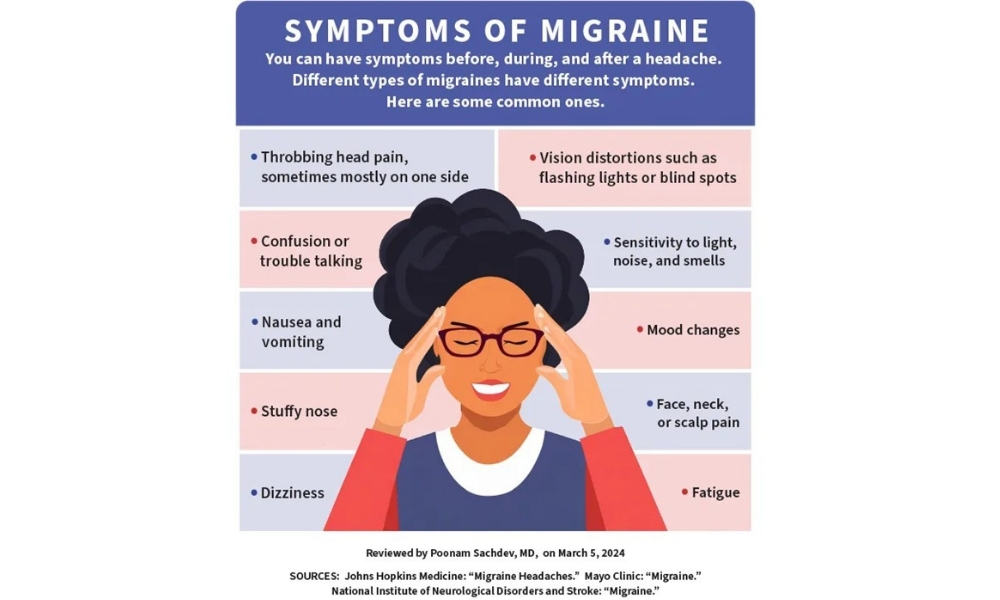
Migraines don’t discriminate; they can affect children, teenagers, and adults alike. For many people, a migraine unfolds in four distinct stages, each with its own set of symptoms: prodrome, aura, attack, and postdrome. However, not everyone experiences every stage, and each episode can feel a little different from the last.
1. Prodrome: The Early Warning Signs
A day or two before the migraine hits, the body often sends out subtle signals like little whispers that something is coming. You might feel unusually tired, moody, or crave certain foods. Common early signs include:
- Constipation or digestive changes
- Mood swings from feeling low to unexpected elation.
- Intense food cravings
- Neck stiffness or tension
- Frequent yawning
- Increased urination or bloating
These clues can serve as gentle alerts, giving you time to prepare or take preventive measures.
- Aura: When the Senses Shift
For some, migraines are preceded or accompanied by an aura, a temporary set of neurological disturbances that usually build up gradually and last up to an hour. Auras are often visual, but they can also affect other senses and functions. You might experience:
- Flashing lights, zigzag lines, or blind spots in your vision
- Tingling or “pins and needles” in your face, arm, or leg
- Weakness or numbness on one side of the body
- Difficulty speaking or forming words
Though temporary, auras can feel disorienting — like the world has momentarily shifted out of focus.
- Attack: The Migraine Strikes
This is the most intense phase, where pain takes center stage. A migraine attack can last anywhere between 4 and 72 hours, varying in intensity and frequency. During this phase, you may experience:
- Throbbing or pulsating head pain, often on one side
- Sensitivity to light, sound, smell, or touch
- Nausea and sometimes vomiting
- Blurred vision or dizziness
For some, even small movements can amplify the pain, making rest and quiet the only relief.
- Postdrome: The Aftermath
When the pain finally subsides, many people describe feeling “hungover” or completely drained. Concentration can be difficult, and even sudden movements may trigger a brief return of discomfort. Interestingly, some individuals report feeling unexpectedly light or euphoric after an attack as though their body is finally exhaling after the storm.
Migraines are more complex than just headaches; they are a cycle of neurological, physical, and emotional changes that ripple through the body. Recognising these stages can help you anticipate patterns, seek timely treatment, and regain a sense of control over this unpredictable condition.
Complex Connection between Stress and Migraine
The research paper “Is there a causal relationship between stress and migraine? Current evidence and implications for management” by Anker Stubberud and colleagues explores how stress and migraine are linked. After reviewing existing studies, the authors conclude that while stress is closely associated with migraines often triggering attacks, worsening symptoms, and contributing to chronicity it cannot be proven to be a direct cause of migraine. The relationship is complex and varies between individuals.
Stress seems to influence migraine through biological and psychological pathways, such as heightened neural sensitivity and emotional reactivity. However, not everyone experiences migraines due to stress, and some people even get attacks after stress decreases (“let-down” paradox).
The authors highlight that stress-management strategies like relaxation training, mindfulness, biofeedback, and cognitive-behavioural therapy can significantly help in reducing migraine frequency and improving quality of life. They recommend integrating these behavioral approaches with medical treatment, and call for more research to understand how stress affects migraine on an individual level.
The American Migraine Foundation highlights that stress is one of the most powerful and common migraine triggers, affecting nearly 70% of people with migraines. Constant tension, emotional strain, and the worry of future attacks can create a vicious cycle, increasing both the frequency and severity of headaches. Managing stress through relaxation techniques, biofeedback, mindfulness, regular exercise, and a consistent sleep routine can reduce the body’s sensitivity to stress and help prevent attacks.
Alongside stress, there are several other key migraine triggers i.e irregular sleep patterns, hormonal changes, caffeine or alcohol, weather shifts, diet, dehydration, bright light, strong smells, and medication overuse. By identifying and managing individual triggers through lifestyle adjustments and awareness, migraine sufferers can take proactive steps toward reducing attack frequency and improving quality of life.
The Case for Rest, Balance and Stillness
- Rest: The Science of Renewal
Rest isn’t laziness; it’s a biological necessity. During deep rest, the body’s parasympathetic system i.e. our natural “rest and repair” mode takes over.Heart rate slows. Muscles unclench. Stress hormones decline. The brain clears metabolic waste, repairs neural pathways, and restores equilibrium. Without this reset, stress accumulates and so do headaches.
- Balance: The Rhythm We Forgot
Balance is the forgotten art of living in sync with ourselves. Regular sleep, mindful movement, nourishing food, and digital boundaries aren’t luxuries, they’re anchors that keep our nervous systems stable.Migraines thrive on unpredictability,irregular sleep, skipped meals, erratic routines. Balance builds resilience against those triggers.
- Stillness: The Antidote to Overstimulation
Stillness is not the absence of activity, but the presence of awareness. A few minutes of mindful breathing, gentle stretching, or quiet reflection can calm the overstimulated brain and soothe the body’s alarm systems. In stillness, we reconnect with ourselves. The pulse slows, the breath deepens, and the mind finally unclenches.
A December Reset: Practical Ways to Slow Down
- Begin each morning in silence. Before screens and schedules, sit for five minutes and simply breathe.
- Prioritise sleep. Keep consistent bedtimes and wake times, even on holidays.
- Digital detox hours. Set boundaries with your devices after 9 p.m., let your brain unplug.
- Move gently. Walks, yoga, stretching, choose movement that calms rather than strains.
- Hydrate and eat regularly. Dehydration and skipped meals are common migraine triggers.
- Protect your pauses. Schedule moments with no agenda. Stillness is not wasted time, it’s maintenance for the mind.
- Listen inwardly. Notice signs of tension: tight jaws, clenched shoulders, shallow breathing. These are early warnings that your body needs rest.
The Deeper Truth
The more we chase productivity, the more our bodies remind us that we were never meant to live like machines. Headaches and migraines aren’t random inconveniences, they’re quiet messages from a system that’s been doing too much for too long, simply asking for a moment to breathe.
December, with its slower pace and softer light, reminds us to ease up to find our rhythm again, to end the year not drained, but gently renewed.
So this month, dare to stop.
Dare to rest, to exhale, to sit in stillness and listen.
In that quiet, your mind will find clarity and your body, peace.
References
1. Hedborg, K., Anderberg, U. M., & Muhr, C. (2011). Stress in migraine: Personality-dependent vulnerability, life events, and gender are of significance. Upsala Journal of Medical Sciences, 116(3), 187–199. https://doi.org/10.3109/03009734.2011.573883
2. Cleveland Clinic. (2024, January 23). Migraine headaches. Retrieved November 12, 2025, from https://my.clevelandclinic.org/health/diseases/5005-migraine-headaches
3. Mayo Clinic Staff. (2025, July 8). Migraine — Symptoms & causes. Retrieved November 12, 2025, from https://www.mayoclinic.org/diseases-conditions/migraine-headache/symptoms-causes/syc-20360201
4. Stubberud, A., Buse, D. C., Kristoffersen, E. S., Linde, M., & Tronvik, E. (2021). Is there a causal relationship between stress and migraine? Current evidence and implications for management. The Journal of Headache and Pain, 22, 155. https://doi.org/10.1186/s10194-021-01369-6. (BioMed Central)
0 Comments