

The author is a high school student.
1. The Big Bang: Creation from a Single Point
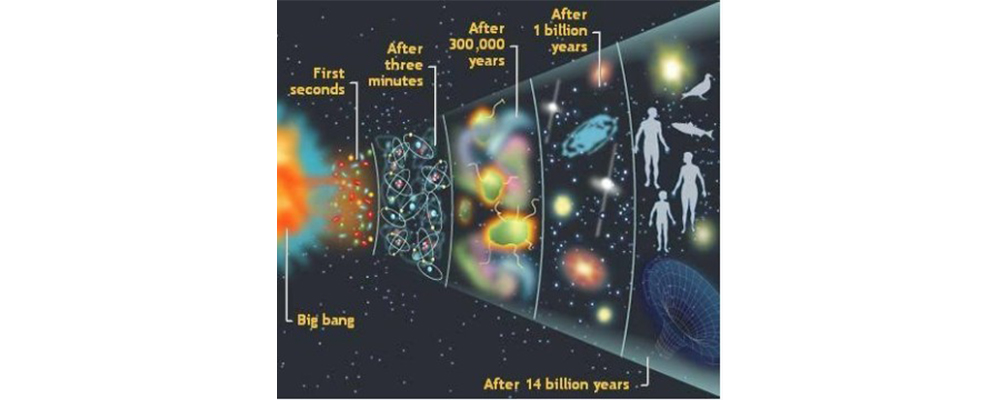
One of the most profound scientific discoveries of the 20th century is the Big Bang Theory, which posits that the universe began from a single, infinitely dense point. This concept of a singular origin of the universe is reminiscent of a verse in the Quran that alludes to the creation of the heavens and Earth from a unified mass.
Verse Highlight:
“Do not those who disbelieve see that the heavens and the earth were a closed-up mass, then We opened them out?”
(Qur’an-21:30)
This verse, in light of modern scientific understanding, resonates deeply. It reflects a process that mirrors the Big Bang, where a singular mass eventually expanded into our current universe.
2. The Six Days of Creation: Divine Order
The Quran describes the creation of the universe as taking place in six periods or “days.” While these “days” are often interpreted as phases or epochs rather than literal 24-hour days, they highlight the orderly process by which the universe was created.
Verse Highlight:
“It is Allah who created the heavens and the earth in six days, then He established Himself above the Throne. You have not besides Him any protector or intercessor; so will you not be reminded?” (Qur’an-32:4)
This verse suggests that creation occurred in stages, with each phase unfolding with divine wisdom and precision. The Quran encourages reflection on this process and points to the structured nature of the universe.

3. The Expanding Universe: A Cosmic Revelation
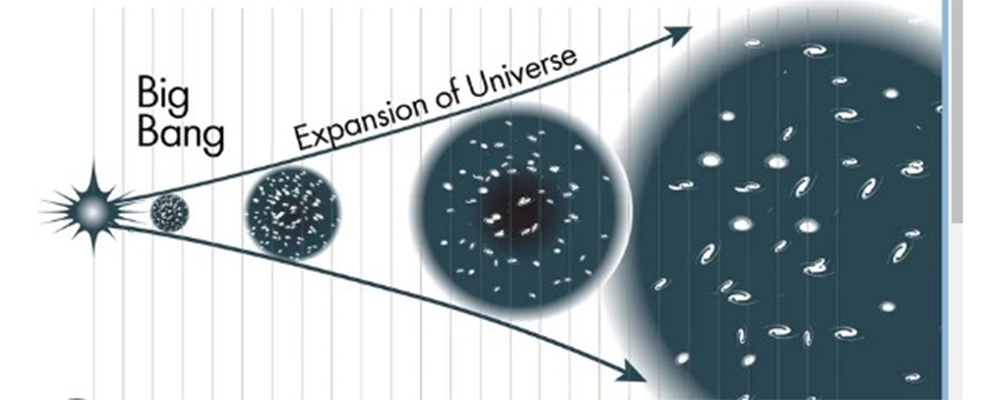
In modern cosmology, we know that the universe is expanding. The Quran touches on this concept with a verse that suggests the heavens themselves are being expanded, which was unknown to humanity at the time of its revelation.
Verse Highlight:
“And the heaven we constructed with strength, and indeed, We are [its] expander.”
(Qur’an-51:47)
This verse anticipates the discovery that the universe continues to expand, a fact that was confirmed by astronomers in the 20th century through the observation of distant galaxies moving away from us. It’s a striking example of how the Quran aligns with modern scientific understanding.
4. The Earth’s Position: A Perfect Balance
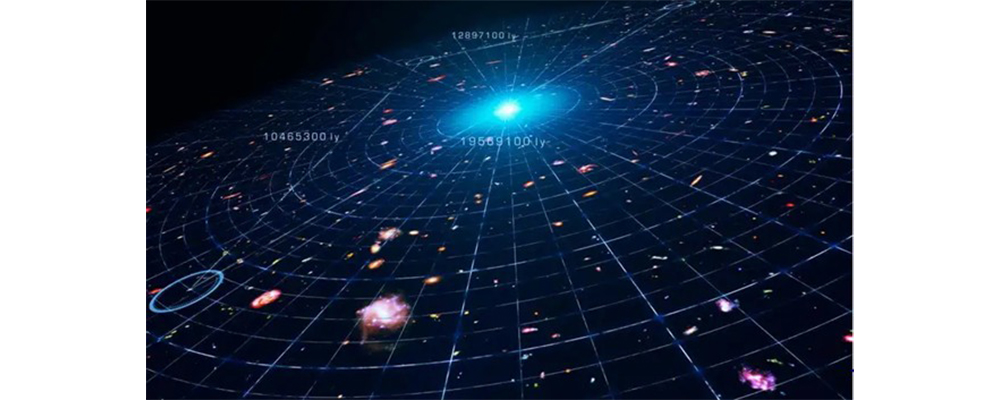
The Earth, perfectly suited for life, is described in the Quran as a place of balance. Its position in space, its tilt, and its distance from the sun are all factors that make life possible. The Quran
emphasizes this harmony and invites humans to appreciate the care with which Allah has designed the universe.
Verse Highlight:
It is He who created the heavens and the earth in six days; then He ascended above the Throne.
He knows what goes into the earth and what comes out of it, and what descends from the
Heavens and what ascends into it. (Qur’an-57:4)
The verse underlines that the Earth is part of a grand, divine order, with every element of the
Natural world being interconnected. This delicate balance is not random but the result of Allah’s Precise and purposeful creation.
5. The Role of the Sun and Moon: Guiding Lights
The Sun and Moon are significant in the Quran, not just as celestial objects but as symbols of Allah’s control over time and the natural world. The Sun marks the day, while the Moon governs the night, both working together in harmony.
Verse Highlight:
“It is Allah who created the night and the day, and the Sun and the Moon; each floating in an orbit.” (Qur’an-21:33)
The regularity of their motion symbolizes divine order, reminding humanity of the consistent nature of creation and the Creator’s infinite knowledge and wisdom.
6. The Water Cycle: Signs of Divine Wisdom
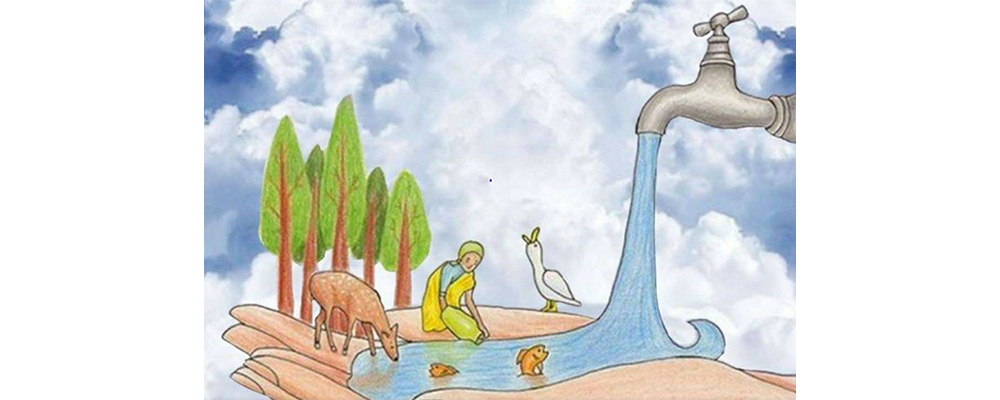
Modern science has revealed the intricate processes of the water cycle, which sustains life on Earth. The Quran also refers to water as a sign of Allah’s power, highlighting its role in life’s creation and balance.
Verse Highlight:
“And We made from water every living thing. Then will they not believe?” (Qur’an-21:30)
The Quran connects water directly to life itself, emphasizing that all living beings, including humans, were created from water. The natural water cycle—evaporation, condensation, and precipitation—is a manifestation of the divine wisdom that governs the Earth.
7. Humanity’s Place in the Cosmos:
The Purpose of Creation and Free Will:
“And I did not create the jinn and mankind except to worship Me.”
(Qur’an-51:56)
This verse directly points to the central purpose of human life: worship and recognition of Allah. Despite the vast universe, the purpose of mankind is to acknowledge the greatness of Allah and to live according to His guidance. The universe serves as a reminder of Allah’s power and presence, encouraging humans to worship and submit to His will.
Mashallah
I really appreciate for all your efforts , may almighty God bless you with more n more knowledge….
May Allah swt increase her more in knowledge
Ameen
MashaAllah.. Nicely described!!
Ma Sha Allah. Very good article. Really appreciate it.
Mashallah, all the best for your future beta.
Verygood Mahveen Fathima👍. Every kid should know about their culture. All the best for your future endevours🙌.
Mashallah Tabarakallah. Very nice article. Very easy and crisp information articulated very nicely. Good work. Keep it up. May Allah bless you with more wisdom in both the words deen and Duniya…
I really appreciate for all your efforts , may almighty God bless you with more n more knowledge….
Mashallah great work 👏
Mashallah ❤️ mashallah ❤️
MashaAllah.. congratulations on your publication. May almighty Allah bless you with more knowledge, health and prosperity. Ameen
ماشاءالله
Mashallahhh all the very best for your future Mahveen
Mashallah! Well Done. Keep it Up!!
May Allah reward you with more Knowledge of here and hereafter.