

Zesty Aromatic Spoon (ZAS) is a pseudonym for a writer whose readers are already familiar with her reflective take on life. Through vivid storytelling, ZAS explores the deeper connections in food, travel, & human interaction. Keep guessing.
Dear Aura readers,
This month in Flavours of Writing, let’s dive into a topic that’s not only trending but also raking in enough money and is a big part of country’s economy. Any guesses? Drumroll, please… it’s the world of restaurants!
Remember the simpler times when every eatery was just called a “hotel”? The good old days. Now, we’re spoiled for choice with fancy labels like restaurants, cafes, eateries, canteens, inns, motels—you name it! Honestly, I only figured out the subtle (and not-so-subtle) differences between these terms after Google graciously entered our lives, holding the torch of enlightenment.
My earliest memory of dining out dates back to a delightful ice cream treat, courtesy of my paternal aunt. But as a starry-eyed 7-year-old, I was far more fascinated by the aquarium near the entrance, brimming with colorful fish, than the frozen delight itself. The restaurant was the crème de la crème of our hometown, its warm lighting lending it a touch of sophistication that seemed straight out of a dream.
Back then, home-cooked meals for picnics were the epitome of family bonding, while eating out was shrouded in secrecy. In joint families, it was practically a covert mission. Parents would issue strict instructions not to spill the beans about dining out, but there was always that one kid who couldn’t resist making faces, rolling their eyes, and grinning ear to ear until the secret slipped out. And who would be the most upset about our little dining-out escapades? None other than our grandmother!
I still recall a classmate’s wide-eyed disbelief when she asked, “Do you actually eat at hotels?” Looking back, I realize her shock stemmed from how cinemas of that era had shaped public perception. Restaurants, or “hotels,” were portrayed as the shady stomping grounds of gangsters, a breeding ground for murder plots, and the go-to venue for cabaret dancers.
Being the daughter of a food-loving father, eating out soon became a monthly ritual after his job brought us to the city. But let me tell you, back in the day, eating out wasn’t the norm—it was practically scandalous! He had this wonderful knack for taking us to the best yet simplest places to eat. I still find myself missing that one spot—where we’d sit in the car and Abbu would return with plates of humble paratha and curry. No fancy restaurant or swanky café could ever recreate that perfectly simple, unforgettable memory.
The charm of old-school restaurants! They were the true jacks-of-all-trades—multicuisine before the term even existed. Local favorites and a few special delicacies were all it took to keep everyone happy. The menu? Not a glossy booklet or a mysterious QR code but one spoken at lightning speed by a waiter with an impeccable memory. Between settings down those classic steel glasses with a practiced clink, he’d recite the menu faster than an express train.
Decisions were blissfully simple back then—masala dosa, palak paneer (Ammi’s favorite), maybe a non-veg dish, and rotis. Fast forward to today, and dining out starts with a debate straight out of a UN summit: “Where should we eat? Indian, Chinese, Mughlai, or Continental?” And just when you think you’ve nailed it, someone adds, “Or maybe Thai? Wait, how about Korean?”
Recently, my daughter, on a visit to a metro city, casually dropped, “Let’s try a Japanese restaurant!” Thanks, internet, for introducing our kids to sushi and tempura before they’ve mastered basic dal-chawal!
But wait, that’s just Section A of this dining exam. Section B? The eternal riddle: “What should we order for starters?” Back then, we knew two things—hunger and food. Now, we’re juggling starters, main courses, and desserts, as if our meal were a three-act play. Ah, progress!
Now, the chaos of ordering! Once the starters are ordered, and everyone’s finally allowed to pick something from the menu, there’s always that one person who seems to have stepped into a foreign land. They squint at the menu as if deciphering hieroglyphs, stumble over pronunciations, and finally drop the classic bombshell: “I’ll just see what you all order first.” This genius move ensures they get a taste from every single plate at the table, making them the unintentional buffet-goer. Meanwhile, the poor soul sitting at the end of the table? They’re left with a single, lonely piece of the starters—collateral damage in the great dining-out battle.
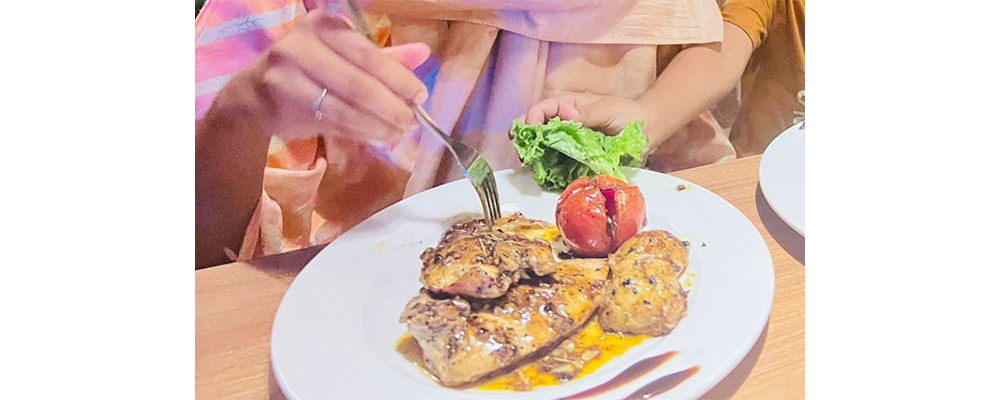
And, let’s not forget the platter phenomenon. It arrives looking like a masterpiece of culinary art, but let’s face it—half of it is the same item in different shades and sauces. Still, Instagram-worthy, right?
Then comes the main course. While everyone is busy bickering over the starters, one sensible elder or the financial sponsor of this culinary circus quietly strategizes, flipping through the novel-length menu to save time. But no matter how extensive the options, the table is inevitably graced with the classics: Butter Chicken and Butter Naan. Someone always orders biryani, there’s invariably one person sulking over god-knows-what, and moms? They heroically eat the leftovers because, “We shouldn’t waste money.”
Amidst it all, there’s the child who treats the cutlery like a drum set, turning the dining experience into a live concert. Meanwhile, an elder nearby alternates between threats and prophecies: “Stop it, or you’ll break the plate!” And thus, a restaurant outing becomes less of a meal and more of a sitcom in the making.
There’s always that one person at the table who’s a walking, talking culinary influencer. They confidently order the trendiest, most exotic dish on the menu—something the rest of us can barely pronounce. Naturally, every single person wants a bite, nods approvingly, and declares, “Next time, I’m totally ordering this!” Spoiler alert: next time, we all still end up with butter chicken and naan.
Post-main-course, the table resembles a battlefield after the dust has settled. Plates are strewn about like fallen soldiers, and amidst the chaos, the waiter graciously asks the golden question: “Would you like dessert?” The usual suspects appear—ice cream, brownie with ice cream, caramel pudding, or gulab jamun. It’s a sweet encore to the dining drama.
Then comes the final act: paying the bill. But wait, the pièce de résistance! The sugar-coated fennel seeds (mukhwas) arrive, signaling the end of the feast. We all know someone who stealthily wraps them in a tissue and sneaks them into their pocket. Don’t judge—free souvenirs are part of the experience!
And just when you think it’s over, moms step up with their signature move: “Please pack the leftovers. We’ll use them for breakfast.” The art of zero waste is alive and well.
Speaking of leftovers, let me tell you a legendary family tale. Once, our entire clan—16 strong—went out to dine. After devouring everything, a single kebab was left on the table. Everyone was full, but my Badi Ammi wasn’t about to let it go to waste. She wrapped it in tissue, popped it into her bag, and promptly forgot about it. The next day, we were on a long drive and stopped at a lush, scenic spot by flowing water. Suddenly, she remembered the kebab! In true Badi Ammi fashion, she fished it out, made 11 tiny pieces, and distributed them among us kids. That one kebab became a memory as cherished as the feast itself.
Eating out has evolved dramatically over the years, and with it, so have our dining habits. From simple family outings to food courts in malls for the middle class and fine dining experiences for the elite, the journey has been one of convenience and indulgence.
Back in the day, wastage was frowned upon—leftovers were treasures, not trash. Today, extravagant spending on lavish meals is often seen as a status symbol, even if half the food ends up uneaten. What was once a rare treat, eagerly anticipated every three months, has now been replaced by quick takeaways and home deliveries, robbing us of the joy of shared meals and the festive spirit of eating out.
The rich spices, intense aromas, and vibrant (often toxic) food colors of today’s fare have dulled our taste buds, leaving us less appreciative of wholesome, homemade meals. Our children, raised amidst this abundance, often lament, “Kuch acha khana hai” (I want to eat something nice). But when you ask them what they want, they shrug in clueless indecision. The irony? The “nice food” they crave is often just the simplicity and warmth of a lovingly prepared home-cooked meal—a taste we seem to have forgotten in our pursuit of culinary novelty.
There’s so much to explore and laugh about when it comes to eating out, and I’d love to hear your side of the story! What’s the funniest dining-out experience you’ve ever had? Was it an ordering mishap, a toddler turning the table into an art studio?
Until next month, folks… eat well, eat healthy, and don’t forget to savor the memories along with the meals!
MashaaLLAH, Love your writing as well as stories.