

Infant mental health refers to the development capacity of children from birth to 3 years of age to experience young children’s social, emotional, and overall psychological well-being, all in the context of family, community, and culture. For this reason, parents’ and/or closest caregivers’ relationships with them play an important role in the mental health of young children.
In other words, Infant mental health is the ability to develop physically, cognitively, and socially in a manner that allows infants to master the primary emotional tasks of early childhood without the serious disruption caused by harmful life events. Because infants grow in nurturing environments, infant mental health involves the psychological balance of the infant family system.
Irrefutable evidence indicates that brain growth makes the first years of life qualitatively and quantitatively different from any other time. Thus, the early experience gets under the skin and shapes the brain, affecting lifelong health, behaviour, and learning. Young children are often among
In the past 50 years, researchers have found that attending to young children promotes more fully functioning older children, teens and adults.
The field of infant mental health holds three assumptions-
- Infant behaviour cannot be viewed separately from relationships.
- The most important relationships are with primary caregivers/parents.
- Infant caregivers/parents function in a social-cultural context.
Common misconception- “The trauma happened when they were a baby; they don’t remember”. – A baby is born with a functioning nervous system and instincts to support its survival. The human baby has much greater receptivity to social interaction than other mammals. During childhood, a vast network of neural connections is laid down in the brain. One of the parts of the brain that mature is the amygdala, which develops until the child is about four years old. The amygdala is a part of the brain responsible for processing emotions, particularly fear. It also links emotions to processes such as memories, learning and senses. If exposed to excess stress during infancy, the amygdala will become over-sensitized to pick up on future stress. Abuse in childhood, for example, is frequently associated with an increased reaction to stressful circumstances due to neural connections that were established in infancy, conscious or not.
The good news is that, because of the brain’s amazing capacity to continue to grow neurons and its plasticity, early-year trauma can be mitigated with careful, sensitive nurture.
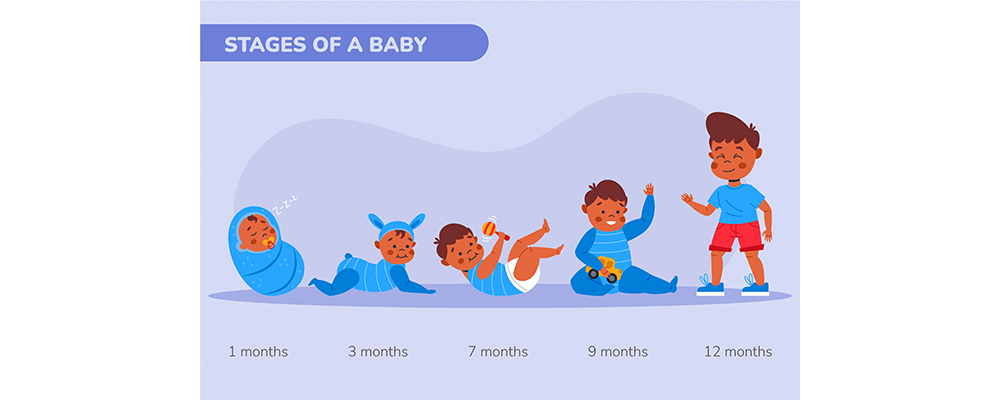
How to have a safe and healthy family environment for infants
- Play stimulates the production of opioids and oxytocin, which give a sense of calm and safety and can have a long-term impact of reducing the stress response in the amygdala. While an infant may be experiencing challenges because of developmental trauma, play and creative arts therapy can absolutely support a child’s recovery.
- When you are pregnant, your baby can hear you, your baby will love to hear you sing and talk to them.
- Your newborn is born ready to socialise with you, your baby enjoys watching your face and being held.
- When your baby is upset, your attention, gentle voice and soothing touch can help them feel calm and safe. Remember, you can’t spoil a baby; you are helping them learn to regulate themselves.
- By responding and nurturing your baby’s feelings, you can make them feel safe and secure. This will help them learn how to build trust and have healthy relationships.
- Make time to connect and communicate with your infant through smiling, talking, touch and massage.
- Be playful with them, read books to them and set a healthy sleep and wake routine.
- Arguments or fights should be completely avoided in front of the infants, & parents & other family members should always maintain healthy communication at home.
By: Sana Rubiyana
Psychologist and rational Emotive Cognitive Behavior Therapist
[email protected]
IG @sanarubiyana15
X @SRubiyana
0 Comments