
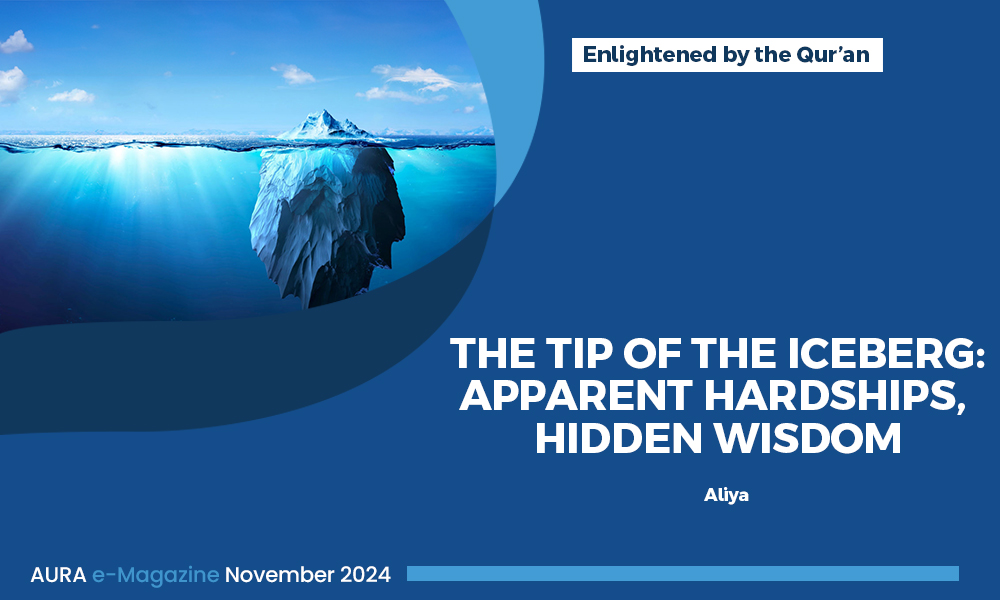
Is there so much injustice in our world? Why do the people of Palestine continue to suffer despite their unwavering faith? Why is Allah letting it all happen? Don’t these questions arise in one’s mind now and then?
Or it could be in a simpler form, like, why is the person far from knowing what Deen is, getting the first rank in the class? Why can’t I, after long hours of hard work and prayers, achieve it? The bribe takers are getting your dream job title, the dishonest relative’s word is getting more attention and there goes a never-ending list of not-so-apt situations.
The truth is, that two different types of people look at such situations differently. The first group is of those who conclude by only seeing what is apparent. When they see the well-being of the tyrants and the atrocities of the innocents; when they see the fortune of the disobedient people and the hardships of the obedient people; the enjoyments of the wicked people and the adversity of the virtuous people, they fall into misunderstandings, failing to see the wisdom behind these events. What this group concludes from situations like these is that the world is functioning without any moral laws and has no sovereign, and, if there is one, he must be senseless and unjust; therefore, one may do whatever he desires, for there is none to whom one shall be accountable.

On the other hand, when the second group sees those things, they become so frustrated and disheartened that sometimes their faiths are put on a very hard trial. It was to unravel the wisdom behind this mystery that Allah lifted the curtain from the reality governing His factory, His master plan, to teach Musa AS the wisdom behind the events happening day and night and how their seeming aspects are quite different from the reality.
This passage from the Qur’an, Surah al-Kahf, profoundly explains a few hard truths about our lives. It describes the incident where Prophet Musa ؑ, one of the most revered prophets, meets Khidr, a man blessed with special knowledge from Allah.
Let’s discuss a few insights one can derive from this story.
Humility in Learning
Before meeting with Khidr ؑ, we had an interesting conversation between Musa AS and Bani Israel in the hadith of Prophet Muhammad ﷺ: Musa AS got up to deliver a speech before the Children of Israel and he was asked, “Who is the most learned person among the people?” Musa ؑ replied, “I am.” Allah rebuked him because he did not refer the knowledge to Allah. So, Allah revealed to him: “At the junction of the two seas there is a servant of Ours who is more learned than you. Musa asked, “O my Lord, how can I meet him?” Sahih al-Bukhari 4725
Allah teaches us from the character of Musa ؑ that, despite being the prophet of the time, he immediately sought to learn from Khidr ؑ, showing how true seekers of knowledge never let pride get in the way. This shows us that we should be open to learn from anyone, regardless of their age, race, gender, or status. Knowledge can come from unexpected sources, and we must humble ourselves to benefit from it.
Ilm al-Ladunni (Divine Knowledge)
When Musa ؑ met Khidr ؑ, he said, “I have come to you so that you may teach me something of that knowledge which you have been taught.” Khidr ؑ said, “You will not be able to have patience with me. O Musa! I have some of Allah’s knowledge which He has bestowed upon me but you do not know it; and you too, have some of Allah’s knowledge which He has bestowed upon you, but I do not know it.”
Allah mentions in the Quran:
فَوَجَدَا عَبْدًا مِّنْ عِبَادِنَآ ءَاتَيْنَاهُ رَحْمَةً مِّنْ عِندِنَا وَعَلَّمْنَاهُ مِن لَّدُنَّا عِلْمًا
Then they found one of Our servants, on whom We had bestowed mercy from Us, and whom We had taught knowledge from Us. (Quran 18:65)
Khidr ؑ was granted Ilm – مِن لَّدُنَّا mil-ladunna, from Allah Himself, this knowledge can be termed as – ‘Ilm al-Ladunni’
Allah’s wisdom and mercy surpass all human understanding. Sometimes, we may not immediately understand His wisdom, but we must trust His plan. From this great knowledge, Khidr ؑ was taught profound wisdom of life and the right action at the right time.
Musa’s (AS) Weakness
Allah mentions in the Qur’an:
فَلَمَّا جَاوَزَا قَالَ لِفَتَىٰهُ ءَاتِنَا غَدَآءَنَا لَقَدْ لَقِينَا مِن سَفَرِنَا هَـٰذَا نَصَبًۭا
So when they had passed beyond it, [Moses] said to his boy, “Bring us our morning meal. We have certainly suffered in this, our journey, [much] fatigue.” (Quran 18:62)
قَالَ سَتَجِدُنِىٓ إِن شَآءَ ٱللَّهُ صَابِرًۭا وَلَآ أَعْصِى لَكَ أَمْرًۭا
[Moses] said, “You will find me, if Allāh wills, patient, and I will not disobey you in [any] order.” (Quran 18:69)
Allah ﷻ points out two weaknesses of Musa ؑ in this passage — his impatience and fatigue. These traits are barriers to learning for a student of knowledge. This doesn’t make Musa ؑ any less of the status he holds in the eyes of Allah. There is no doubt that Musa ؑ is the most mentioned prophet in the Qur’an. Allah is mentioning these weaknesses for us to relate with the character of Musa ؑ. Had Allah mentioned all the ideal and standard examples of the righteous in the Qur’an, it would feel impossible for us to follow them.
When Khidr ؑ heard the request of Musa ؑ to seek knowledge from him, the very first dialogue of Khidr was, “You cannot be patient with me.”(Quran 18:67) This conversation reflects the depth of wisdom Khidr ؑ holds and Musa’s ؑ awareness of his own limitations as he says ‘Insha’Allah, you will find me patient.’ (Quran 18:69)
Patience and humility are essential in the pursuit of knowledge. Hastiness, as the Prophet Muhammad ﷺ explained, is from Shaitan, while calmness and thoughtfulness are from Allah. (Jami at Tirmidhi 2012)
The Three Incidents:
A Test of Patience
The Damaged Ship: Musa and Khidr set out walking along the shore, until a boat passed by and they asked the crew to let them go on board. The crew recognized Khidr ؑ and allowed them to go on board free of charge. When they went on board, suddenly Musa saw that Khidr had pulled out one of the planks of the ship. Musa ؑ said to him, “These people gave us a free ride, yet you have broken their boat so that its people will drown! Verily, you have done a terrible thing! (Quran 18:71)
Khidr ؑ damages a ship, which initially seems like a harmful act. Musa ؑ immediately objects, but later learns that Khidr’s act was to prevent a greater harm from occurring. Allah showed Khidr the hidden reasons, so he said,
أَمَّا ٱلسَّفِينَةُ فَكَانَتْ لِمَسَـٰكِينَ يَعْمَلُونَ فِى ٱلْبَحْرِ فَأَرَدتُّ أَنْ أَعِيبَهَا وَكَانَ وَرَآءَهُم مَّلِكٌۭ يَأْخُذُ كُلَّ سَفِينَةٍ غَصْبًۭا
As for the ship, it belonged to poor people working at sea. So, I intended to cause defect in it as there was after them a king who seized every [good] ship by force. (Quran 18:79)
Sometimes, temporary difficulties protect us from greater harm. Trusting Allah’s plan during hardships is crucial, as they may save us from something worse.
Murder of the Young Boy: Then they both disembarked from the boat, and while they were walking on the shore, Khidr saw a boy playing with other boys. Khidr took hold of the boy’s head and pulled it off with his hands, killing him. Musa ؑ said to him, “Have you killed an innocent person who had killed none! Verily, you have committed an evil thing!” (Quran 18:74)
Khidr ؑ killed a young boy, shocking Musa ؑ. However, it is later revealed that this boy would have grown up to cause immense harm to his parents.
وَأَمَّا ٱلْغُلَـٰمُ فَكَانَ أَبَوَاهُ مُؤْمِنَيْنِ فَخَشِينَآ أَن يُرْهِقَهُمَا طُغْيَـٰنًۭا وَكُفْرًۭا
And as for the boy, his parents were believers, and we feared that he would overburden them by transgression and disbelief. (Quran 18:80)
Ibn `Abbas narrated from Ubayy bin Ka`b that the Prophet ﷺ said: “The boy Al-Khidr killed was destined to be a disbeliever from the day he was created.” It was recorded by Ibn Jarir from Ibn `Abbas. He said: “Their love for him might make them follow him in disbelief.” Qatadah said, “His parents rejoiced when he was born and grieved for him when he was killed. If he had stayed alive, he would have been the cause of their doom. So let a man be content with the decree of Allah, for the decree of Allah for the believer, if he dislikes it, is better for him than if He were to decree something that he likes for him.” [Tafsir Ibn Kathir]
Khidr ؑ further explains, “and we desired that their Lord should grant them another in his place, a son more upright and more tender hearted” (Quran 18:81). Losing a child is undeniably a devastating tragedy for any parent. However, for believers, every situation carries an element of khair (goodness), even when it is hard to understand. In this story, Allah highlights the righteousness and piety of the parents (Quran 18:80), which was in danger due to the potentially harmful influence of their child who had gone astray. Losing imaan because of a so-called “blessing” is never worth the cost in the Aakhirah (Hereafter). Thus, itis a means to prevent even greater suffering and hardship for his parents in the future.
Allah sometimes takes away what seems like a blessing to replace it with something far better. This teaches us that what we perceive as loss may often be a form of divine protection, allowing us to receive something even better in the grander scheme of Allah’s wisdom.
The Rebuilt Wall: They both proceeded until they came to the people of a town. They asked them for food but they refused to entertain them. (Then) They found a wall at the point of falling.) (Al-Khidr) set it up straight with his own hands. Musa ؑ said, “We came to these people, but they neither fed us nor received us as guests. If you had wished, surely, you could have taken wages for it!” (Quran 18:77)
Khidr ؑ repaired a wall in a town where they were treated poorly. The wall concealed a treasure meant for orphans, which would benefit them when they grew older. Allah provides us with abundant rizq when the time is right according to Him, he plans according to Himself, not us. Just as the wall was built to preserve the orphans’ wealth, Allah’s timing in answering our prayers is always perfect. Patience is the key.
Conclusion
The story of Musa ؑ and Khidr ؑ from Surah al-Kahf is a powerful reminder of the limits of human understanding and the depth of Allah’s wisdom. Musa ؑ though a prophet of the time, was a human. It has been a sunnah of Allah swt, that He makes the prophets go through harsh realities of life to strengthen and teach them divine wisdoms. Here, Musaؑ was taught through Khidrؑ. Each incident that Allah picturised in this passage revealed that what we perceive as misfortune or injustice often carries a hidden purpose beyond our immediate grasp. These lessons remind us to trust in Allah’s plan, even when life doesn’t make sense. Patience, humility, and faith are essential in navigating the trials of life, as Allah’s wisdom always works in our favour, even when we cannot see the bigger picture. By reflecting on these events, we are encouraged to cultivate a deeper sense of trust in divine timing and a stronger reliance on the unseen wisdom of our Creator.
Allama Iqbal beautifully encapsulates this sentiment in his poem, echoing the words of Khidrؑ:
Chashm-E-Dil Wa Ho To Hai Taqdeer-E-Alam Behijab
‘When the heart sees clear vision, the fates that rule earth wear no veil.’
0 Comments