
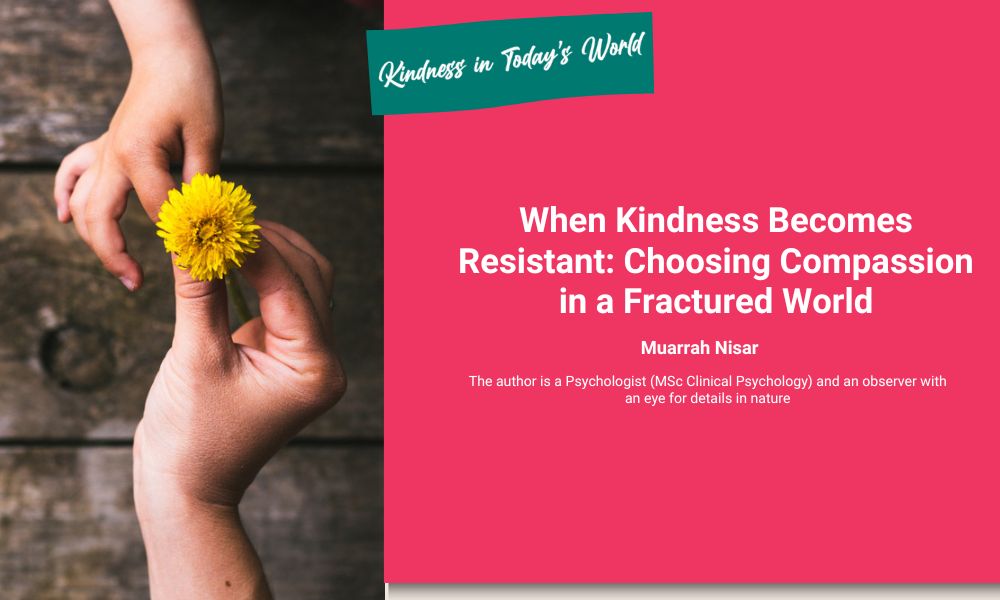
The author is a Psychologist (MSc Clinical Psychology) and an observer with an eye for details in nature
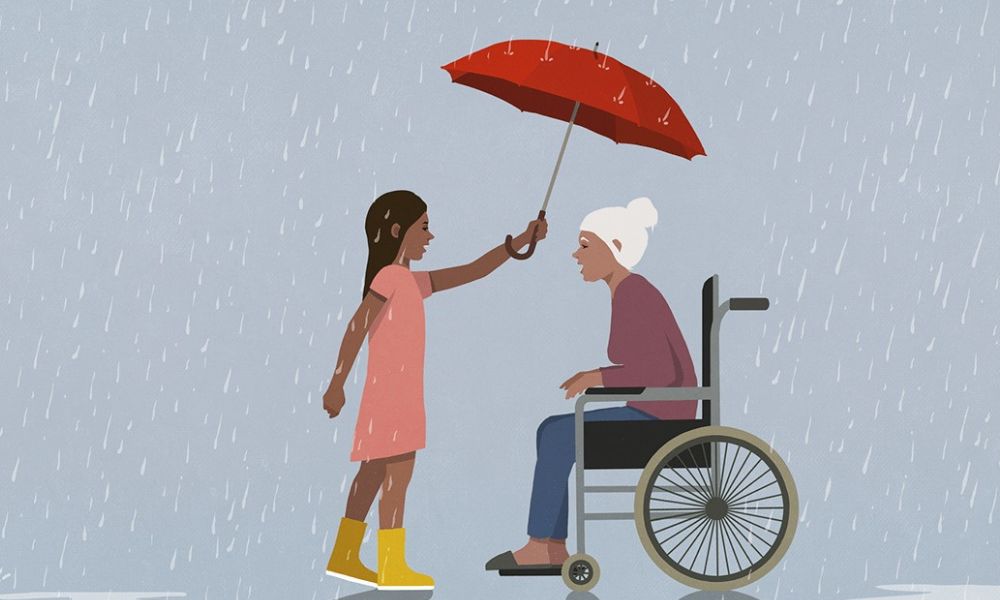
I once asked an old school teacher what he thought made someone truly human. He looked at me with eyes that had seen too many stories and said, “It’s what you do when no one is watching or when watching hurts too much.”
In 2025, that question is not just a philosophical one. It is urgent. We are surrounded by wars, displacement, inequality, greed, hatred, and discrimination. Our media feeds, politics, and even neighbourhoods are increasingly defined by what divides us. Against this backdrop, kindness can seem like a quaint ideal. And yet it might be the hardest, most essential way to remain human.
The Science Behind Simple Acts
Kindness is not just an ethical virtue; it’s biologically rooted in who we are. Acts of generosity, empathy, or caring trigger dopamine, oxytocin, and endorphins, neurochemicals linked to pleasure, bonding, and reduced stress. Simply smiling, speaking in a warm tone, or listening attentively improves cooperation and boosts well-being (Neuroscience News, 2024).
Over time, people who engage in regular prosocial behaviours report lower levels of anxiety, better resilience, and greater life satisfaction. This “kindness muscle” can be strengthened: compassion training, such as mindfulness, volunteering, or meditation, can rewire our stress responses (School of Kindness, n.d.; Singer & Klimecki, 2014).
But there is a counter-force: compassion fatigue. Those constantly exposed to suffering, health workers, caregivers, and volunteers can develop physical and emotional exhaustion, detachment, irritability, or guilt. When the world’s pain becomes part of your daily load, kindness can weigh heavily (Raypole, 2023; WHO, 2021).
So kindness is rewarding, yet it is also costly. Recognising this tension is essential to sustaining compassion without burning out.
When Systems Fail, Kindness Holds Up
In moments of crisis, pandemic, war, displacement, and disaster, structural failures become obvious: gaps in health systems, breakdowns in trust, and injustice exposed. But what often surprises me is how many people still kindle kindness in those gaps.
Stories from India
During the devastating second wave of COVID‑19, when hospitals ran out of beds and oxygen, ordinary citizens in cities like Kanpur and Varanasi connected via WhatsApp, Twitter, and community networks to source cylinders and ambulances and coordinate home‑care. Loss was everywhere, yet helping hands multiplied.
In Kerala and Maharashtra, during floods or droughts, resource-scarce communities mobilized to rescue, feed, and shelter others without barriers of religion or caste.
Global Echoes
In Ukraine, as bombings shattered cities, neighbours opened their homes to strangers. In Palestine, amid displacement and trauma, grassroots networks led by teachers and health workers distribute food and education materials, continuing care even under siege.
After the earthquakes in Turkey and Syria or the floods in Pakistan, mutual aid groups provided not only relief but also emotional solidarity. It was not just the water or food but the presence. The voice that says, “You’re not alone.”
These are not gestures that erase injustice. They are the human threads holding communities together when systems unravel.
Where Kindness Often Fails and Why We Must Practice It Everywhere
It’s easier sometimes to be kind in public than at home, easier to show warmth online than in private. But these quieter spaces often reveal our truest selves.
At home, kindness falters due to stress, fatigue, or assumptions. We lash out at those we love, excuse ourselves from apology, and assume love exempts us from empathy. But it is in these intimate spaces where kindness is most tested and most transformative (Zaki, 2019).
Digitally, kindness is distorted. Social media can expose us to global suffering and calls to action, but it can also amplify hate, misinformation, and division. Outrage is algorithmically rewarded, while compassion is often drowned out. Kindness online isn’t silence; it’s a choice to pause, reflect, and not dehumanise even behind a screen (Zaki, 2019).
Beyond Feel‑Good: Kindness as Resistance and Integrity
Kindness isn’t softness. In a world of systemic injustice, it becomes a form of resistance. It resists systems that reward exploitation and division. It faces biased religious, racial, and gendered views and calls for action. And it demands authenticity: being as kind in private as we are in public.
Psychologically, sustained compassion can help us avoid moral injury, the harm that occurs when people witness or participate in wrongdoing without recourse. Kindness, when practised authentically, restores our sense of moral coherence (Piliavin & Charng, 1990).
How We Might Keep Being Kind
- Staying kind in a cruel world is not easy, but it is possible. Here’s what helps:
- Recognise compassion fatigue early and rest before you burn out (Raypole, 2023).
- Model kindness for children and peers; kindness is socially contagious (School of Kindness, n.d.).
- Build small daily habits: thoughtful words, listening without distractions, and apologising sincerely.
- Reflect regularly: Where did I succeed in being kind today? Where could I do better?
- Extend it systemically: support just policies, equitable access, and mental health structures.
- Online, engage with empathy: check facts, de-escalate, and uplift, not just react.
Because What’s at Stake Is More Than Feelings
When kindness fades, cynicism takes over. Hatred finds space. Systems forget their purpose. And we lose something deeper: the ability to believe the world can change. World Kindness Day is not about hearts and hashtags (though they help). It’s about remembering who we are and who we choose to be, especially when it’s hard. In every city and every home, on flooded streets or in online storms, there is a choice. To show up. To be kind. To stay human. Even when it costs.
Because sometimes the smallest act of kindness is the greatest form of resistance.
References
Neuroscience News. (2024, April 5). The science of kindness: Cooperation and empathy linked in the brain. https://neurosciencenews.com/kindness-cooperation-social-neuroscience-29181/
Piliavin, J. A., & Charng, H. W. (1990). Altruism: A review of recent theory and research. Annual Review of Sociology, 16, 27–65. https://doi.org/10.1146/annurev.so.16.080190.000331
Raypole, C. (2023, November 14). What is compassion fatigue? Psychology Today. https://www.psychologytoday.com/us/basics/compassion-fatigue
School of Kindness. (n.d.). The science of kindness. https://schoolofkindness.org/science-of-kindness
Singer, T., & Klimecki, O. M. (2014). Empathy and compassion. Current Biology, 24(18), R875–R878. https://doi.org/10.1016/j.cub.2014.06.054
World Health Organization. (2021). Mental health and psychosocial considerations during the COVID-19 outbreak. https://www.who.int/docs/default-source/coronaviruse/mental-health-considerations.pdf
Zaki, J. (2019). The war for kindness: Building empathy in a fractured world. Crown Publishing.
After the earthquakes in Turkey and Syria or the floods in many regions, mutual aid groups provided not only relief but also emotional solidarity. It was not just the water or food but the presence. The voice that says, “You’re not alone.”
0 Comments