
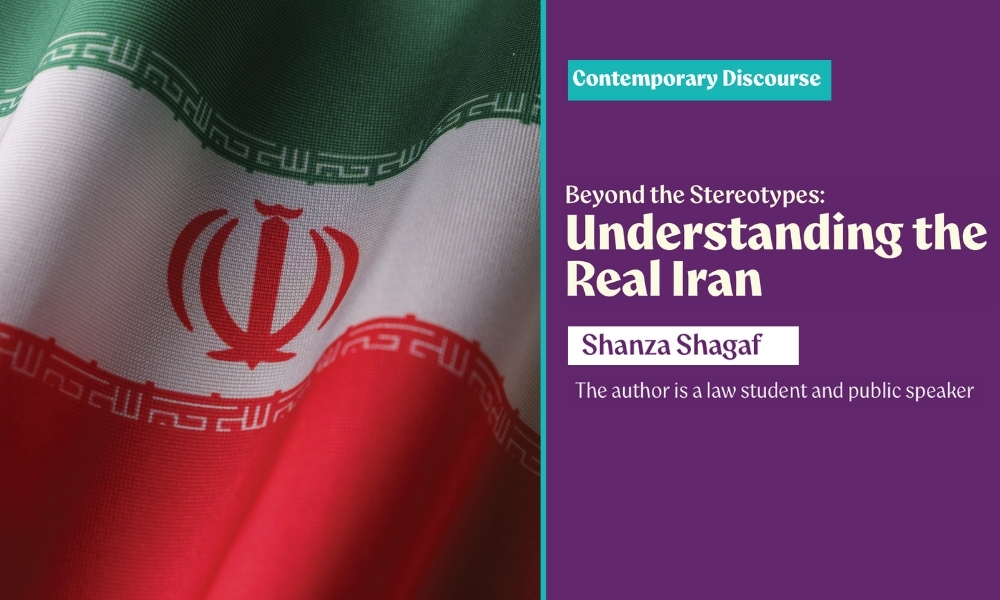
Modern Iran is one of the most misunderstood societies in the contemporary world. It exists at the intersection of ancient civilization and modern geopolitics, religious tradition and technological ambition, political restriction and intellectual creativity. To understand Iran honestly requires moving beyond reductionist narratives and engaging with the complexities that define the country today.
This exploration is not an attempt to romanticize Iran or ignore its challenges. Rather, it seeks to develop a balanced perspective — one that recognizes both achievements and struggles, both limitations and possibilities. Iran is not simply a political headline; it is a living civilization with centuries of intellectual, artistic, and spiritual heritage that continues to evolve in remarkable ways.
Even today, the cultural influence of Persian civilization remains deeply embedded in global history. Persian poetry continues to inspire readers across continents. The words of Rumi are quoted in spiritual gatherings worldwide. Hafez and Saadi Shirazi remain timeless voices of love, wisdom, and human reflection.
Persian scholars played central roles during the Islamic Golden Age. Thinkers and scientists from Persian lands contributed to medicine, algebra, astronomy, and philosophy at a time when much of the world was intellectually stagnant. The works of scholars like Avicenna influenced European medicine for centuries.
This historical depth matters because modern Iranian society still carries strong cultural memories of intellectualism, scholarship, poetry, spirituality, and resilience. Iran’s modern identity cannot be separated from this civilizational foundation.
Yet paradoxically, sanctions also pushed Iran toward self-reliance in several sectors. Limited access to foreign technology forced investment in domestic scientific research, manufacturing, medicine, and engineering. Iran began focusing heavily on producing its own technological systems, medical equipment, pharmaceuticals, and industrial infrastructure.
This environment cultivated a culture of innovation under constraint. Iranian scientists, engineers, and students learned to work with limited resources while continuing research and development. Universities became central spaces for national progress.
The story of Iran, therefore, is not only about political conflict but also about how societies adapt creatively under pressure.
Education occupies a central place in modern Iranian society. Families across economic classes place immense value on academic achievement, viewing education as both social mobility and national strength. Competitive university entrance examinations are taken extremely seriously, and students often dedicate years preparing for them.
Iran today possesses one of the strongest higher education systems in the region. Universities in cities like Tehran, Mashhad, Isfahan, and Shiraz produce graduates in engineering, medicine, humanities, law, nanotechnology, computer science, and physics.
Iran has consistently ranked highly in scientific publication output within the Middle East. The country has invested heavily in STEM fields, encouraging scientific research even amid economic hardship.
Iranian researchers have contributed significantly to:
- Nanotechnology
- Biotechnology
- Stem cell research
- Pharmacology
- Aerospace engineering
- Artificial intelligence
- Renewable energy
- Medical sciences
Iranian doctors and scientists have achieved notable success in organ transplantation, fertility treatment, and cancer research. Domestic pharmaceutical industries have expanded considerably due to restrictions on imported medicines.
This emphasis on education reveals a side of Iran rarely highlighted internationally: a society deeply invested in knowledge production and intellectual advancement.
Modern Iran has made surprising progress in technology despite economic restrictions. Urban Iranian society is highly connected digitally, and young people actively engage with software development, coding, startups, and online entrepreneurship.
Iran has developed domestic alternatives for digital services, online platforms, and communication technologies. While internet restrictions exist, Iranian youth remain technologically aware and globally connected through creative means.
The country has also invested in:
- Satellite technology
- Aerospace research
- Cybersecurity
- Robotics
- Smart healthcare systems
- Industrial engineering
Iran’s aerospace sector, though controversial in international politics, also represents the ambitions of a scientifically driven society seeking technological independence.
Iranian startups in urban centers are working in e-commerce, fintech, digital design, online education, and app development. Cafés in Tehran often resemble startup hubs filled with students discussing coding, filmmaking, business ideas, and social issues.
This modern urban reality sharply contrasts with stereotypical portrayals of Iran as isolated or technologically backward.
Perhaps no aspect of Iran is more globally discussed — or misunderstood — than the condition of women. International media frequently portrays Iranian women solely as oppressed figures deprived of agency. While legal and social restrictions undeniably exist, this narrative alone oversimplifies a far more complex reality.
Iranian women are among the most educated in the region. Women constitute a major percentage of university students and are active across professional sectors including:
- Medicine
- Engineering
- Academia
- Literature
- Journalism
- Entrepreneurship
- Law
- Arts and cinema
- Scientific research
Women in Iran work as professors, surgeons, scientists, filmmakers, athletes, and social activists. Iranian female scientists have contributed to advanced medical and scientific research. Female filmmakers have created internationally recognized cinema that explores human relationships, morality, identity, and social structures.
Iranian women have repeatedly demonstrated resilience and intellectual leadership despite structural limitations.
At the same time, discussions about women in Iran must honestly acknowledge challenges. Reducing Iranian women to only victims removes their individuality, ambition, achievements, and strength. The reality is more layered: many Iranian women simultaneously navigate some degrees of restriction while excelling academically, professionally, culturally, and socially.
Their lives cannot be summarized through a single narrative.
Directors such as Abbas Kiarostami, Asghar Farhadi, and Majid Majidi gained global recognition for storytelling that explores morality, poverty, family dynamics, childhood innocence, ethical dilemmas, and social realities.
Iranian cinema often operates within censorship boundaries, which paradoxically encouraged filmmakers to develop subtle, symbolic, and deeply human storytelling techniques. Many Iranian films focus not on spectacle but on ordinary life — revealing universal emotions through simple narratives.
These films provide global audiences with glimpses into Iranian society beyond politics: children walking through dusty streets, families facing economic hardship, women negotiating social expectations, and youth searching for identity.
Cinema became a cultural bridge between Iran and the world.
Despite restrictions, youth culture in Iran is vibrant and dynamic. Young people gather in cafés, universities, bookstores, art galleries, and online communities. They listen to music, create podcasts, design fashion, write poetry, debate politics, and produce digital content.
Social media has become an especially important space for self-expression. Iranian youth use online platforms to share photography, literature, activism, humour, educational content, and cultural commentary.
This generation is often caught between multiple worlds:
- Traditional expectations and modern aspirations
- Religious structures and secular influences
- National identity and globalization
- Political frustration and creative hope
Understanding Iranian youth is essential because they represent the country’s future intellectual and cultural direction.
Another misconception about Iran is the assumption that it is ethnically or culturally homogenous. In reality, Iran is home to immense diversity.
The country includes:
- Persians
- Azeris
- Kurds
- Baluchis
- Arabs
- Turkmen
- Armenians
- Lurs
- Gilaks
- Mazandaranis
Each community possesses unique languages, traditions, cuisines, music, clothing styles, and cultural expressions.
Iranian society is therefore not a single uniform identity but a mosaic of cultures shaped through centuries of interaction.
Religious diversity also exists within Iran. While the country is predominantly Shi’a Muslim, there are Sunni communities alongside Christians, Jews, Zoroastrians, and others who have historically lived in the region.
Celebrations such as Nowruz demonstrate this cultural richness. Nowruz, celebrated for thousands of years, symbolizes renewal, hope, nature, and unity. Families gather around symbolic tables, visit relatives, exchange gifts, and celebrate together regardless of ethnic background.
While these realities are important, they are not the entirety of Iranian society.
Rarely do headlines show:
- Iranian scientists working in laboratories
- Students competing academically
- Artists producing films and paintings
- Families celebrating traditions
- Women leading research projects
- Entrepreneurs building startups
- Writer’s publishing literature
Selective representation creates psychological distance between societies. People begin seeing countries not as human communities but as political symbols.
This phenomenon is not unique to Iran, but Iran remains one of the clearest examples of how geopolitical framing can overshadow ordinary human life.
A balanced understanding requires acknowledging both:
- Legitimate criticisms regarding political restrictions and human rights concerns
- The intellectual, cultural, and social realities that continue to exist beyond those issues
Nuance is essential.
However, religious identity in Iran is not experienced uniformly. Some Iranians are deeply religious, while others approach religion culturally, spiritually, intellectually, or critically. This diversity of engagement reflects the complexity of modern Iranian identity.
Persian spirituality also extends beyond formal institutions through poetry, philosophy, mysticism, and literature. The influence of Sufi thought and metaphysical reflection remains visible in Persian cultural traditions.
Perhaps the most important step in understanding Iran is recognizing the humanity of its people.
Iranian society is filled with:
- Parents worried about their children’s futures
- Students dreaming of success
- Artists seeking expression
- Women balancing expectations and ambition
- Young people searching for identity
- Families trying to survive economic hardship
- Intellectuals debating reform and tradition
Like people everywhere, Iranians experience love, fear, hope, frustration, faith, humour, grief, ambition, and resilience.
Reducing Iran only to political headlines erases these human experiences.
Iran is neither a utopia nor merely a place of oppression. It is a nation shaped by ancient civilization, political complexity, scientific ambition, cultural brilliance, religious influence, social contradictions, and resilient people.
Its women are not simply victims; many are scholars, activists, doctors, artists, and leaders. Its youth are not isolated; they are globally aware, digitally connected, and intellectually active. Its society is not culturally empty; it is rooted in centuries of poetry, philosophy, spirituality, and art.
At the same time, political restrictions, censorship, economic struggles, and human rights debates remain real and significant. A balanced understanding does not ignore these realities, it contextualizes them within the broader human landscape of Iranian life.
In an age dominated by sensational media and polarized discourse, looking beyond headlines becomes an ethical responsibility. To truly understand Iran is to recognize its contradictions, appreciate its humanity, and engage with its realities thoughtfully rather than superficially.
Because no nation, including Iran, can ever be fully understood through headlines alone.
Did You Know?
Iran is a multilingual country. While Persian (Farsi) is the official language, millions also speak Azerbaijani Turkish, Kurdish, Arabic, Balochi, Gilaki, Mazandarani, and Luri.
Did You Know?
“Farsi” and “Persian” are two names for the same language. “Farsi” is what many native speakers call Persian.
Did You Know?
Persian belongs to the Indo-European language family — the same broad family as Hindi, English, and many European languages — not Arabic.
Did You Know?
Although Persian uses a script based on Arabic, the two languages are structurally very different.
The app version is way better than the browser one. Everything is organized and the deposits are handled instantly. Get the betikaapp if you want a better gaming experience.
The graphics on this site are out of this world. It feels more like a premium experience than a standard casino. Really enjoying my time at spacemancasino.
I’ve been looking for a platform like this for a while. The interface is super smooth and everything just works. Highly recommend checking out mysuka2cuci if you want a hassle-free experience.
I’ve been looking for a reliable mobile betting site and this one is a game changer. The interface is smooth and the payouts are fast. Definitely check out betebetmobil for a great experience.
Really impressed with the mobile version of this site. I can place my bets on the go without any lag or crashes. It is just a solid, reliable platform. Try vn22bet22
I had a great run here last night and the withdrawal was processed much faster than I expected. It is refreshing to find a site that actually pays out promptly. Join clcasinowin
Finally found a site with such a smooth login process. No more lagging when I try to access my account. Highly recommended for everyone! phlviplogin
I had a great run here last night! The slot games are fair and the graphics are top notch. Definitely my new favorite spot. phluckyslot
Really enjoying the bonuses they offer. It gives me more chances to win and the overall interface is very user friendly. phlucky789
No more login issues like I had on other sites. This portal is seamless and gets me straight to the action. Cheers to topslot88login for keeping it simple.
The installation was a breeze and the login process is secure. I love how everything is just a click away with 93jililoginappapk