
The author is a teacher by profession, loves gardening and reading
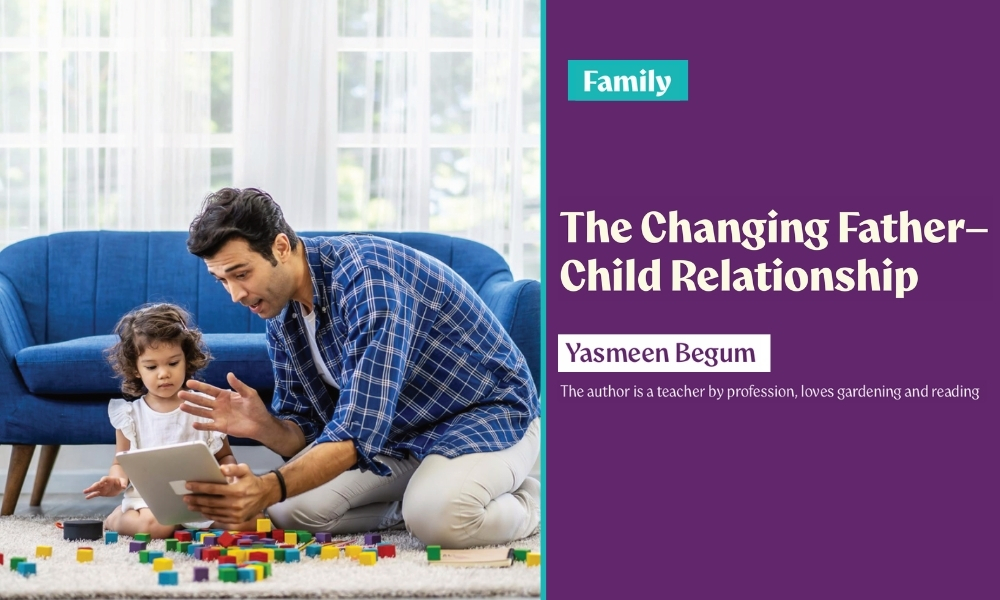
Times have changed quickly. Over time, the manners and cultures have undergone drastic changes and emerged as new norms, with terms such as modern times. Leaving behind the legacy of the forefathers and etiquette. Due to this, the parent-child relationship has also been affected drastically. In the good old days, fathers were often viewed mainly as providers and authority figures. Their primary role was to earn money, maintain discipline, and make important family decisions. Children were expected to obey their fathers without any question, and emotional closeness was often limited. There was fear in the hearts of the children, and no one dared to disrespect the command they had in their homes. Today, however, the father–child relationship is evolving. Modern families are witnessing new ideas about parenting, respect, communication, and emotional connection. As society changes, fathers seem to be more involved in their children’s daily lives, creating relationships based not only on authority but also on understanding and support.
Existing patterns
In our childhood, it was believed that fathers should maintain a strict, reserved and distant image. Respect was often associated with fear or unquestioning obedience. Children rarely discussed personal struggles and emotional issues openly with their fathers. Being emotional was considered a sign of weakness. As a result, while children respected their fathers, they did not always feel comfortable sharing their feelings with them.
Over the years, ideas about parenting have changed. Respect is increasingly viewed as something earned through trust, kindness, and mutual understanding rather than strict control. Modern fathers often encourage conversations with their children and listen to their opinions. Instead of expecting obedience alone, many fathers aim to guide, explain, and support. This shift has helped build stronger emotional bonds between parents and children.
The drift in such a role is basically due to educating families about children’s well-being and their silent concerns. Studies have suggested that children who feel heard and supported often develop greater confidence and emotional stability. Fathers today are more likely to participate in activities such as helping with homework, attending parent-teacher interactions, discussing personal problems, and expressing affection openly. These actions make children feel valued.
Changing times
Another factor influencing the changing father–child relationship is the sharing of household responsibilities. Gender is not a negative stigma anymore. In the past, caregiving responsibilities were mainly associated with mothers, while fathers focused on financial support. However, modern society increasingly accepts shared parenting responsibilities.
Many fathers now take active roles in childcare, cooking, education, and emotional nurturing. This involvement allows children to see fathers as caring figures like their mothers.
Technology has also played a role in shaping relationships. On one hand, smartphones, social media, and digital gadgets can create distance between parents and children. Family members may spend more time on screens and hence have less family time.
On the other hand, technology can also help maintain connections, especially in families separated by work or travel. Video calls, messages, and online interactions enable fathers to remain involved in their children’s lives even from afar. The challenge lies in balancing technology with meaningful personal interaction.
Generational gaps are another issue. Differences in values, lifestyles, and expectations sometimes lead to misunderstandings. Younger generations often care more about their independence and their necessities, while older generations had discipline, tradition, and responsibility dear to them. Such differences have led to conflicts regarding the younger generation’s choices, social behaviour, or life goals.
There was another norm, wherein the men weren’t encouraged to express their emotions. It was considered a sign of weakness. Today, thoughts towards emotional expression are changing. More fathers recognise that sharing feelings and showing empathy can strengthen relationships and help them communicate well.
Conclusion
Despite all this, fathers remain under constant pressure to fulfil family responsibilities in some or other way. Also, the financial and increasing demands to settle well and have all necessities in life have become challenging and have minimised the few chances of meaningful family time.
In conclusion, the father–child relationship has transformed considerably from traditional patterns of strict authority towards more emotionally connected interactions. Changes in parenting styles, gender roles, awareness of mental health, and social values have influenced how fathers and children relate to one another. Although generational gaps and modern pressures still create challenges, open communication can help strengthen family bonds. As society continues to evolve, the father–child relationship will likely keep changing, reflecting new understandings of care, and responsibility will keep evolving.
The slot variety here is insane. I love how the games load quickly without any glitches. Definitely my new go-to place for some fun spins at brasil777slots.