

The author is a skilled speaker, passionate writer, and researcher focused on healthy eating and relationship behaviour
Reflections
The other day, I found myself reflecting on how my parents raised four children: one quiet, one loud, one disciplined, and one spontaneous. We grew up under the same roof, shared the same meals, and lived by the same values, yet we often disagreed, argued, and had our share of differences. Still, love always bound us together. This thought stayed with me. If so many differences can exist between siblings raised by the same parents, imagine the diversity among the billions of people who share this planet. And if we, as a family, can learn to accept one another despite our contrasts, can we not extend the same tolerance to the people around us? Is tolerance limited to blood ties, or is it a deeper quality? A reflection of our shared humanity?

By definition, tolerance is the willingness to accept beliefs, practices, or people that differ from our own, even when we disagree with them. But how tolerant are we, really? Often, those closest to us have the most complaints about our lack of patience or understanding. We proudly call ourselves “honest” or “straightforward,” claiming to say things as they are. But does that excuse the rudeness or judgment? Somewhere along the way, many of us began confusing bluntness with courage and intolerance with strength. We tell ourselves that, unlike our elders, we won’t “suffer silently.” But in doing so, have we forgotten the grace of listening, understanding, and coexisting peacefully? Perhaps it’s time we pause, take a closer look at how we’ve changed and what we still need to learn.
Mutual Consideration
Neighbours are the people who live around us, be it in the homes next door or in our online circles. How often have we seen our neighbours struggling for parking space when they have guests, and yet we choose not to adjust, thinking, “If I help once, I’ll have to help forever”? How often do we find ourselves whispering about what others are cooking, “Ugh, the smell of fish!” or “What kind of masalas do they use?” only to advise them later, “You should be more considerate of others in a community.” We seldom realise that the advice we give so easily applies equally to us. Can we not bear a few unfamiliar aromas for a day or two, just as we expect others to respect our customs? Different religions and cultures have their own ways of cooking and their own fasting days. A little understanding from both sides; avoiding certain foods out of courtesy, or simply being less judgmental, could go a long way in creating harmony. After all, tolerance begins at home in the simple act of not judging the aromas drifting from another kitchen.
Another very common form of neighbourhood intolerance is gossip. Quick judgments like “She doesn’t talk much, must be proud,” or “They’re too modern,” or “That family is too orthodox,” have sadly become a part of our everyday conversation. Tolerance definitely isn’t about turning a blind eye to wrongs; it’s about choosing the right way to address them. If something truly concerns us, the tolerant way is to speak directly, with respect and sincerity, rather than gossiping behind someone’s back. If a person explains their side, being tolerant means truly listening and trying to understand their perspective. When we instead start labelling our neighbours by their clothes, language, or faith, we quietly build invisible walls that grow taller with time, separating us from one another. Our beloved Prophet ﷺ reminded us powerfully of the sanctity of neighbourly relations. Al-Miqdad ibn al-Aswad reported that the Messenger of Allah (peace and blessings be upon him) said: “It is less serious for a man to fornicate with ten women than for him to fornicate with his neighbour’s wife… and less serious for a man to steal from ten houses than from his neighbour’s house.” [Al-Adab Al-Mufrad 103] This teaches us the immense value and respect Islam places on neighbours. Tolerance, then, is not passive endurance; it is active respect. It teaches us to replace complaint with compassion, judgment with understanding, and to see diversity not as division, but as the strength that makes our communities truly beautiful.
How often do we hear complaints and controversies about loud prayers, temple bells, or festive processions, whether it’s Milad, Ganesh Chaturthi, or Durga Puja? When it comes to others, we show little patience, but when it’s our turn, we expect complete understanding from everyone else. We raise our voices in our own celebrations, and yet preach tolerance to others. True tolerance doesn’t begin with demanding it from our neighbours. It starts with practising it ourselves. Expecting others to send us sweets on their festive days while distancing ourselves on ours reflects a narrow heart. Expecting others to keep the neighbourhood clean while we leave garbage near their gates shows that we’ve missed the essence of community living. As Al-Hasan (may Allah be pleased with him) explained, “The term ‘neighbour’ includes the forty houses in front of a person, the forty behind him, the forty to his right, and the forty to his left.” [Al-Adab Al-Mufrad 109]. Such a wide definition reminds us that our responsibility of tolerance and kindness extends far beyond the walls of our own homes.
Beyond Groupism
Another growing issue in our neighbourhoods is groupism, forming exclusive circles based on religion, language, caste, or region: “South Indian group,” “Tamilian group,” “Hyderabadis group.” Especially in metropolitan cities, where people from all over India live side by side, this silent segregation reflects a lack of openness. It isolates families who don’t share the same language or customs, leaving them feeling excluded in the very community they call home. The Prophet ﷺ said, “He is not a believer whose stomach is filled while his neighbour goes hungry.” [Al-Adab Al-Mufrad 112] Notice, he did not specify whether the neighbour was Muslim or non-Muslim. The command is universal. It teaches us that tolerance is not merely about accepting differences, but about embracing people despite them. True faith shines not in isolation, but in inclusion when we open our doors, hearts, and minds to those who are different from us.
New Definitions
In today’s globalised world, our understanding of “neighbours” has expanded far beyond the physical walls of our homes. In earlier times, people spent half their day in their neighbourhoods chatting on doorsteps, sharing meals, or simply watching children play in the streets. But in this modern era, our interactions have shifted online. The people we message daily, collaborate with on projects, or play games with virtually are also our neighbours in the digital sense. In this new landscape, our WhatsApp groups, Facebook communities, and online forums have become our extended neighbourhoods. The way we speak, react, and respond online reflects our true level of tolerance far more than any social media post or “Be Kind” slogan.
The internet has given everyone a voice, a space to express opinions, beliefs, and perspectives. But not every opinion needs our agreement, nor does disagreement justify hostility. Trolling or mocking someone for having a different political or religious view, commenting “Unfollowed!” or posting angry emojis simply because we dislike their choice of leader, video, or post, all these reveal deep intolerance. True tolerance online means learning to “agree to disagree.” When we demand uniformity through boycotts or hashtags and expect everyone to share our view, we forget that tolerance must begin with us. Too often, we react without understanding someone’s context or struggle, publicly shaming them instead of seeking clarity. In a connected world, tolerance doesn’t mean silence; it means respect. It means allowing space for diverse voices, even when they sound different from our own.
Many things we do online are brushed off as “just for fun.” But it’s worth asking ourselves if mocking or humiliating others is fun? Jokes about accents and states, “Typical Northie/Southie,” “Biharis everywhere,” “Kannadigas don’t know Hindi” may sound harmless, but they carry deep prejudice. Heated arguments over language, “Why can’t you just speak Hindi?” only add to this intolerance. Of course, everyone has a right to express an opinion. But online, expression should come with responsibility. You can share your view and stop there. Others may agree or disagree, and that’s their right. The problem begins when we expect everyone to validate our opinions, as if disagreement is an insult. Turning differences of taste, whether it’s Messi vs. Ronaldo or Kohli vs. Dhoni, into personal hostility or hate messages shows how intolerance has seeped even into entertainment.
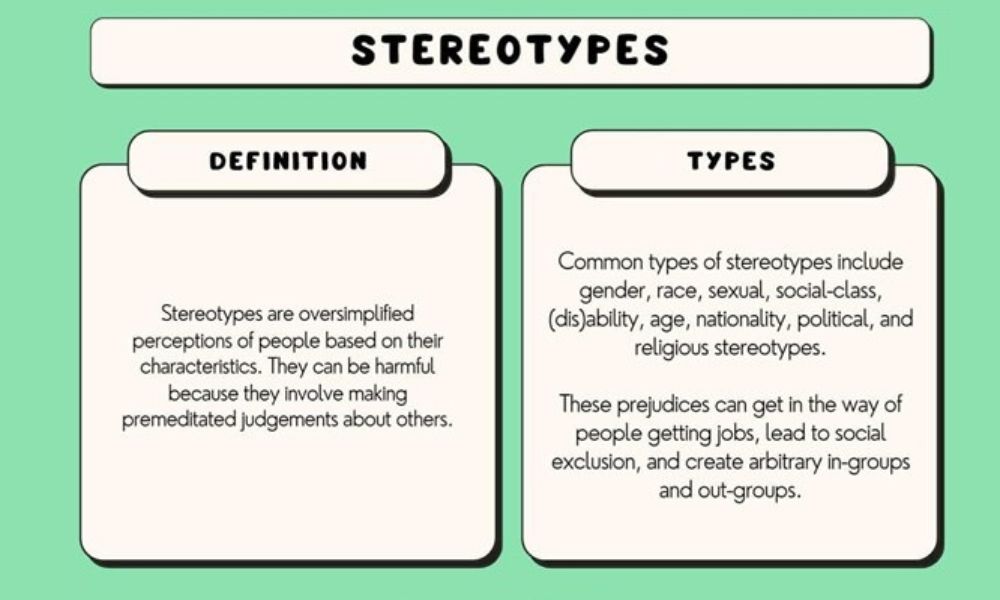
Intolerance also hides behind humour. Sharing insensitive memes about someone’s looks, weight, skin tone, or mental health; forwarding fake news or community-based jokes; ridiculing posts in regional languages with comments like “Write in Hindi, please, that’s our national language”, all of this reveals how we drop basic decency the moment the person isn’t standing before us. Hiding behind screens does not give us the right to say anything, in any tone, just because it’s “online.” Even forwarding “sarcastic” or “funny” memes that target others is another form of disguised intolerance.
Conclusion
This hypocrisy must stop. Offline, we project empathy, but online, we fuel hate in comment sections. We post about unity, freedom, and equality on Independence Day, and then, days later, write divisive posts or share hate about a community. We campaign for equal opportunities, but mock or troll anyone who dares to create differently. These double standards define our digital era; preaching acceptance, but practising judgment. If we truly believe in unity and tolerance, it must reflect not just in our posts, but in our everyday words, actions, and clicks.
It’s time we recognised that tolerance isn’t passive acceptance. It is an active understanding. It doesn’t mean agreeing with everyone, but allowing others the space to be who they are. As Ronald Reagan beautifully said, “Peace is not the absence of difference, but the ability to handle difference peacefully.” True tolerance begins with small, simple acts such as greeting a neighbour from another faith, appreciating an unfamiliar dish, or pausing before reacting to a post online. Whether it’s the neighbour whose food smells different, the aunty who speaks another language, or the stranger whose opinion clashes with ours, intolerance begins in the smallest corners of our minds. And so does tolerance. It doesn’t require protests or hashtags; it starts quietly when we pause before judging, listen before reacting, and choose kindness over ego. The same patience we show to a child or an elder can just as easily be extended to the person next door and to the person behind the screen.
In a world divided by ideologies, religions, and endless notifications, the bravest act of all is to remain gentle. To understand before opposing, to converse before cancelling. If every home learns to live peacefully with the one beside it, and every user learns to respect the voice across the screen, harmony will no longer be a distant dream because peace in our society begins with peace in our hearts and tolerance, both online and offline.
A good insight about areas we need to exhibit tolerance.