
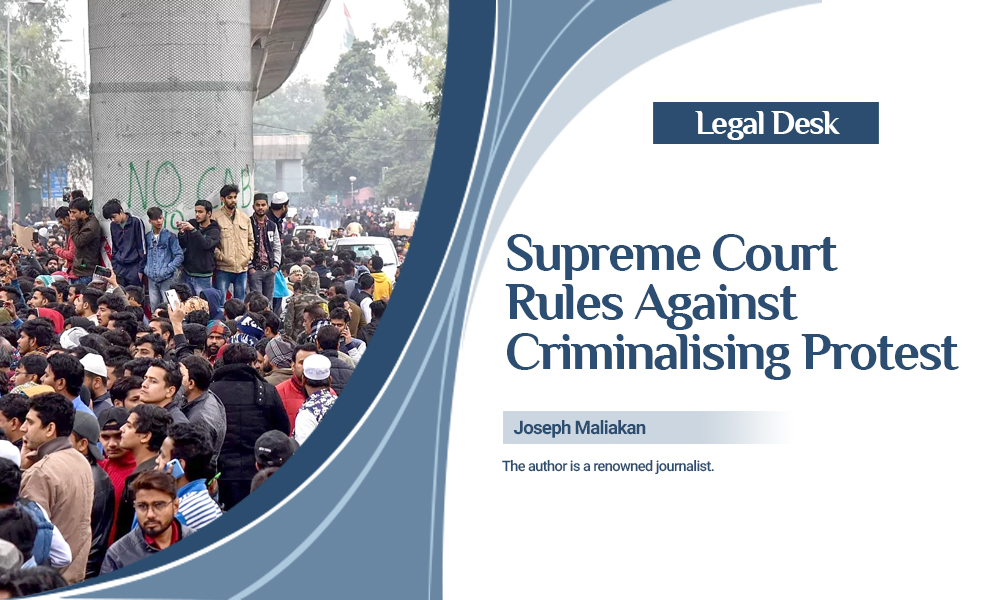
The author is a renowned journalist.

Relief for Protest Rights in India
In a significant judgment preserving democratic freedoms, the Supreme Court of India, on 31 July 2025, quashed the First Information Report (FIR) registered against Telugu actor and producer Manchu Mohan Babu and his son Vishnu Vardhan Babu. The FIR stemmed from a 2019 protest rally highlighting non-payment of student fee reimbursements in Andhra Pradesh. The New Indian ExpressLive Law
Bench’s Verdict
A bench consisting of Justices B.V. Nagarathna and K.V. Viswanathan set aside the Andhra Pradesh High Court’s refusal to quash criminal proceedings. The bench emphasized:
The appellants were exercising their right to freedom of speech and expression and to assemble peacefully. Therefore, no purpose will be served by continuing the prosecution.
The New Indian ExpressLive Law
Background: The 2019 Rally
On 22 March 2019, during the Model Code of Conduct period, the duo led a rally from Sri Vidyaniketan Educational Institutions toward Tirupati–Madanapalli Road, demanding delayed student reimbursements. A complaint was filed noting obstruction to traffic for several hours. FIRs were lodged under Sections 290, 341, 171F read with 34 IPC and Section 34 of the Police Act, 1861. Live LawIndia Today
Supreme Court’s Legal Reasoning
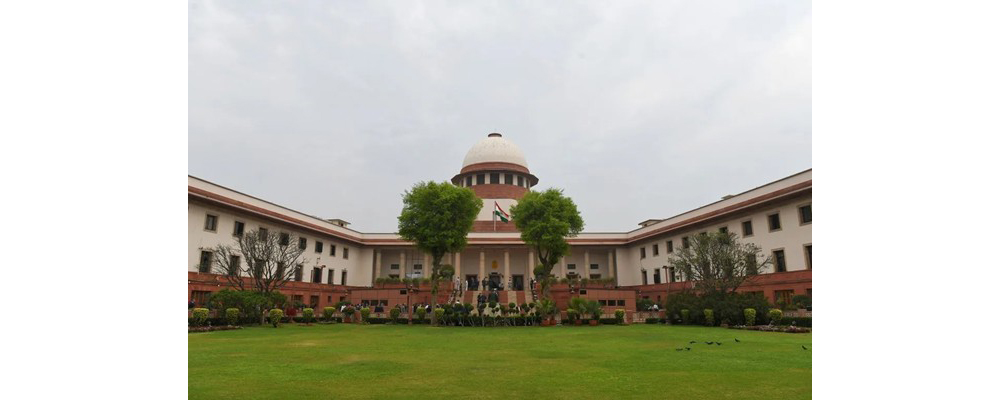
Upon review, the Supreme Court found that even if one assumed all allegations in the FIR and charge sheet were true:
- There was no evidence of public annoyance or danger.
- No obstruction of individuals using public roads.
- No undue electoral influence or impersonation.
- No public order violations under the Police Act. Live LawLawBeat
Thus, continuing prosecution would serve no useful purpose. The judgment reaffirmed that peaceful protest is constitutionally protected and misusing criminal law to suppress dissent is impermissible. LawBeatLawcurb
Context: Protests in Delhi and Diminishing Spaces
Just one month prior, on 1 July 2025, political and rights groups came together at Jantar Mantar to protest restrictions on protests in Delhi. The gathering was addressed by CPI (ML) leaders and activists including Comrade Mrigank, Nadita Narain (Democratic Teachers Front), and N.D. Pancholi (PUCL), highlighting growing constraints on public assembly. indiancurrents.org
The article reflects on how protest venues in Delhi have diminished—from large open areas like Boat Club and India Gate to tightly monitored zones like Jantar Mantar. Permissions and Section 144 orders impede spontaneous protest, and even petition submissions now require routing through intermediaries.
Significance of the Ruling
The Supreme Court’s decision underscores a fundamental principle: peaceful protest is not a criminal offense. It is a reaffirmation of constitutional freedoms and judicial oversight against misuse of law to stifle dissent.
0 Comments