
Every year, when the crescent moon arrives in Rabiʽ al-Awwal, the Muslim world is swept into a tide of joy and reverence. It is the month that witnessed the birth of the Prophet Muhammad ﷺ, the most remarkable event in the history of human civilisation. However, it is also the month which reignites the debates over tradition, innovation and the true meaning of love towards our beloved Rasoollah ﷺ. This month stands at the crossroads of devotion and tradition. While some see it as a sacred celebration, few others view it as a spiritual call to stand firmly on the ideals preached by Prophet Muhammad ﷺ and for many, it’s just a cultural ritual stripped of its depth. Significantly, this month has carried both the birth and sorrow of Muhammad’s ﷺ passing. It’s the month that sends a message that it’s not merely for festivity and celebration but a solemn remembrance of a loss that is too great to celebrate.
The Day the World Changed: The Prophet’s ﷺ Birth
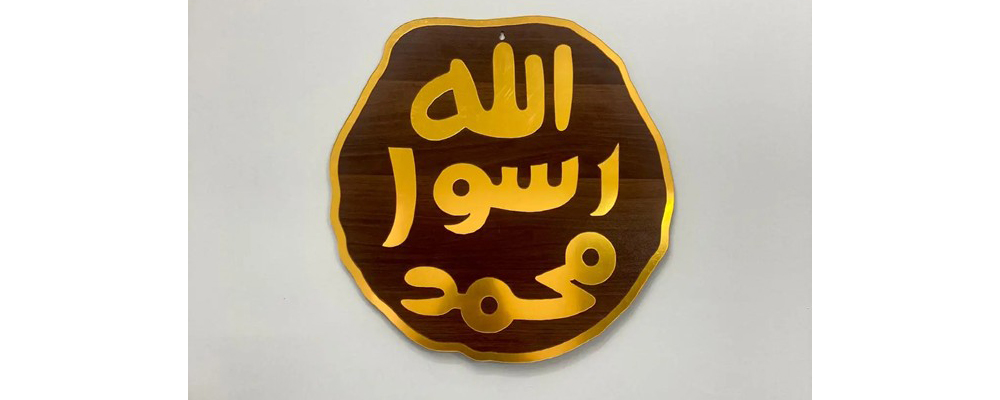
Prophet Muhammad ﷺ came into this world as a mercy to mankind. Through him, Allah would lead nations out of the darkness of ignorance and oppression into the light of Tawhid (Oneness of Allah), justice, and peace.
The Prophet ﷺ was born in Makkah on a Monday in Rabiʽ al-Awwal, though narrations differ on the exact date; many say the 12th, while others mention dates between the 8th and 17th. What is certain is that his arrival had been foretold and long-awaited. Five centuries earlier, Prophet ‘Isa (AS) had given glad tidings of “a Messenger to come after me, whose name shall be Ahmad” [Qur’an 61:6]. Even centuries before that, Prophet Ibrahim and Ismaʿil(AS) prayed for his coming while rebuilding the Kaʿbah [Qur’an 2:129].
Signs and blessings surrounded his birth. His mother, Aaminah, recalled a radiant light during her pregnancy that shone so brightly she could see the castles of Syria. His foster mother, Halimah, took him in, despite hoping for a wealthier child, and her household was blessed ever after. Even his name, Muhammad, “the one who is praised” — was rare and unique, a hint of the greatness to come.
Milad un-Nabi: Sunnah or Bid‘ah?
especially in the Asian sub-continent, commemorate the birth of the Prophet Muhammad ﷺ with poetry, charity, and illuminated mosques, as a sign of love and reverence. However, a vast majority choose not to celebrate, keeping in mind that neither Prophet ﷺ nor his companions marked birthdays, and that no authentic evidence supports the practice.
We must remind ourselves that the truest way to honour him is to live by what he has left behind: The Quran and His Sunnah. Uncalled innovations and unnecessary celebrations lose meaning if they distract us from the commands he lived by. In a world full of noise and spectacle, real love for the Prophet ﷺ is shown through mercy, truth, and discipline every day, not just once a year.
The Hijrah: A New Chapter in the Story of Islam

Rabiʽ al-Awwal is also remembered for one of the most pivotal moments in Islamic history, the Hijrah, the migration of the Prophet Muhammad ﷺ and his closest companion, Abu Bakr (RA) from Makkah to Madinah. It wasn’t just a change of location; it was a turning point. This journey marked the birth of the first Islamic community, a place where Muslims could live freely and begin building a society rooted in justice, compassion, and truth.
So profound was this moment that the Islamic calendar itself begins here. Umar ibn al-Khaṭṭāb (RA) said, “The Hijrah drew a clear line between truth and falsehood, so let our calendar begin from it.” [Ibn Ḥajar al-ʿAsqalānī]. Today, in the year 1446 AH, the spirit of the Hijrah calls us to stand firm for what is right, resilient in struggles, and remain steadfast in the pursuit of justice.
The First Masjid: Laying the Foundations of Faith in Rabi al Awwal
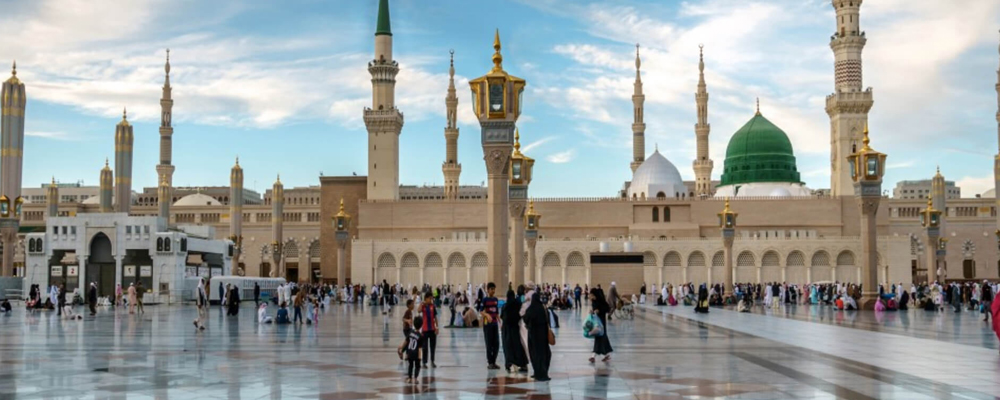
The very first masjid in Islam was built in Rabiʽ al-Awwal. When the Prophet ﷺ left Makkah with Abu Bakr (RA), they journeyed across the desert to the small town of Quba near Yathrib. There, they stayed for three days and built Masjid Quba before continuing to Yathrib, later known as Madinah where they began constructing Masjid An-Nabawi.
Upon arriving in Quba, the Prophet ﷺ advised the people: “Spread peace among one another, feed the hungry, strengthen family ties, and pray when others are asleep — and you will enter Paradise in peace.” His words were not mere greetings, but a blueprint for a community built on worship, compassion, and unity.
The anniversary of the Hijrah is a reminder of these principles. In both Quba and Madinah, the Prophet ﷺ nurtured a society rooted in the Qur’an and Sunnah. As he taught: “Leave me as I leave you, for those before you were ruined by their excessive questioning and disputes over their prophets. If I forbid you from something, avoid it; and if I command you to do something, then do it as much as you can.” [Sahih Bukhari]
The Prophet’s ﷺ Death: A Time for Reflection and Remembrance
While Rabi al Awwal is a month marked by the significance of the Prophet Muhammad’s ﷺ birth, it is also a month of deep reflection, as the Prophet ﷺ passed away during this time. He died on Monday, the 12th of Rabi al Awwal, in the 11th year of Islam, after a period of illness. His passing left the Muslim community in great shock and grief. Many companions, including Umar ibn al-Khattab (RA), were unable to accept the news. It was Abu Bakr (RA) who reminded them, “If it was Muhammad whom you worshipped, then know that he is dead. But if it is Allah (SWT) whom you worship, then know that He does not die.”
The grief that swept through the Muslim community was overwhelmingly great and felt most deeply in Madinah. They mourned not only the loss of the Prophet ﷺ, whom they loved more than life itself, but also the closing of a chapter in history: the end of divine revelation.
Umm Ayman, who had cared for the Prophet ﷺ like a mother, expressed it best: “I do not weep for him, I know he has gone to what is far better than this world. But I weep for the heavenly tidings that have now been cut off from us.”
This poignant moment serves as a reminder that while the Prophet (PBUH) was the Messenger of Allah (SWT), he was still a human being. His death reminds Muslims of the impermanence of life and the importance of preparing for the hereafter by following his Sunnah and living by the Quran.
Rabiʽ al-Awwal: Echoes of Legacy and Life
Rabiʽ al-Awwal holds deep significance in the Prophet’s ﷺ family life. This month, two of his wives, Zaynab (RA) and Juwayriyah (RA), passed away. His daughter Ruqayyah (RA) was born during this time, and Umm Kulthūm (RA) married ʿUthmān ibn ʿAffān (RA). Some accounts also note that his cousin and son-in-law, ʿAlī ibn Abī Ṭālib (RA) embraced Islam in Rabiʽ al-Awwal.
Beyond the Prophet’s ﷺ family, Rabiʽ al-Awwal marks key moments in Islamic history. Ṣalāḥ al-Dīn al-Ayyūbī took control of Damascus during this month after Nūr al-Dīn Zinkī’s death a major step toward uniting Egypt and Syria and eventually reclaiming al-Aqsa from the Crusaders. This victory earned him the title Sultan of Egypt and Syria and a lasting place as a heroic leader.
Rabiʽ al-Awwal is also the birth month of many legendary Islamic scholars and saints, including Imam Aḥmad ibn Ḥanbal, the founder of the Ḥanbalī school; Abū ʿAbd Allah al-Ḥākim, pioneer of hadith criticism; the renowned Sufi master Abū al-Qāsim al-Qushayrī; the beloved poet Mawlānā Jalāl al-Dīn al-Rūmī; the reformer Ibn Taymiyyah; the historian Shams al-Dīn al-Dhahabī; and Ottoman chronicler Taşköprüzade Ahmet. Their contributions have left a profound and lasting impact on the Muslim world.
No Prescribed Acts of Worship in Rabiʽ al-Awwal
Unlike Ramadan or Dhul Hijjah, Rabiʽ al-Awwal has no special fasting, extra prayers, or prescribed duʽas. But that doesn’t make it empty, it makes it personal. This month is an open invitation to truly know the Prophet ﷺ ,to read his biography, reflect on his life, and let his Sunnah shape our own.
Visit the sick. Feed the poor. Greet with a smile. Forgive quickly. These simple acts carry the weight of Sunnah and the light of mercy. Rabiʽ al-Awwal isn’t about ritual checklists — it’s about turning everyday moments into reflections of the Prophet’s ﷺ compassion. By knowing him, loving him, and living like him, we keep his legacy alive where it matters most: in our hearts and our daily lives.
Rahmatullil Aalameen: Mercy to Mankind
In an age where anger spreads faster than kindness and division often drowns out compassion, Prophet Muhammad ﷺ stands as a timeless mercy to mankind. His life was a living example of patience in the face of insult, gentleness toward the weak, and unwavering justice for the oppressed. He ﷺ taught us that strength is not in overpowering others, but in controlling one’s anger; that true wealth lies not in possessions, but in a heart content with Allah; that the most beloved people are those who bring benefit to others. In a world starving for sincerity, his Sunnah is not just history, it is a lifeline. If we carry his mercy into our homes, our speech, and our dealings, we not only honour his message, we heal our fractured world, one act of compassion at a time.
But compassion and love without knowledge is incomplete. Read his biography. Listen to his words. Gather your family to share his teachings. Picture the man who prayed through the night for people who had stoned him, who lifted burdens from the shoulders of the poor, who smiled at those who hurt him. The more you know him, the more you will love him, and the more you will yearn to live as he lived.
Rabiʽ al-Awwal is not truly celebrated in processions or lights alone — it is celebrated when we allow his Sunnah to illuminate our lives. This month is a call to reflection and renewal, to anchor ourselves in mercy, truth, and integrity. If we carry these lessons forward, we will not just remember the Messenger ﷺ — we will keep his teachings alive in a world that desperately needs it.
References:
1. Ramadan Tent Project. (2024, September 11). Rabi al-Awwal 1446. https://www.ramadantentproject.com/rabi-al-awwal-1446/
2. Husaini Bin Jamil, K. (2024, September 18). Rabi al-Awwal: The month of momentous events. IslamiCity.https://www.islamicity.org/66752/rabi-al-awwal-the-month-of-momentous-events/
3. Faruqui, S. (2019, October). The benefits of Rabi ul-Awwal: Its significance, lessons and blessings.MuslimHands.https://muslimhands.org.uk/latest/2019/10/the-benefits-of-rabi-ul-awwal-its-significance-lessons-and-blessings.
4. Virtual Quran Institute. (n.d.). Rabi al-Awwal.https://virtualquraninstitute.com/rabi-al-awwal/
0 Comments