
The author is a B.Sc. Biotechnology graduate from MAHE Manipal–Dubai
In the enclosed darkness of a womb, two souls exist side by side. They float in warmth, nourished by an unseen cord, their every need mysteriously satisfied. Around them, a steady rhythm pulses, life-giving and reliable, though they cannot comprehend its source.
The first soul contemplates this reality with wonder. “There must be someone beyond this world,” it reasons. “We are fed, though we do not eat. We are sustained, though we labour for nothing. This warmth, this nourishment that flows without ceasing, this protection from dangers we cannot perceive—surely this cannot be accidental. There must be a Mother, a presence we cannot see but whose care is evident in every moment. And if there is such perfect provision here, might there not be another realm awaiting us—a world beyond our comprehension?”
The second soul dismisses such thoughts. “You speak of mysteries where there are none,” it argues. “We exist by chance alone. This warmth, this nourishment—these are merely conditions we happen to find ourselves in. We appeared from nothing and will vanish into nothing. There is no ‘Mother’—that is merely a comforting fiction. And as for life beyond this space? Pure fantasy. This is all there is. When our time here ends, we simply cease to exist.”
Now consider a profound truth: we are those souls.
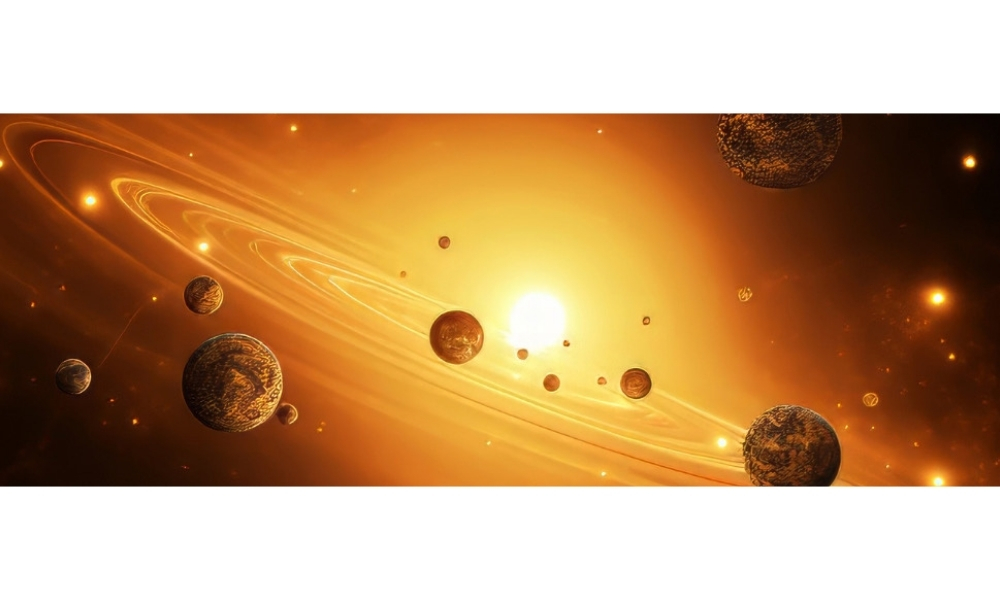
We inhabit what might be called a cosmic womb—this universe of stars and planets, of elegantly calibrated natural laws, of conscious life emerging impossibly from unconscious matter. We exist within a system of breathtaking complexity. Our sun sits at exactly the right distance to provide warmth without incinerating us. Our atmosphere contains precisely the mixture of gases required for respiration. Water cycles, nutrient chains, and vast ecosystems function in harmonious interdependence. The fundamental constants of physics are fine-tuned to a staggering degree; alter the cosmological constant by one part in 10 to the power of 120, and the universe collapses or flies apart, incapable of sustaining life.
We did not create this system. We did not earn our place within it. We simply find ourselves here, nourished and sustained by conditions we neither chose nor fully understand.
The believer looks upon this reality and perceives what the first soul intuited: evidence of intentionality, of care, of a Provider whose nature transcends our limited perception. Just as the foetus cannot see its mother yet knows her through her effects—through nourishment, protection, and the environment that makes life possible—so too do we know God through His creation. We know Him through the precise ordering of existence, through consciousness capable of contemplating these questions, through moral intuitions and yearnings for transcendence that seem inexplicable if we are merely accidental arrangements of atoms.
The Quran expresses this eloquently: “Indeed, in the creation of the heavens and the earth and the alternation of the night and the day are signs for those of understanding.” The believer sees the universe not as a brute fact requiring no explanation, but as an ayah—a sign pointing toward its Creator.
Furthermore, just as the foetus cannot imagine the vast world awaiting—cannot conceive of skies and oceans, of the beauty of life after birth—so too are we unable to fully grasp existence beyond this temporal life. The foetus might conclude that the womb is everything, that emergence means annihilation. But what seems like an ending is actually a beginning. Emergence is not death but birth into a greater reality.
The atheist position, like that of the second soul, insists this is all there is. “We arose by chance from unconscious matter. The elegance we observe is merely the product of blind natural laws. This life, this universe—it is a cosmic accident, signifying nothing, leading nowhere. When we die, we cease to exist, just as we did not exist before we were conceived.”
But consider the implications. The foetus who denies the mother must believe that nourishment materialises from nowhere, that the womb’s perfect conditions require no deeper explanation, that the development of eyes and lungs—all preparing for an unexperienced world—serves no ultimate purpose. Such a soul must accept that this entire journey culminates in simple obliteration.
How much more coherent is the first soul’s interpretation: that evident care suggests a Caretaker, that preparation implies purpose, that this journey leads somewhere meaningful.
We who observe the universe face a similar choice. The emergence of conscious beings capable of asking “Why?” from unconscious particles, the existence of mathematical laws governing reality with elegant precision, the presence within us of moral intuitions and aesthetic sensibilities that transcend mere survival—these phenomena demand interpretation. Either they are purposeless accidents, or they reflect intentional design by an Intelligence surpassing our complete understanding.
The atheist must believe that consciousness arose from unconsciousness, that meaning emerged from meaninglessness, and that the universe gave rise to beings capable of contemplating it for no reason whatsoever. They must accept that our deepest intuitions—our sense of justice, our capacity for love, our yearning for transcendent purpose—are merely evolutionary accidents, neurochemical processes deceiving us into thinking our existence matters when, ultimately, it does not.
The Islamic perspective, widely shared among theistic worldviews, offers a more satisfying narrative. We are not cosmic accidents but intentional creations of a purposeful God. This universe is not a random fluctuation but a sign pointing toward its Creator. Just as the womb is not the fetus’s final destination but a temporary dwelling place—a realm of preparation—so too is earthly life a testing ground, a place of moral and spiritual growth before our emergence into eternal existence.
God, like the mother unseen by her unborn children, provides for us, though we cannot perceive Him directly with our physical senses. He has fashioned a universe whose very laws sustain our existence. He has granted us consciousness, reason, and moral intuition—all the faculties needed torecognisee Him and to freely choose our relationship with Him. He has sent guidance through revelation, assuring us we are not alone, that we are known and loved, that a greater life awaits those who prepare for it.
The believer might say to the sceptic what the first soul could say to the second: “Your denial does not erase the evidence; it merely closes your eyes to it. We cannot see the Mother directly from within this womb, but her reality is proven by our very existence, by the nourishment we receive, by the care evident in every moment. Yes, emergence from this familiar world is frightening to contemplate. But it is not annihilation—it is birth into the presence of the One who has sustained us all along, into the reality for which all this has been preparation.”
The universe’s existence, its order, its remarkable hospitality to life and consciousness—these cry out for explanation. The atheist essentially offers none, or offers only: “It just is.” The theist provides: “It exists because God willed it, designed it with purpose, sustains it moment by moment, and will ultimately reveal Himself fully to His creation.”
We are the souls in the womb. The question confronting each of us is whether we will recognise our Creator’s care, trust in the existence that awaits beyond this temporary dwelling, and prepare ourselves accordingly—or whether we will insist, against compelling evidence and deep intuition, that we are alone, purposeless, and destined for oblivion.
The first soul emerges into light, its faith vindicated by reality. The second soul faces a reckoning it never anticipated, unprepared for the truth it spent its entire existence denying.
Which soul speaks with true wisdom? The answer may determine not just how we understand our existence, but how we navigate it—and what awaits us when we finally emerge from this cosmic womb into the fuller reality beyond.
0 Comments